A little water is normal when your air conditioner runs. In fact, your system may remove gallons of humidity from your home on a hot North Carolina day. That moisture has to go somewhere, which is why knowing how to clean an AC condensate drain can prevent a small blockage from becoming a ceiling stain, water damage, or an unexpected cooling shutdown.
The condensate drain is a simple part of your HVAC system, but it works hard during Raleigh-area summers. As warm indoor air passes over the cold evaporator coil, moisture collects and flows into a drain pan and through a PVC drain line. Dust, algae-like growth, pet hair, and sludge can build up in that line over time. When water cannot drain, it backs up where it should not.
Signs Your AC Condensate Drain May Be Clogged
A clogged drain does not always announce itself with a major leak. Watch for water around the indoor unit, damp carpet or flooring near a closet or attic system, musty odors when the AC runs, or a water stain on the ceiling below an attic unit.
Your system may also stop cooling even though the thermostat is set correctly. Many systems have a float safety switch that turns the equipment off when drain water rises too high. That shutdown protects your home from overflow, but it can feel like an air conditioning failure on a hot afternoon.
If you see active water dripping from a ceiling, turn the system off at the thermostat and call for service. Do not keep running the AC and hope the water finds its way out. Continued operation can overflow the drain pan and worsen the damage.
How to Clean an AC Condensate Drain Safely
For a minor, accessible clog, a homeowner can often clear the line carefully. The best approach depends on where your equipment and drain outlet are located. A system in a finished attic, crawl space, or tight utility closet may be better left to a trained technician, especially if water has already backed up.
Before starting, turn off cooling at the thermostat. If you know which breaker serves the air handler or furnace, switch that off as well. This reduces the chance of the system starting while you are working near the drain components.
1. Find the drain line and outside outlet
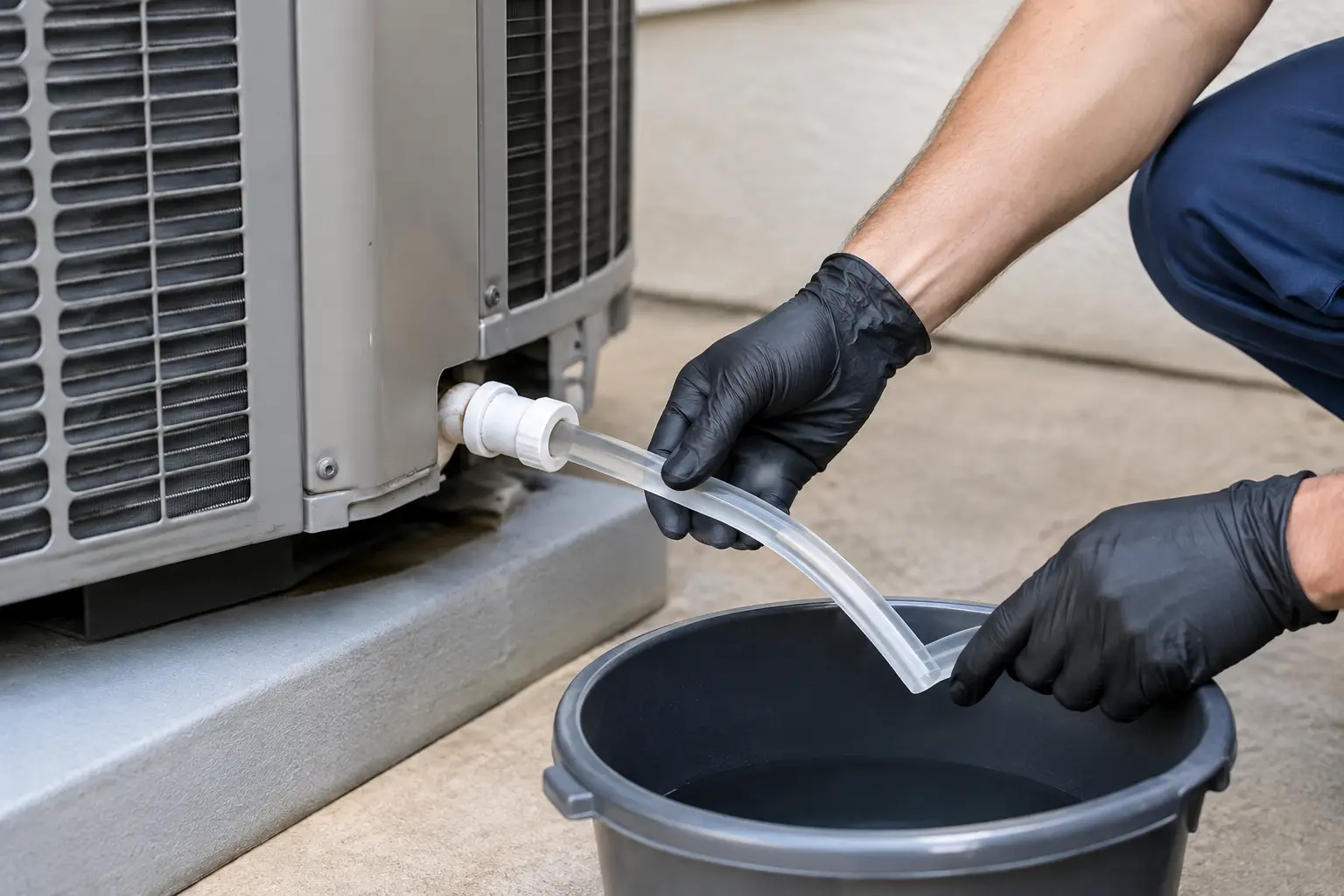
Near the indoor portion of your HVAC system, look for a white PVC pipe connected to the drain pan area. Many homes have a vertical capped section of pipe near the unit. This is usually the drain cleanout. The line often exits near the foundation outside, although its location can vary.
Check the outdoor drain outlet first. If it is covered by mulch, mud, leaves, or landscaping, clear the area gently. Never seal or cap the outlet. The line needs open airflow to drain properly.
2. Remove standing water if you can reach it safely
If water is visible in the secondary drain pan beneath an attic unit, do not lean across equipment or step on drywall to reach it. That is a service call. For an accessible indoor unit, you may be able to remove a small amount of water around the pan with towels or a wet-dry vacuum.
Take care not to disturb electrical wiring, insulation, or the evaporator coil. The goal is to address the drain line, not disassemble the system.
3. Use a wet-dry vacuum at the exterior drain outlet
A wet-dry vacuum is often the most effective homeowner tool for a blocked condensate line. Place the vacuum hose over the outdoor drain outlet and create a reasonably snug seal with your hand or a towel. Run it for about one to two minutes.
You may hear debris moving through the line or see dark water collect in the vacuum. That material is exactly what can stop condensate from draining. Avoid using high-pressure compressed air. Too much pressure can disconnect a fitting, crack an older pipe, or force dirty water back into the equipment.
4. Flush the line through the indoor cleanout
After vacuuming from outside, remove the cap from the vertical cleanout near the indoor unit. Slowly pour in a small amount of warm water to confirm the line is flowing. If the water immediately backs up, stop. The clog may be farther down the line, or the drain may have a slope or installation issue that needs professional correction.
If the water flows, you can follow with distilled white vinegar. Use about one cup, poured slowly. Vinegar can help reduce buildup without introducing harsh chemicals into the drain system. Do not mix vinegar with bleach or use strong drain cleaners. These products can create dangerous fumes, damage components, and do little to solve a heavy blockage.
Replace the cleanout cap when finished. It helps keep air and debris out of the drain connection.
5. Restore power and check for normal drainage
Turn the breaker and thermostat back on, then let the system run. It may take time for enough condensation to form for you to see water at the outdoor drain outlet, particularly on a mild day. Check the indoor area for leaks and listen for normal operation.
If the air conditioner shuts off again, water continues to collect, or the drain line will not accept water, schedule HVAC service rather than repeatedly flushing the line. A technician can inspect the drain pan, trap, float switch, pipe slope, and coil condition to find the actual cause.
What Not to Put in an AC Drain Line
A condensate drain is not a household sink drain. Caustic drain cleaners, excessive bleach, and wire snakes can create more problems than they solve. Strong chemicals may affect plastic fittings and nearby metal components, while a rigid wire can puncture or separate the pipe.
Bleach is a common suggestion, but it is not always the right answer. Its fumes can be unpleasant in a confined utility space, and it should never be combined with another cleaning product. If you want to perform simple routine maintenance, distilled white vinegar and water are generally the gentler choice. When a clog is stubborn, mechanical removal and inspection are more useful than stronger chemicals.
Why Condensate Clogs Are Common in Central North Carolina
High humidity gives your AC more moisture to remove. During long stretches of summer heat, the drain line stays wet for extended periods, creating conditions where biological buildup can develop. Homes with pets, dusty return areas, or aging equipment may also see more debris in the drain system.
This is one reason seasonal AC maintenance matters. During a professional tune-up, a technician can inspect and clear the condensate drain before it causes an interruption in cooling. They can also identify a rusted drain pan, a failing float switch, poor drainage slope, or a dirty evaporator coil that contributes to repeat issues.
For homeowners with an attic air handler, routine drain maintenance deserves extra attention. A clogged line above a finished ceiling can cause damage long before it becomes obvious. A safety switch is helpful, but it is not a substitute for keeping the drain path clear.
When to Call an HVAC Professional
Call for professional help when the line clogs repeatedly, the drain pan is rusted or cracked, water has reached ceilings or walls, or you cannot safely access the equipment. You should also call if the system has stopped because of a float switch and does not restart after the drain appears clear.
Repeat clogs can point to a larger issue, such as an improperly installed trap, a partially blocked main drain, excess debris from a dirty coil, or a drain line that does not slope correctly. A qualified technician has the tools to clear the line thoroughly and verify that water is leaving the system as intended.
Delta Heating, Cooling & Plumbing can help homeowners diagnose condensate drainage problems with clear recommendations and straightforward repair options. Addressing the issue early is usually faster and less expensive than repairing water-damaged ceilings, flooring, or insulation.
A clean drain line is a small detail with a big job. If your AC is producing water where it should not, turn it off, protect the area, and get the drain checked before the next humid day puts more moisture through the system.