
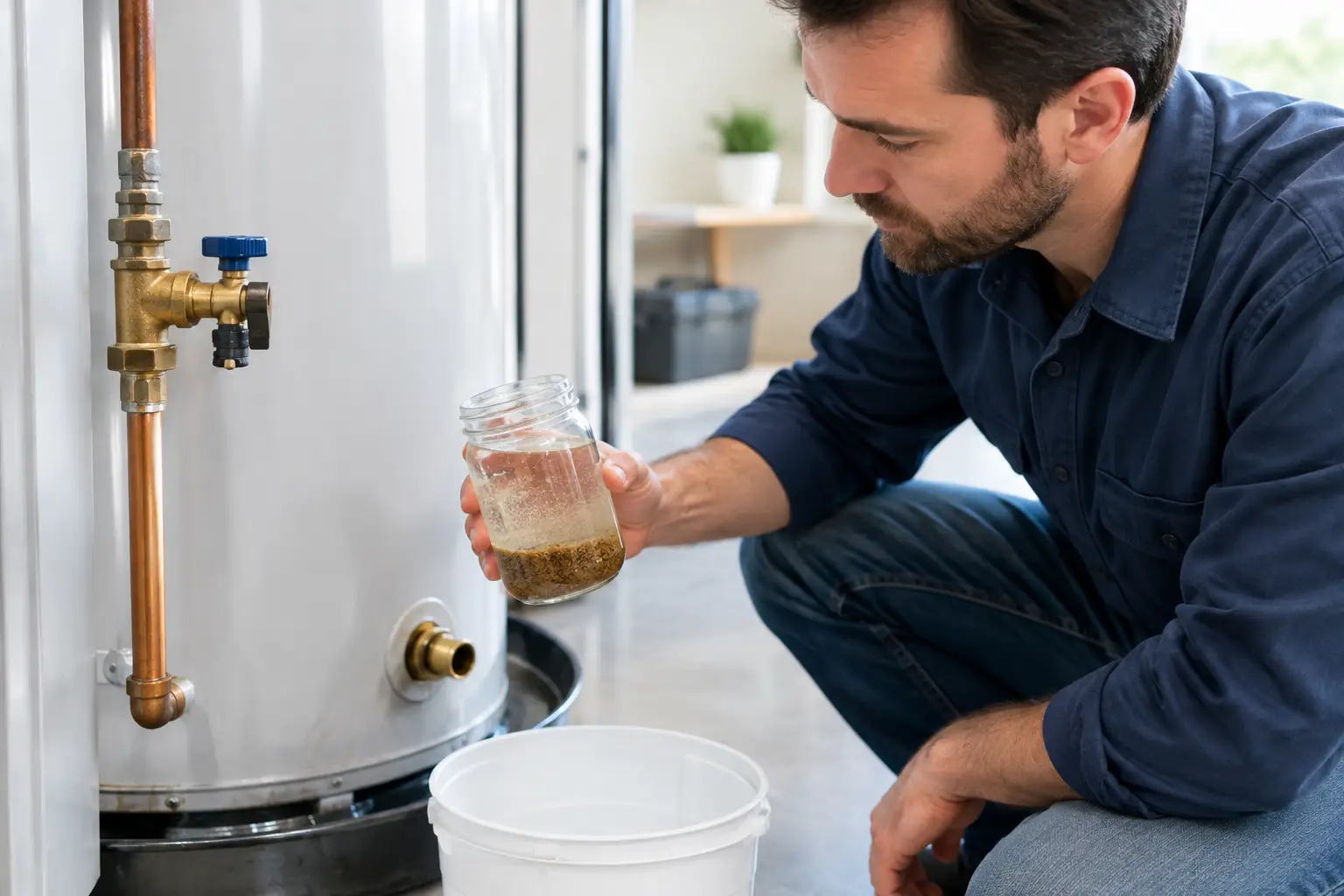
A water heater can appear to be working normally right up until it starts running out of hot water, making loud popping sounds, or leaking from the bottom of the tank. Often, the problem is not the heating element or burner alone. It is sediment. This water heater sediment guide explains what settles inside a tank, what it can do to your system, and when a careful flush may help versus when it is time for professional service.
For homeowners in Raleigh and surrounding communities, water quality, household water use, and the age of the equipment all affect how quickly sediment develops. Addressing it early can improve performance and help you make a clear, informed decision before a minor issue becomes a cold-shower emergency.
What Is Water Heater Sediment?
Sediment is the collection of minerals and small particles that separate from water and settle on the bottom of a storage-tank water heater. Calcium and magnesium are common contributors, particularly when water contains higher levels of dissolved minerals. Sand, rust particles from aging plumbing, and other debris can also make their way into the tank.
As water is heated, those minerals are more likely to fall out of suspension. Over time, they form a layer at the base of the tank, where the heat source works hardest. A thin layer may cause few noticeable problems. A thick, hardened layer can insulate the water from the heat source, forcing the unit to work longer to do the same job.
Tankless water heaters do not collect sediment in the bottom of a tank, but mineral scale can still build up inside their heat exchanger. The maintenance process and warning signs are different, so homeowners should not treat a tankless system like a conventional tank model.
Signs Sediment May Be Affecting Your Water Heater
Sediment rarely announces itself with one perfect symptom. Instead, look for changes in how your home receives hot water. If hot water runs out sooner than it used to, the sediment may be taking up tank capacity. A 50-gallon tank with a substantial buildup does not effectively hold the same amount of usable heated water.
Popping, crackling, rumbling, or banging sounds are another common clue. Water can become trapped beneath sediment and create steam bubbles as the tank heats. Those bubbles push through the buildup and create noise. Some sound is possible during normal operation, but a new or increasingly loud rumble deserves attention.
You may also notice longer recovery times, higher energy bills, inconsistent water temperature, or rusty-looking hot water. Discolored water can come from corrosion inside the tank or nearby piping, so it should be evaluated rather than assumed to be harmless sediment.
A leak near the base of the water heater is more urgent. Sediment itself does not always cause a leak, but overheating and corrosion can shorten tank life. If water is actively pooling around the unit, turn off the water supply if it is safe to do so and request plumbing service promptly.
Why Buildup Can Shorten Water Heater Life
A water heater is designed to transfer heat efficiently into the water. Sediment creates a barrier between that heat source and the water above it. On an electric unit, the lower heating element may operate under greater stress. On a gas unit, the burner may need to run longer, which can overheat the tank bottom and increase wear.
The result is not always an immediate failure. More often, it is a gradual decline in efficiency and comfort. The system consumes more energy, takes longer to recover, and experiences additional strain with every heating cycle.
There is also an age factor. Flushing a newer, well-maintained tank can remove loose mineral deposits and support better performance. Flushing a much older water heater with heavy corrosion is less predictable. Moving built-up material can sometimes expose an already weakened drain valve or tank area. That does not mean older units should never be serviced. It means the condition of the unit matters, and a professional assessment is often the safer choice.
Water Heater Sediment Guide: Can You Flush It Yourself?
A homeowner can perform a basic tank flush when the unit is in good condition, the drain valve operates properly, and the manufacturer’s instructions permit it. However, hot water, gas connections, electricity, pressure relief components, and aging valves all create potential risks. If you are unsure at any point, stop and schedule service.
Before starting, turn off the energy source. For an electric water heater, switch off the dedicated breaker. For a gas water heater, follow the unit’s instructions for turning the control to a safe setting. Then close the cold-water supply valve and allow the tank to cool. Draining scalding water through a hose can cause serious injury.
Attach a garden hose to the drain valve and route it to a suitable drain or outdoor area where hot water will not harm people, pets, landscaping, or surfaces. Open a hot-water faucet in the home to help relieve pressure, then carefully open the tank drain valve. The first water may be cloudy or contain visible particles.
Once the tank is drained, briefly opening the cold-water supply can help stir and rinse loose sediment out through the hose. Continue only if the drainage is flowing safely and the valve is functioning normally. When the water runs clearer, close the drain valve, remove the hose, and fully refill the tank before restoring power or gas operation.
Never turn an electric water heater back on while the tank is empty or partially filled. The heating elements can burn out quickly. Check for leaks around the drain valve and nearby connections after refilling.
When Not to Force a Flush
Do not force open a stuck or heavily corroded drain valve. Do not continue if water will not drain, the hose connection leaks badly, or you see corrosion around the tank seams. A failed pressure relief valve, a gas odor, electrical concerns, or a significant active leak also call for a trained technician rather than a do-it-yourself approach.
A no-drain situation can mean sediment has compacted at the bottom of the tank. Pushing harder with tools or probing into the valve can damage the unit and create a much larger leak. Professional technicians can evaluate whether targeted cleaning is reasonable or whether the water heater is nearing replacement.
How Often Should a Water Heater Be Flushed?
For many households, an annual inspection and flush is a practical starting point. Homes with mineral-heavy water, private well water, high hot-water demand, or recurring sediment issues may benefit from more frequent maintenance. The right schedule depends on what is actually happening inside your system, not a one-size-fits-all calendar reminder.
If your water heater has gone years without service and is already noisy or slow to recover, ask for an evaluation before attempting a major flush. A technician can check the drain valve, anode rod, temperature and pressure relief valve, burner or heating elements, and visible signs of corrosion. That broader inspection provides a clearer picture than flushing alone.
Water treatment can also be worth discussing if mineral buildup is a repeat problem throughout the home. It will not repair an aging tank, but addressing the source of excessive scale may reduce wear on water heaters, fixtures, and appliances over time.
Know When Repair Gives Way to Replacement
A flush can improve a water heater that is otherwise sound, but it cannot reverse a rusted-out tank or fix extensive internal corrosion. Replacement may be the better investment when the tank is leaking, repairs are becoming frequent, hot-water capacity no longer fits your household, or the unit is approaching the later part of its expected service life.
A qualified plumber can explain the trade-offs clearly: whether a repair is sensible today, whether maintenance can safely extend the unit’s life, and what replacement options fit your home and hot-water needs. Delta Heating, Cooling & Plumbing provides straightforward assessments and transparent pricing so homeowners can choose the next step with confidence.
If your water heater is getting louder, slower, or less reliable, do not wait for a full tank failure to decide what to do. A timely inspection can protect your hot-water supply and give you room to plan the right repair or replacement.