
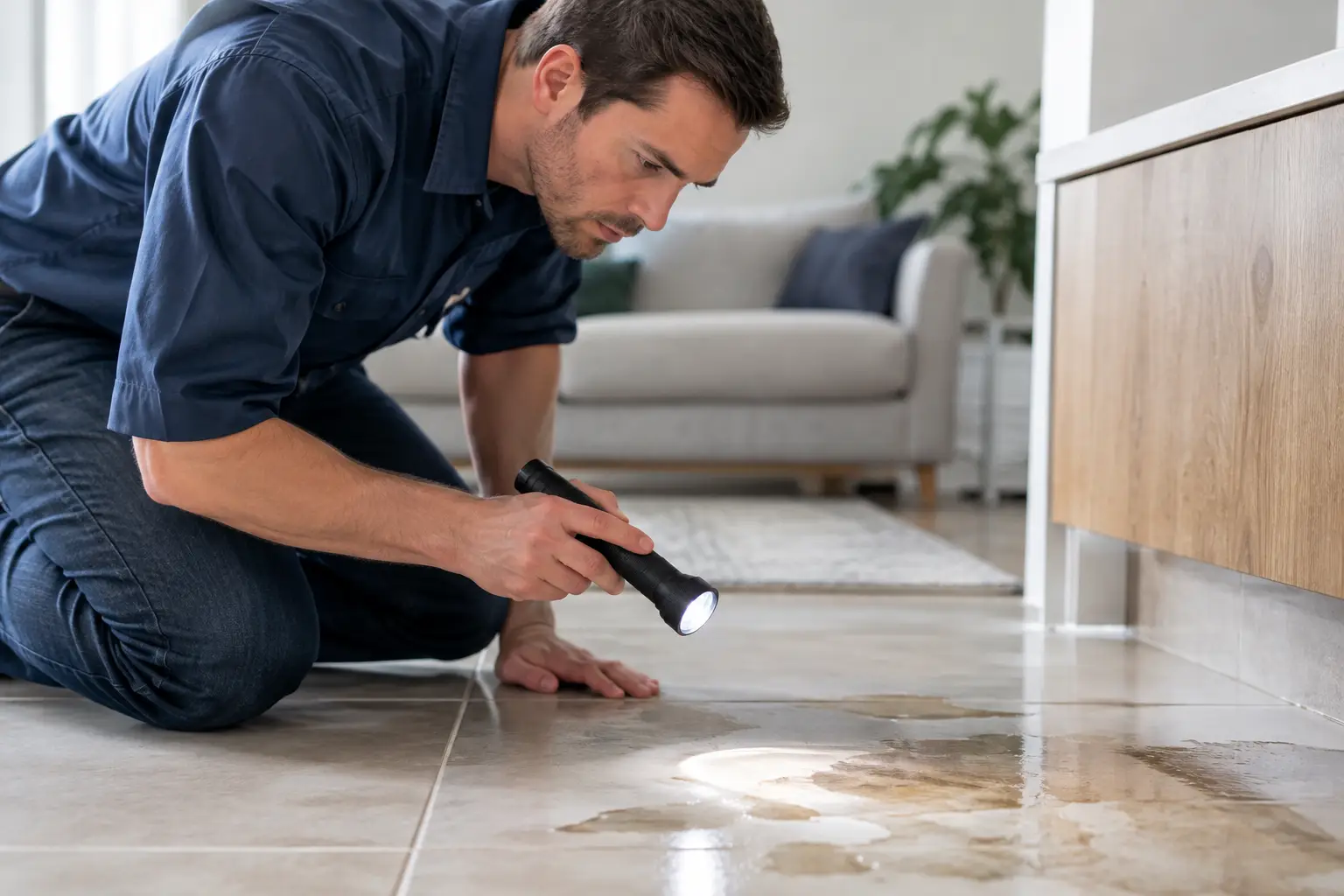
A slab leak can start quietly beneath a concrete floor and cause expensive damage long before water appears where you can see it. Knowing how to identify slab leaks gives you a chance to act before moisture damages flooring, weakens materials around the foundation, or creates the conditions for mold growth.
A slab leak is typically a leak in a water line running beneath your home’s concrete foundation. It may be a pinhole opening caused by pipe age, corrosion, shifting soil, installation issues, or repeated pressure changes. Because the pipe is hidden, the first clues often show up in your water bill, flooring, or day-to-day plumbing performance rather than as an obvious puddle.
How to Identify Slab Leaks From Early Warning Signs
No single symptom confirms a slab leak. A higher water bill, for example, may come from irrigation, a running toilet, or a leaking fixture. The concern rises when several signs appear at the same time, especially when they persist.
Your water meter moves when water is off
This is one of the simplest homeowner checks. Turn off faucets, appliances that use water, ice makers, and irrigation. Then look at your water meter. If the leak indicator is moving or the meter reading continues to increase after a reasonable wait, water may be escaping somewhere in the plumbing system.
This test does not tell you where the leak is. It also will not identify a leak if a toilet is silently running or a water treatment system is cycling. Still, it is a useful first step that tells you a professional inspection is warranted.
You hear water running with no fixture in use
A soft hissing, rushing, or trickling sound beneath the floor can point to a pressurized water line leak. It may be easier to notice late at night, when the home is quiet and no one is showering, washing clothes, or running the dishwasher.
Listen near bathrooms, kitchens, laundry rooms, and areas where water lines may pass under the slab. Do not assume every sound is a slab leak. Plumbing pipes can make normal expansion noises, and a nearby appliance may be the real source. A consistent sound when all water use has stopped deserves attention.
A spot on the floor feels unusually warm
If a hot-water line leaks beneath the slab, it can create a noticeably warm patch in tile, vinyl, or concrete flooring. The temperature difference may be subtle, so compare the area with nearby flooring using your bare hand or a noncontact thermometer.
Warm flooring is not a universal slab-leak symptom. Sun exposure, HVAC ducts, and appliances can affect floor temperature. But a new warm spot that stays in the same place, particularly near other warning signs, should be professionally evaluated.
Flooring changes without an obvious explanation
Moisture rising through or around a slab can damage finished floors. You might see warped wood, loose tile, cracked grout, damp carpet, discoloration, or flooring that begins to separate from the surface below it. A musty odor may develop if water has been present long enough to affect padding, adhesives, trim, or nearby walls.
Do not wait for widespread damage before calling for help. By the time flooring changes are obvious, the leak may have been active for some time. Moving furniture, lifting flooring, or drilling into a slab to investigate on your own can create additional damage and make a repair more complicated.
Your water pressure suddenly seems lower
A substantial leak in a pressurized line can reduce water pressure at faucets and showers. If the change is isolated to one fixture, the issue may be a clogged aerator, a failing valve, or a fixture-specific problem. If pressure is weak throughout the house, a plumbing leak or water supply issue becomes more likely.
Low pressure alone is not proof of a slab leak. It is most meaningful when it accompanies a moving water meter, unexplained usage, or signs of moisture indoors.
Your water bill or usage climbs unexpectedly
Compare your current bill with the same season last year, not just the previous month. Summer irrigation, visiting family, filling a pool, and changing household routines can all increase water consumption. If your usage is higher with no clear reason, a hidden leak should be on the list of possibilities.
Even a small underground leak can waste a surprising amount of water over weeks or months. If you receive a high-use notification from your utility, take it seriously and check for visible leaks and running toilets right away.
Signs Outside the House That Can Point to a Problem
Slab leaks often leave indoor clues, but not always. Depending on the location of the pipe and how water travels through the soil, you may see damp ground near the foundation, an unusually green patch of grass, or water collecting where it normally does not.
These signs require context. North Carolina’s rainy periods and humid conditions can leave soil damp for ordinary reasons. A soggy area that remains after dry weather, feels warm, or appears alongside high water use is more concerning.
Foundation movement can also be a warning sign, but it is not automatic evidence of a slab leak. Cracks in concrete, walls, or tile may result from normal settling, drainage problems, or changes in soil moisture. A plumber can help determine whether an active plumbing leak is contributing before you commit to major foundation or flooring work.
What to Do When You Suspect a Slab Leak
The goal is to limit water loss and get a clear diagnosis, not to guess at the repair. Start by documenting what you have noticed, including meter readings, changes in your bill, damp areas, and when the issue began. If water is actively surfacing indoors or causing damage, turn off the home’s main water supply if you can safely do so.
Then take these practical steps:
- Avoid running high-water-use appliances until the source is identified.
- Move rugs, furniture, and stored items away from wet or warm flooring.
- Do not use chemical leak sealers or attempt to break through the slab.
- Schedule professional leak detection as soon as possible.
If you smell gas, hear a strong gas leak sound, or believe a gas line may be involved, leave the area and contact your gas utility or emergency services from a safe location. Water-line slab leaks and gas emergencies require very different responses.
Why Professional Leak Detection Matters
Finding a hidden leak is not the same as finding a wet spot. A qualified plumber first isolates the plumbing system and checks pressure to confirm whether a leak is present. From there, specialized equipment may be used to narrow down the location, including acoustic listening devices, thermal imaging, electronic locating tools, and pressure-testing methods.
The right approach depends on the home’s plumbing layout, pipe material, access points, and symptoms. In some cases, a targeted repair at the leak site makes sense. In others, rerouting a line around the slab may reduce disruption and lower the chance of future issues in an aging section of pipe. A trustworthy diagnosis should explain the options, expected work, and pricing before repairs begin.
For homeowners in Raleigh and surrounding communities, Delta Heating, Cooling & Plumbing provides plumbing diagnostics designed to identify the source of the problem and explain the next step clearly. If you suspect water is leaking beneath your slab, acting early can protect your home, your flooring, and your peace of mind.