A water heater can quietly become one of the more expensive appliances in your home, especially when it is heating water around the clock only to lose that heat through the tank, pipes, or an outdated control system. The best water heater efficiency upgrades are not always a full replacement. For many homeowners, the right answer starts with a professional inspection, a few targeted improvements, and an honest look at the unit’s age and condition.
For households in Raleigh and surrounding communities, hot-water use adds up quickly between morning showers, laundry, dishwashing, and busy family routines. The goal is not simply to buy the highest-efficiency option available. It is to choose upgrades that fit your home, usage habits, existing plumbing, and budget.
Start With the Source of Energy Waste
Before investing in an upgrade, identify why your water heater is wasting energy. A conventional storage-tank unit repeatedly heats a supply of water and holds it until you need it. Some heat loss is normal, but aging insulation, sediment buildup, a failing heating component, or hot-water pipes running through unconditioned spaces can make the system work much harder than it should.
A water heater that runs out of hot water sooner than it used to, makes popping sounds, leaks, or produces rusty water needs attention before efficiency upgrades are considered. These can be signs of a repair issue or a tank nearing the end of its service life. Adding insulation to a failing unit may reduce minor heat loss, but it will not solve corrosion, a damaged tank, or a faulty valve.
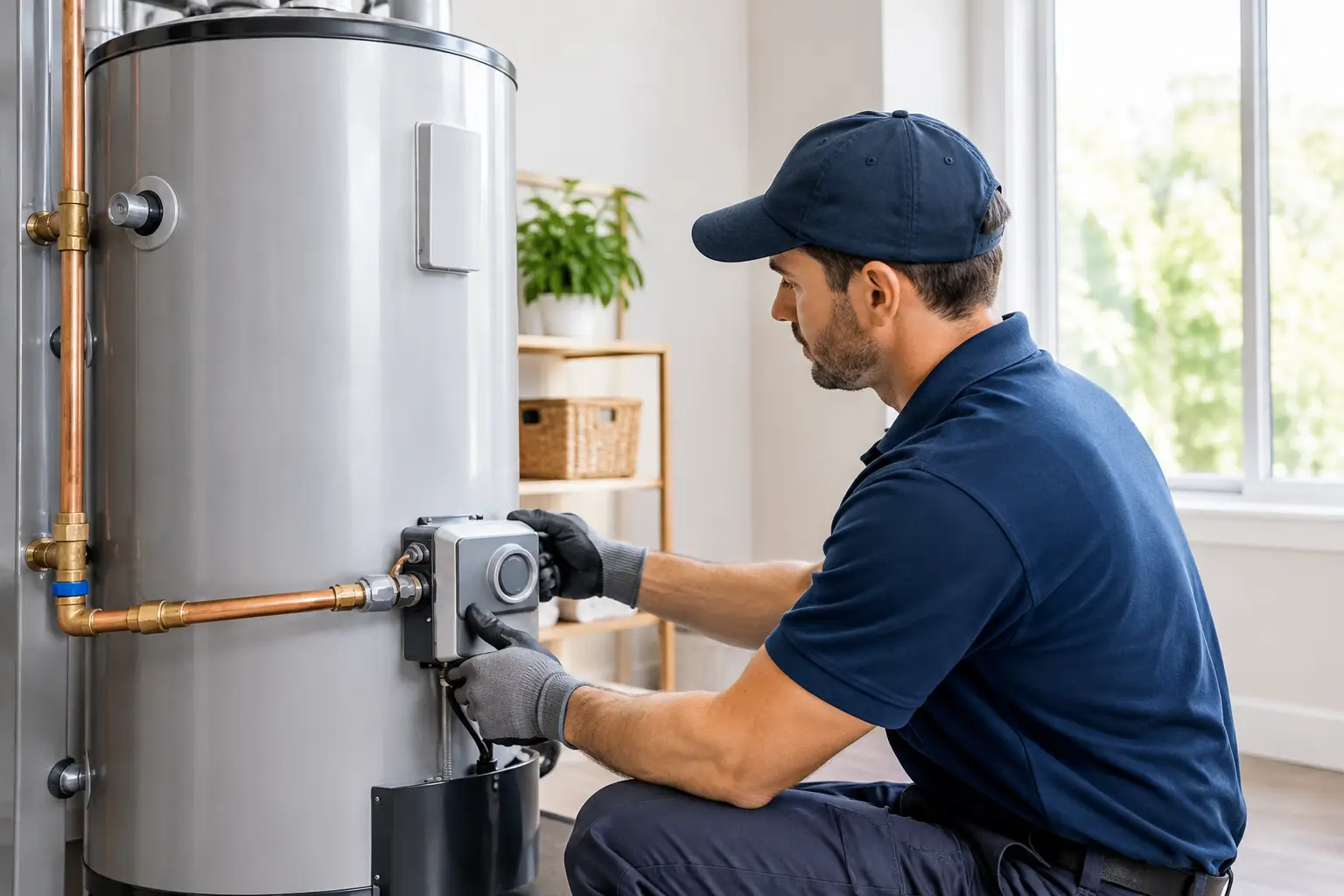
A trained plumbing technician can evaluate the tank, connections, temperature settings, venting where applicable, and signs of sediment or mineral accumulation. That assessment helps separate practical upgrades from money spent on a unit that should be replaced.
Best Water Heater Efficiency Upgrades to Consider First
Set a safe, efficient temperature
Many water heaters are set hotter than necessary. A setting around 120 degrees Fahrenheit is often sufficient for typical household needs and can reduce standby heat loss. It also lowers the risk of scalding at faucets and showers.
The right setting can depend on your household. A home with young children, older adults, or residents with specific health concerns may need additional precautions. If you are unsure about adjusting the temperature, have a professional check it during routine maintenance. An accurate setting is more useful than guessing at the dial.
Insulate accessible hot-water pipes
Insulating the first several feet of hot-water pipe leaving the heater is one of the simplest ways to reduce heat loss. It can be especially helpful when pipes travel through a garage, crawl space, attic, or other unconditioned area. Less heat lost between the water heater and fixture means less time waiting for warm water and less energy used to reheat the system.
Pipe insulation is not a cure for long plumbing runs or poor water pressure, but it is an affordable improvement with a clear purpose. The material and installation need to be appropriate for the pipe type and location, particularly near heat-producing equipment.
Add a tank insulation blanket when appropriate
Older storage-tank water heaters may benefit from an insulation blanket if the tank itself feels warm to the touch. The blanket helps reduce standby heat loss, which is the energy lost while hot water sits unused in the tank.
This upgrade is not suitable for every water heater. It must not cover controls, warning labels, valves, vents, or other required access points. Newer units often already have effective insulation, so a blanket may provide little benefit. A technician can tell you whether this step makes sense and install it without creating a safety concern.
Flush sediment from a tank-style unit
Sediment settles at the bottom of a storage tank over time. As it builds, the heater may take longer to warm the water, produce rumbling or popping sounds, and operate less efficiently. This is a common concern in homes with mineral-heavy water or water heaters that have gone years without maintenance.
A professional tank flush can remove buildup and restore more efficient operation when the unit is in good condition. However, an older tank with heavy corrosion requires care. Opening a neglected drain valve can expose an existing weakness, which is why professional evaluation matters. Maintenance should protect your investment, not create an unexpected leak.
Upgrade the Water Heater When Repairs Stop Making Sense
If your tank is older, inefficient, or requiring repeated repairs, replacement may deliver the most meaningful reduction in energy use. A newer high-efficiency tank-style water heater can reduce standby heat loss with improved insulation and more precise controls. It can be a sensible choice for homeowners who want dependable performance with familiar operation and a lower upfront cost than some advanced options.
Sizing matters as much as efficiency. An oversized tank costs more to heat than your household needs, while an undersized unit can leave everyone competing for hot water. A professional will consider the number of occupants, bathrooms, fixtures, laundry habits, and peak-hour demand. A family that takes several showers in a short morning window has different needs than a two-person household with staggered schedules.
Fuel source and installation requirements also influence the decision. Electrical capacity, gas piping, venting, available space, drainage, and local code requirements can all affect which replacement is practical. The best unit on paper is not necessarily the best installed solution for your home.
Is a Tankless Water Heater Worth It?
Tankless water heaters warm water as it flows through the unit instead of keeping a full tank heated all day. Because they avoid most standby heat loss, they can be an excellent efficiency upgrade for the right household. They also take up less space and can provide a continuous supply of hot water when properly sized.
The trade-off is upfront cost and installation complexity. A tankless system may require changes to electrical service, gas lines, venting, or water lines. It also needs periodic maintenance, particularly where mineral deposits can build inside the equipment. Skipping that maintenance can reduce performance and shorten the equipment’s lifespan.
Tankless is often a strong fit for homeowners planning to stay in the home, households that value a long shower without draining a tank, or homes where storage-tank space is limited. It is not automatically the best answer for every budget or every plumbing layout. A load calculation and installation review should come before choosing a system.
Consider a Heat Pump Water Heater for High Efficiency
A heat pump water heater uses electricity to move heat from surrounding air into the water, rather than generating all of the heat directly. This makes it one of the most efficient water-heating options available for many homes. It can substantially reduce energy use compared with a standard electric tank.
There are practical requirements. These units need adequate surrounding air space and generally work best in areas such as a garage, utility room, or basement where the cooler, drier air they produce will not create a comfort problem. They can also make some noise while operating and may have a higher initial cost.
For North Carolina homeowners with a suitable installation location, a heat pump water heater can be a compelling long-term upgrade. The key is verifying that the space, drainage, electrical setup, and household hot-water demand support it.
Do Not Overlook Water Use Itself
Efficiency is not only about the appliance. Reducing unnecessary hot-water use lowers the workload on any water heater. Repairing a dripping hot-water faucet, replacing a leaking shower valve, and choosing efficient showerheads can all make a difference. A recirculation system may reduce the wait for hot water in larger homes, but it must be designed carefully. A poorly controlled recirculation pump can use extra energy by constantly moving and reheating water.
Controls such as timers, demand-activated pumps, and insulated return lines can make recirculation more efficient. The right approach depends on how far fixtures are from the water heater and how much waiting your household experiences.
Make the Decision With Clear Numbers
The cheapest upgrade is not always the lowest-cost option over time, and the most advanced equipment is not always necessary. Compare the expected installation cost, maintenance needs, projected energy use, available space, and remaining life of your current water heater. If your existing unit is reliable and relatively young, maintenance, insulation, and temperature adjustments may be the smart path. If it is leaking, corroded, or frequently failing, replacement is usually more responsible than another temporary repair.
Delta Heating, Cooling & Plumbing can assess your current system, explain the options in plain language, and provide transparent pricing before work begins. A well-chosen water heater upgrade should give your household more than lower energy use. It should provide dependable hot water when you need it, without surprises in your utility bill or your plumbing room.