A water heater rarely chooses a convenient time to quit. One morning, the shower runs cold. Another day, you notice a puddle near the tank or hear a popping sound from the utility room. Knowing which warning signs call for a simple repair and which point toward replacement can help you protect your home, your budget, and your daily routine.
For homeowners in Raleigh and nearby communities, water heater decisions also involve practical local factors: hard-working household demand, older homes with aging plumbing, and the desire for dependable hot water without a surprise utility bill. The right answer depends on the unit’s age, condition, fuel source, repair history, and the way your family uses hot water.
When Water Heaters Need Professional Attention
Some water heater problems are obvious, while others start small. A loss of hot water is the clearest signal, but it is not the only one. If the water is only lukewarm, takes much longer to heat, or runs out faster than it used to, the issue may be a worn heating element, thermostat problem, burner issue, sediment buildup, or a failing component inside the tank.
Unusual noises deserve attention as well. Rumbling, popping, or banging often occurs when sediment collects at the bottom of a tank. As the burner or elements heat the water beneath that layer, trapped moisture can create those sounds. Flushing may help in some situations, but heavy sediment can also reduce efficiency and contribute to early tank failure.
Discolored water is another concern. Rust-colored hot water may indicate corrosion in the tank or connected plumbing. A metallic smell, cloudy water, or an odor similar to rotten eggs can have different causes, so a professional diagnosis matters. The source may be the water heater, but it is not always the water heater alone.
A leak is the issue homeowners should treat most urgently. Water around a fitting, pressure relief valve, drain valve, or supply connection may be repairable. Water leaking from the body or bottom seam of the tank is more serious. Once the tank itself has corroded through, replacement is generally the dependable solution.
Repair or Replace? Start With Age and Condition
A standard storage-tank water heater commonly lasts about eight to 12 years, although maintenance, water quality, installation quality, and usage can change that range. If a unit is relatively new and the problem is isolated, repair often makes financial sense. Replacing a thermostat, heating element, valve, or ignition-related component can restore performance without requiring a new system.
The calculation changes when a tank is nearing or beyond its expected service life. Repeated repairs on an older unit can add up quickly, and a major repair may only delay the next failure. If corrosion is present, the tank leaks, or hot water performance remains unreliable after service, replacement may offer more value and peace of mind.
It also helps to consider the cost of the repair in relation to the replacement. There is no one percentage that fits every home. A modest repair on a newer, well-maintained unit is different from an expensive repair on a tank that has already needed multiple service calls. A clear estimate and an honest assessment of remaining life allow you to make that choice without guessing.
Do not wait for a complete failure if you have warning signs and an aging unit. Planned replacement gives you time to compare system types, size the equipment correctly, and schedule installation around your household. Emergency replacement can still be handled, but it leaves less room for thoughtful decision-making.
Choosing Between Tank and Tankless Water Heaters
The best water heater is not automatically the newest or largest option. It needs to match your home’s hot water demand, available installation space, fuel type, plumbing setup, and budget.
Storage-Tank Systems
Traditional tank water heaters store a set amount of heated water, often making them a familiar and cost-conscious choice for many homes. Their performance depends largely on tank capacity and recovery rate, which is the amount of hot water the unit can heat over time. A properly sized tank can serve a family well, particularly when daily routines are predictable.
The trade-off is that the tank continually maintains stored water at temperature. If several people shower back-to-back, run the dishwasher, and start a load of laundry, the household can use the available supply faster than the unit can recover. Proper sizing is essential. A tank that is too small may save money upfront but create daily frustration.
Tankless Systems
Tankless water heaters heat water as it flows through the unit rather than storing it in a tank. They can provide a continuous supply when sized correctly and can be a strong option for homeowners who want to reclaim floor space or reduce standby energy loss.
However, tankless equipment is not a one-size-fits-all upgrade. Its capacity is based on flow rate and the temperature rise needed to heat incoming water. Running multiple showers and appliances at once may require a larger unit or a different configuration. Installation can also involve updates to venting, gas supply, electrical service, or plumbing. Those requirements are why an in-home evaluation is more useful than choosing a model based on a general online recommendation.
Maintenance Helps Protect Hot Water Performance
A water heater works quietly until it does not, which makes regular maintenance easy to postpone. Yet routine service can identify developing issues before they become a cold-shower emergency or a damaging leak.
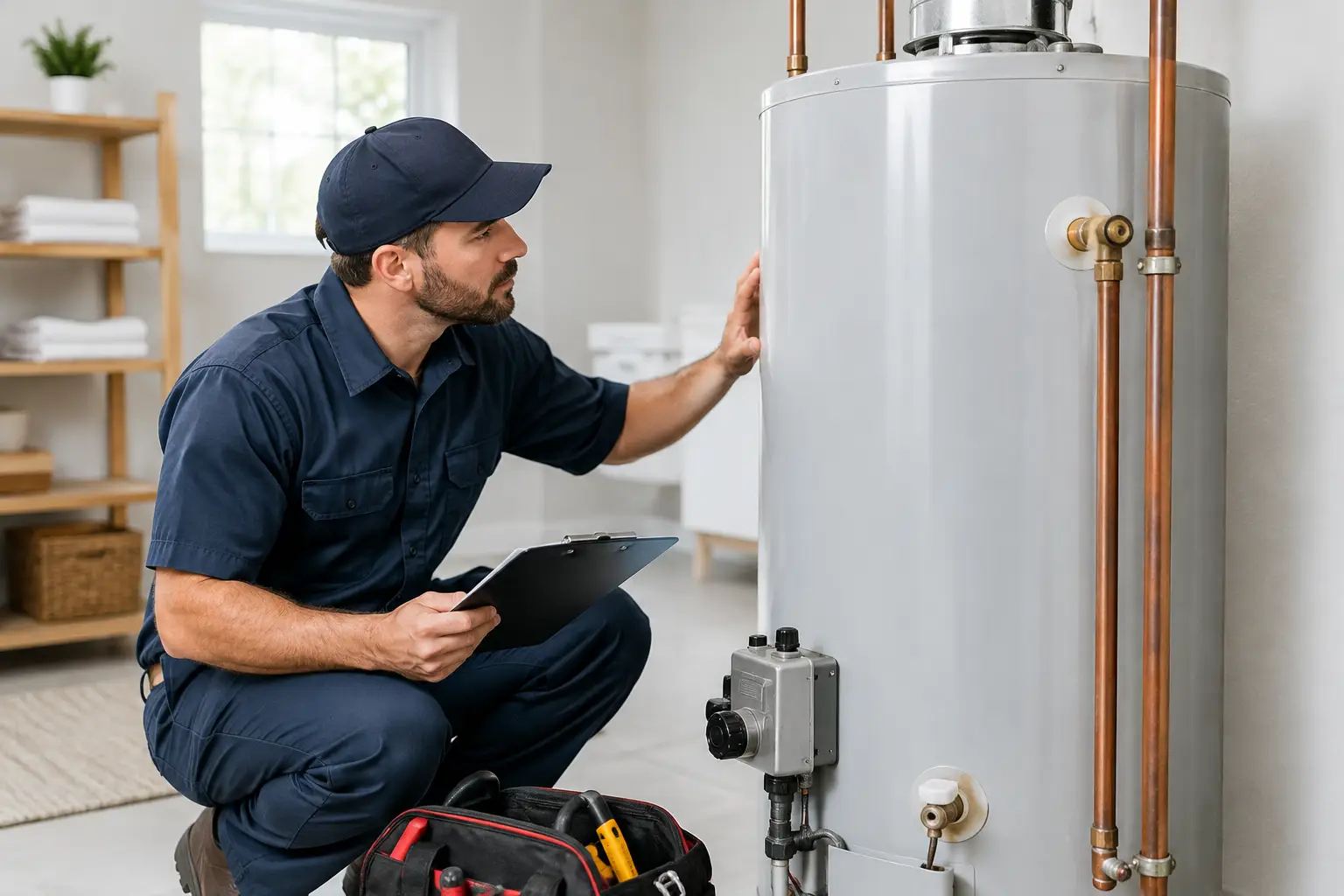
For a storage-tank unit, professional maintenance may include checking the temperature and pressure relief valve, inspecting connections, evaluating the anode rod, looking for corrosion, and flushing sediment when appropriate. The anode rod is especially important because it is designed to corrode before the steel tank does. Replacing it at the right time may help extend tank life.
Tankless systems also benefit from periodic service. Mineral scale can accumulate inside the heat exchanger, particularly where water conditions support buildup. Cleaning and inspecting the system helps maintain efficient operation and protects the equipment over time.
Homeowners can help between service visits by keeping the area around the water heater clear, watching for moisture or corrosion, and paying attention to changes in water temperature or noise. Avoid blocking access to the unit with storage boxes or household items. Quick access makes inspections and repairs safer and faster.
Avoid These Common Water Heater Mistakes
The first mistake is ignoring a small leak. Even a slow drip can damage flooring, encourage mold growth, or indicate a component that is close to failing. The second is turning the temperature too high to compensate for limited hot water. Excessively hot water raises scalding risk and may point to a sizing or equipment problem that should be diagnosed instead.
Another common mistake is choosing a replacement based only on the existing unit’s capacity. Your household may have changed since that system was installed. A new baby, frequent guests, added bathroom, remote-work schedule, or upgraded appliances can all alter hot water demand. A professional can ask the right questions and recommend equipment that fits how your home operates now.
Finally, do not assume every water heater problem requires replacement, or that every old unit should be repaired. Reliable guidance should account for the actual condition of the equipment and the cost of each path. Delta Heating, Cooling & Plumbing provides clear recommendations and transparent pricing so homeowners can make an informed decision.
If your hot water has become unreliable, you hear unfamiliar sounds, or you see water near the unit, schedule service before a minor concern turns into a larger disruption. A prompt evaluation can give you a clear path forward and help restore the steady, dependable hot water your home needs.