A shower that fills around your ankles is more than an irritating start to the day. Standing water can leave soap residue behind, create unpleasant odors, and signal that a small hair clog is becoming a larger drain issue. If you need to know how to unclog shower drain problems before they disrupt the whole bathroom, start with the safest, simplest method and work up only as needed.
Most shower clogs develop gradually from hair, soap scum, body oils, and mineral buildup. In many homes, removing the material close to the drain opening restores normal flow. But when the blockage is farther down the line, aggressive DIY methods can damage pipes or push the problem deeper.
Start by Checking the Drain Cover
Put on rubber gloves and remove the drain cover. Some covers lift out, while others are held in place with one or two screws. Set any screws somewhere safe before inspecting the opening with a flashlight.
Hair often collects immediately below the cover or around the crossbars in the drain. Pull out what you can see with gloved fingers, a plastic drain-cleaning tool, or a small hooked tool made for drains. Work slowly so you do not force the hair farther into the pipe.
Discard the debris in the trash, not the toilet or another drain. Then run hot water for a minute or two. If the water now drains normally, clean the cover and reinstall it. A quick monthly check can prevent the same type of clog from returning.
How to Unclog a Shower Drain With a Plunger
If the clog is not visible near the surface, a cup plunger may loosen it. This works best when there is enough standing water in the shower pan to cover the bottom edge of the plunger.
First, block the overflow opening if your shower has one. This is often a small opening beneath the faucet or on the side of the tub-shower combination. Covering it with a wet rag helps the plunger direct pressure into the drain instead of releasing it through the overflow.
Place the plunger squarely over the drain and make several firm, controlled plunges. Keep the seal tight, then lift the plunger and see whether water begins to move. Repeat a few times if necessary, but do not keep plunging for an extended period. If the water does not improve after several attempts, the clog may be too compact or too far down the pipe for this approach.
Try Baking Soda and Vinegar for Light Buildup
For a slow drain caused by light soap film or residue, baking soda and vinegar can be a reasonable next step. It is not a cure for a dense hair clog, but it may help break up minor buildup after you have removed visible debris.
Pour about one-half cup of baking soda into the dry drain, followed by one cup of white vinegar. Cover the opening with the drain cover or a damp cloth and let the mixture sit for 20 to 30 minutes. Finish by flushing the drain with hot tap water.
Use hot water, not boiling water. Very hot water from the tap is usually enough to rinse loosened residue, while boiling water can be hard on certain pipe materials, seals, and older plumbing connections. If the shower remains slow, avoid repeating the treatment again and again. Repeated DIY attempts can delay the diagnosis of a deeper blockage.
Use a Drain Snake Carefully
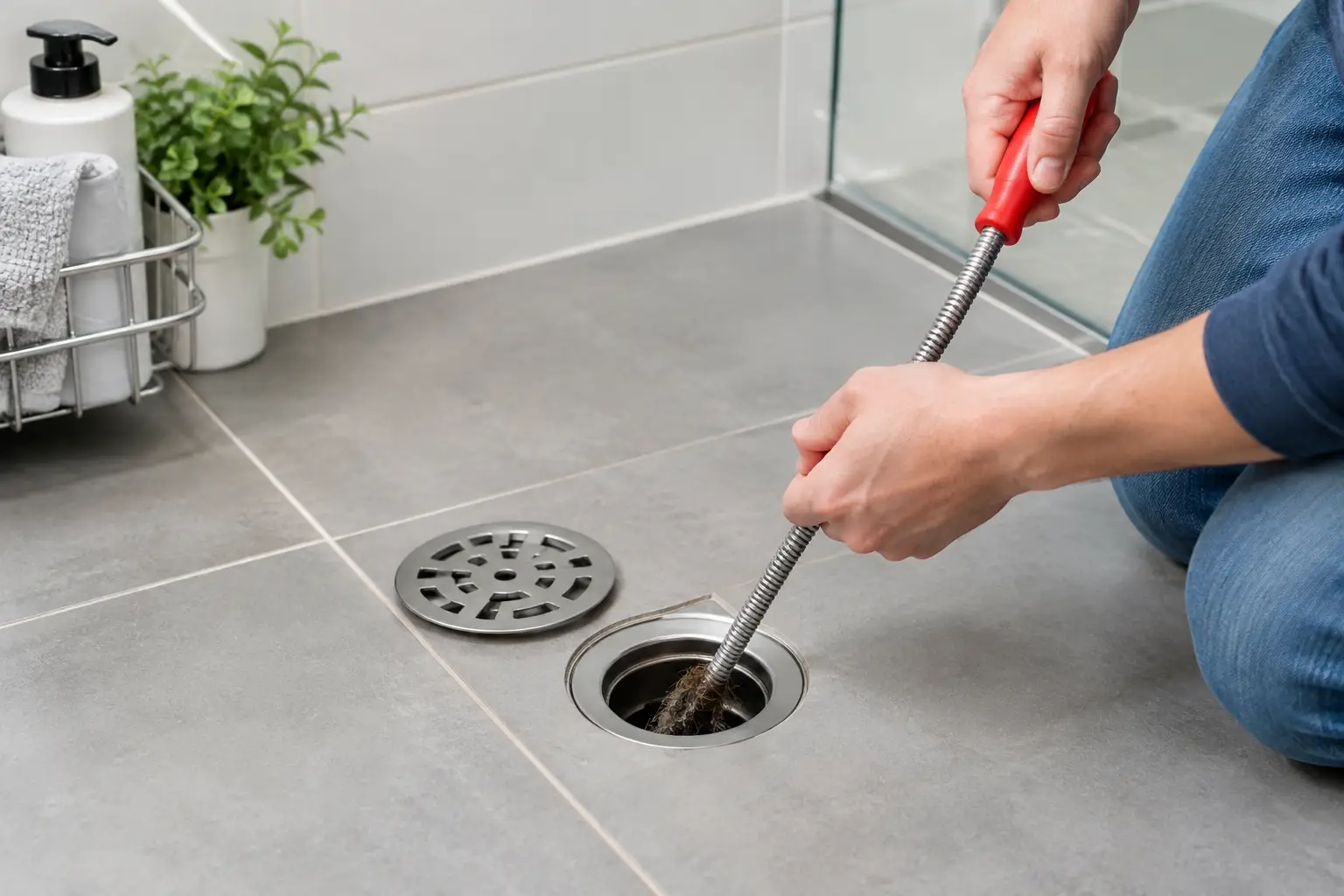
A hand-crank drain snake can reach clogs that sit beyond the drain opening. Feed the cable into the drain gently until you meet resistance. Rotate the handle to catch or break apart the obstruction, then pull the cable back out slowly.
Expect the cable to bring up hair and residue. Clean it into a trash bag before rinsing the tool outside. Afterward, run water to test the drain.
There is a trade-off with using a snake. A homeowner-grade tool can be effective for a straightforward hair clog, but it can also snag, scratch a fixture, or become stuck when used too aggressively. Stop if the cable will not advance, if you feel it binding, or if the drain piping seems to shift. Those are good reasons to call a professional rather than risk turning a clog into a pipe repair.
Skip Chemical Drain Cleaners
Chemical drain cleaners may promise a fast fix, but they are rarely the best answer for a shower drain. Many contain highly caustic ingredients that can irritate skin and eyes, damage finishes, and create problems for pipes, especially in older homes. They can also leave hazardous liquid sitting in the drain if the clog remains.
That leftover chemical is a safety concern for anyone who later removes the drain cover, plunges the line, or services the plumbing. Never mix drain-cleaning products with each other, vinegar, bleach, or any other household cleaner. If you have already used a chemical product, tell the plumber before service begins.
Know When the Clog Is Bigger Than the Shower
A single slow shower drain is often a local clog. However, certain symptoms suggest a blockage farther along the branch line or sewer line. In that situation, another round of baking soda or a stronger plunger will not solve the root cause.
Watch for these signs:
- Water backs up into the shower when the toilet flushes or the bathroom sink runs.
- More than one drain in the home is slow, gurgling, or producing sewer-like odors.
- The shower drains slowly again soon after you remove visible hair.
- Water comes up through a low drain, or you notice sewage backup.
Stop using water fixtures if sewage is backing up or water is rising in the shower. Running the dishwasher, washing machine, or another shower can add more water to a blocked line and cause avoidable damage.
A professional drain cleaning visit can identify whether the issue is hair buildup, mineral scale, a foreign object, root intrusion, or a problem with the pipe itself. Camera-assisted diagnostics are particularly helpful when a clog keeps returning because they show what is happening inside the line instead of relying on guesswork.
Prevent the Next Shower Drain Clog
Prevention is usually easier than clearing a complete blockage. Install a simple hair catcher that fits your drain and empty it after each shower or whenever hair collects. Choose one that allows water to flow freely, since a catcher packed with hair can create the same standing-water issue it is meant to prevent.
Once a week, remove the cover or hair catcher and rinse away residue. A monthly flush with hot tap water can also help keep soap film moving through the pipe. If household members use heavy hair products, shave in the shower, or have long hair, check the drain more often.
For homes with recurring drain trouble, it is worth addressing the pattern rather than treating each clog as a one-time nuisance. Delta Heating, Cooling & Plumbing can clear stubborn shower drains and diagnose deeper drainage concerns with the right equipment, clear recommendations, and straightforward pricing.
A shower should drain quietly and quickly. If your safe at-home steps do not restore normal flow, stopping early can protect your plumbing and help get the real problem fixed sooner.