
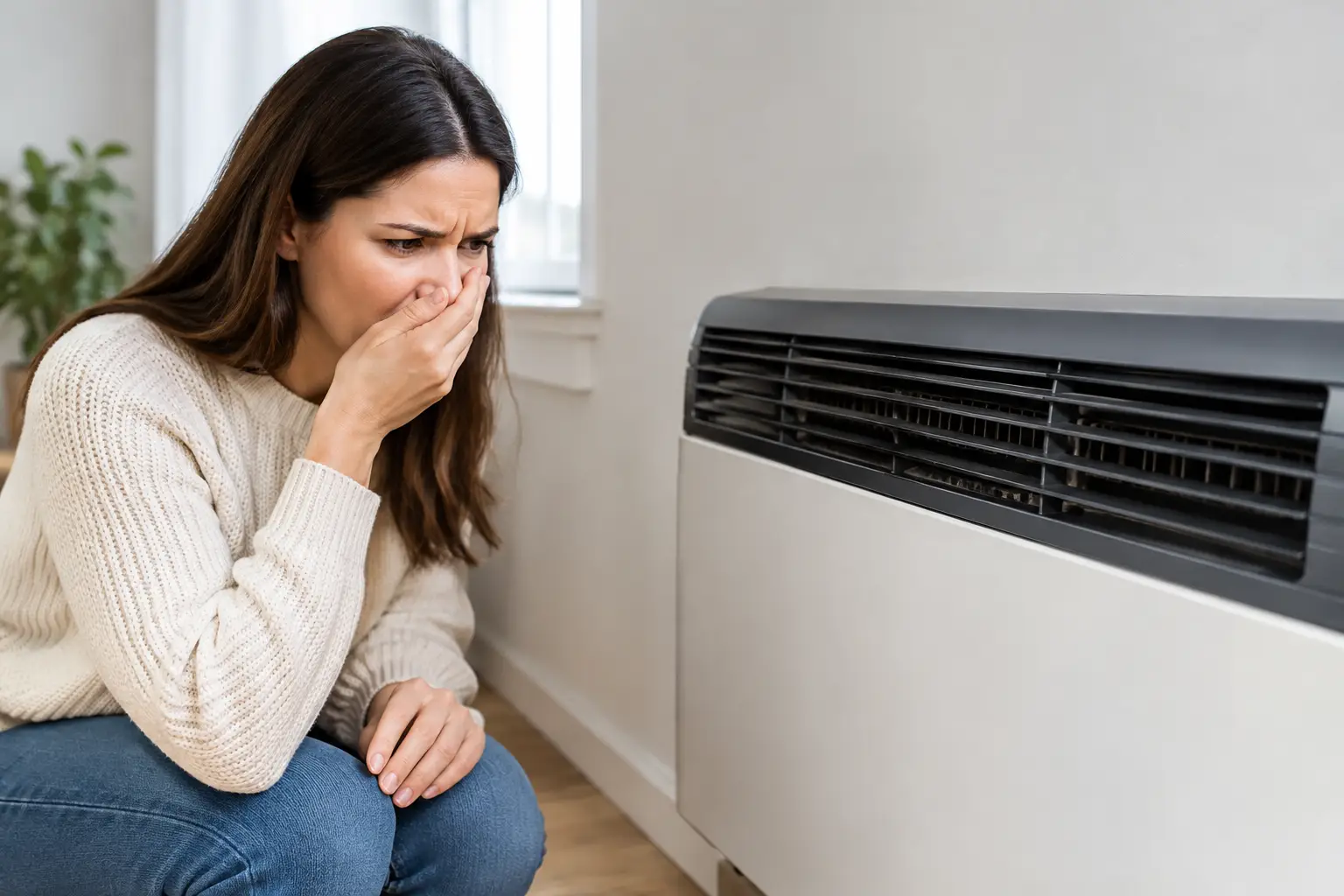
That first blast of heat on a cool Raleigh morning can carry an unpleasant surprise. If your heater smells burnt, the cause may be as harmless as dust burning off the system – or it may signal an electrical issue that needs immediate attention. The difference often comes down to the type of odor, how long it lasts, and whether your heating system is still operating normally.
A brief dusty smell during the first heating cycle of the season is common. A sharp smell of melting plastic, burning rubber, or hot wiring is not something to ignore. Knowing what you are smelling can help protect your home, your comfort, and your heating equipment.
When a Heater Smells Burnt, Start With Safety
Before trying to identify the source, pay attention to signs that point to an urgent problem. Turn the thermostat off and shut down the heating system if the odor is strong, gets worse, or is accompanied by smoke, sparking, unusual sounds, or a tripped breaker.
Do not keep restarting the system to see whether the smell goes away. Repeated operation can worsen a failing electrical component or motor. If you see flames, active smoke, or smell something that resembles burning wires, leave the area if necessary and contact emergency services.
If you smell natural gas – often described as sulfur or rotten eggs – do not operate switches, appliances, or phones inside the home. Leave the house, move to a safe location, and contact your gas utility or emergency responders. A gas odor is different from a typical burning smell, but it deserves immediate action.
A Dusty Burning Smell May Be Normal at First
During North Carolina’s long cooling season, dust can settle on your furnace burners, heat exchanger, electric heat strips, and other warm surfaces. When the heater starts after sitting unused for months, that dust burns away and creates an odor similar to a dusty space heater or a hot attic.
This smell should be mild and should fade within a few heating cycles, often in 15 to 30 minutes of normal operation. Opening a window briefly can help clear the odor. Replacing a heavily loaded air filter may also reduce dust circulating through the system.
There is a limit to what is normal. If the dusty smell returns every time the heat runs, lingers for more than a day, or becomes stronger instead of weaker, schedule a professional inspection. Excessive dust buildup, a dirty blower compartment, or an airflow problem may be contributing to it.
Burning Plastic or Electrical Odors Need Fast Attention
A sharp, acrid odor that resembles hot plastic, rubber, or electrical insulation can indicate an overheating component. Your heating system contains wiring, relays, capacitors, motors, and control boards that can fail over time. Restricted airflow can also make parts work harder and run hotter than designed.
Common causes include a failing blower motor, damaged wiring, an overheating circuit board, or a loose electrical connection. For homes with electric heat or a heat pump operating in auxiliary heat mode, a problem with heat strips or their connections can create a burning electrical smell as well.
Turn the system off at the thermostat. If the odor continues, if there is smoke, or if a breaker has tripped, turn off power to the HVAC system at the breaker only if it is safe to do so. Then arrange for a qualified heating technician to diagnose the system. Electrical repairs are not a DIY project inside an HVAC cabinet.
A Clogged Filter Can Make Your Heater Overheat
The simplest issue is often the one homeowners miss: a dirty air filter. Your system needs steady airflow to move heat safely through the home. When a filter is clogged, the blower has to strain to pull air through it. That restriction can cause the furnace or air handler to run hotter, reduce comfort, and put unnecessary stress on components.
Check the filter size and airflow direction printed on the frame before replacing it. A filter that is too restrictive for the system can also create airflow problems, even when it is clean. If you have replaced the filter and the burnt smell continues, there may be a blockage, blower issue, or ductwork concern that requires a closer look.
Other Reasons Your Heater May Smell Burnt
Not every unusual odor comes from the heater itself. A small object may have fallen into a floor register, debris can collect near a baseboard heater, or household items may be too close to a supply vent. Inspect accessible vents and registers after the system has been turned off and cooled down.
A heat pump can produce a temporary odor during a defrost cycle or when its supplemental electric heat engages on a cold day. That does not automatically mean something is wrong. Still, a persistent burning-plastic smell, reduced airflow, or repeated breaker trips should never be treated as routine heat-pump behavior.
If your home uses a fuel-burning furnace, a dirty burner or combustion-related problem may create unusual odors and performance issues. Carbon monoxide itself has no smell, so do not rely on odor alone for protection. Keep working carbon monoxide alarms installed according to their instructions, especially near sleeping areas.
What You Can Check Safely Before Calling for Service
Homeowners can handle a few basic checks without opening panels or touching electrical components. First, turn off the heat and look for any visible smoke or signs of scorching around vents and the indoor unit. Next, check the air filter and replace it if it is visibly dirty or overdue for service.
Make sure furniture, curtains, boxes, and rugs are not blocking supply or return vents. If you use portable heaters, keep them clear of anything combustible and plug them directly into a wall outlet, not an extension cord or overloaded power strip.
You can also note when the smell occurs. Does it appear only at startup? Only when auxiliary heat runs? Does it start after the blower comes on, or does it happen with a particular thermostat setting? These details help a technician pinpoint the issue faster and provide a clearer repair recommendation.
Avoid removing access panels, resetting breakers repeatedly, or spraying fragrances near vents to cover the smell. Covering an odor can delay recognition of a developing safety issue.
When to Schedule Heating Repair
Schedule service promptly if the odor is anything beyond a brief first-use dust smell. A professional should inspect the system when the smell persists, returns frequently, causes headaches or eye irritation, appears alongside poor heating performance, or occurs with unusual noises and breaker trips.
A trained technician can test electrical components, inspect wiring and heat strips, evaluate blower performance, verify airflow, and look for overheating or combustion concerns. This is also a good time to address deferred maintenance. Seasonal heating tune-ups help remove buildup, catch worn parts early, and reduce the chances of an unwelcome odor on the first cold night.
For homeowners who want a clear answer instead of guesswork, Delta Heating, Cooling & Plumbing can evaluate the source of a burning heater odor and explain the repair options before work begins. Prompt attention is especially worthwhile when a system is older, has needed repeated repairs, or shows electrical warning signs.
A heater should make your home feel comfortable, not leave you wondering whether something is overheating. Trust a short-lived dusty smell only when it fades quickly and the system runs normally. For every other burnt odor, shut the system down and have it checked before the next heating cycle.