
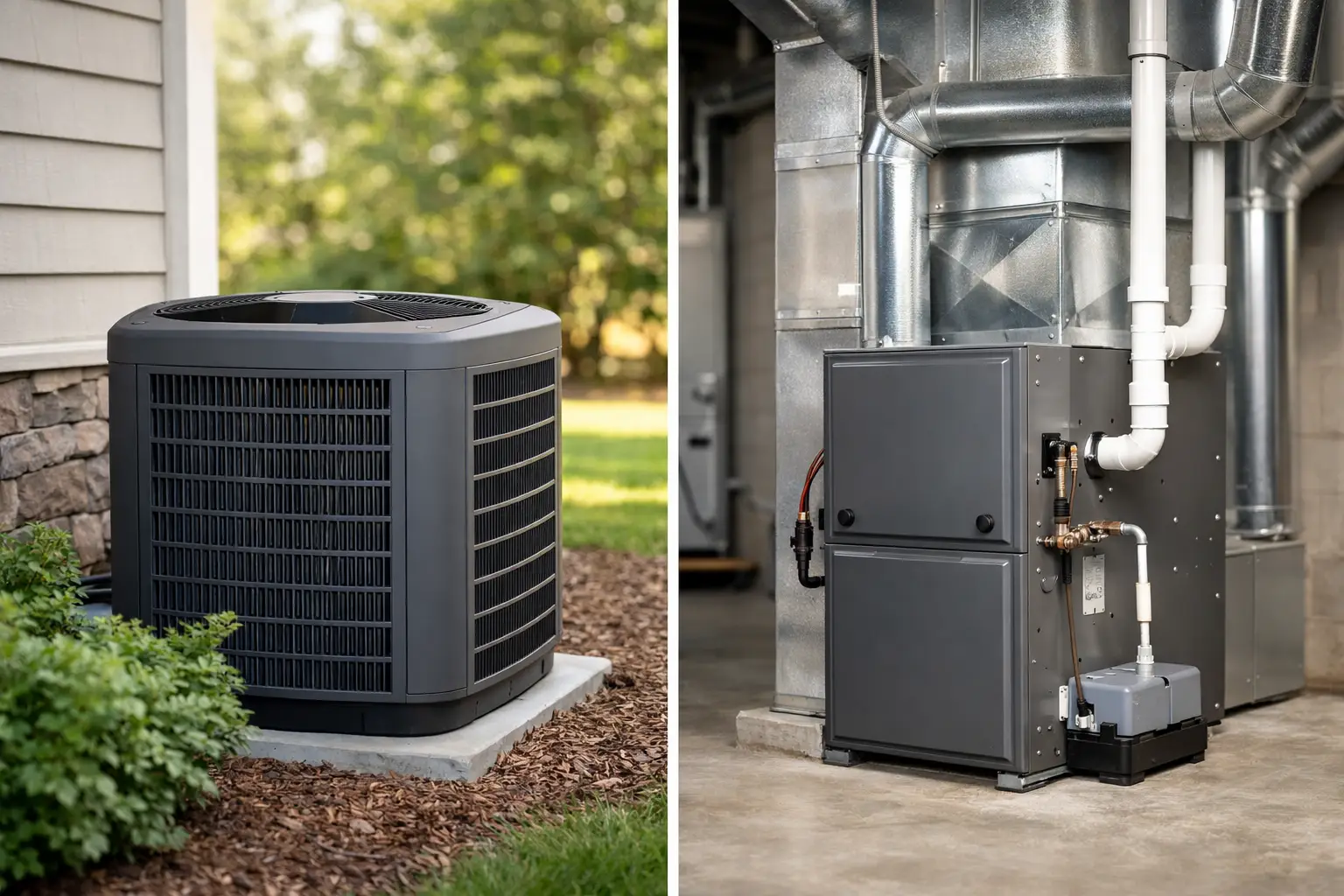
A heat pump versus furnace decision is not just about which unit creates warm air. It affects your summer cooling, winter comfort, monthly utility bills, installation budget, and how your home performs during a North Carolina cold snap. For many Raleigh-area homeowners, the right answer depends on the home, existing equipment, fuel availability, and personal comfort preferences.
A professional in-home evaluation matters because two houses on the same street can have very different heating needs. Insulation levels, duct condition, window performance, system sizing, and thermostat habits all affect the outcome. Here is how to compare the options without getting lost in technical jargon.
Heat Pump Versus Furnace: The Core Difference
A furnace creates heat. Depending on the setup, it may burn natural gas or use electricity to warm air, then move that air through your ducts. It is a heating-only appliance, so it works alongside a separate central air conditioner for summer cooling.
A heat pump moves heat rather than generating it through combustion. During winter, it pulls available heat from outdoor air and transfers it indoors. During summer, it reverses direction and removes heat from your home, working much like an air conditioner.
That dual-purpose operation is the biggest distinction. Replacing both an aging furnace and air conditioner with one heat pump system can simplify an HVAC upgrade. On the other hand, a furnace paired with an air conditioner remains a practical, dependable setup for many homes.
How Each System Handles North Carolina Weather
Central North Carolina has long cooling seasons, humid summers, and winters that are generally moderate but can include freezing nights and occasional sharp cold spells. That climate often makes heat pumps an appealing option because they provide efficient cooling and useful heating through much of the year.
Heat pumps in mild to moderate cold
Modern heat pumps can heat effectively in cold weather, but their efficiency and heating capacity can decline as outdoor temperatures drop. Most systems use supplemental heat when needed, but cold-climate heat pumps can generate 100% capacity down to -5. Delta Platinum Series heat pumps are capable of heating your home to -22, while maintaining indoor temp, and using NO electric auxiliary heat.
A properly selected heat pump should not leave your house cold during normal winter conditions. Still, homeowners who strongly prefer very hot supply air may notice a difference. Heat pump air is typically warmer than the room but may feel less intense at the vent than air from a gas furnace. Delta Platinum Series heat pumps are not like conventional heat pump systems, they can create gas furnace heat even in single digit temperatures.
Furnaces during cold snaps
A gas furnace can deliver high-temperature air quickly, even when temperatures outdoors are well below freezing. That fast, strong heating is a major reason some homeowners prefer furnaces, particularly in older or draftier homes.
The trade-off is that a furnace does not provide cooling. You will also need a compatible air conditioner, which means maintaining two primary pieces of equipment rather than one heat pump system. Electric furnaces are an option where gas is unavailable, but their operating costs can be higher than those of an efficient heat pump in this climate.
Energy Costs Are More Than a Single Number
It is tempting to ask which option is cheapest to run, but the honest answer is that it depends. Electricity rates, natural gas rates, equipment efficiency, thermostat settings, duct leakage, and weather all influence utility costs.
A heat pump is often economical during Raleigh’s milder heating weather because it transfers heat instead of producing it directly. It can also replace both heating and cooling equipment, which may improve the value of a full-system replacement.
A high-efficiency gas furnace may have a cost advantage during the coldest stretches, especially if natural gas prices are favorable. Yet the furnace still requires an air conditioner for summer, and air conditioning demand is significant in North Carolina. When comparing proposals, look at the total annual comfort system, not only the winter fuel bill.
Ask for clear information on the estimated operating cost, efficiency ratings, expected supplemental heat use, and any electrical or gas-line work needed. A transparent estimate should explain what is included in the installation and what may affect the final price.
Upfront Cost and Installation Considerations
The best choice is not always the lowest initial price. A system that is incorrectly sized or installed without attention to airflow can cost more in discomfort, repairs, and wasted energy over time.
If you already have a furnace and central air conditioner nearing the end of their service lives, a heat pump may be a straightforward replacement path. If your home has an existing gas furnace in good condition but needs a new air conditioner, keeping the furnace may make more financial sense. A dual-fuel system can also be worth considering for homeowners who want heat pump efficiency during milder weather and furnace heat during colder periods.
Installation details deserve close attention. Your contractor should evaluate the ductwork, electrical panel capacity, refrigerant lines, condensate drainage, outdoor unit location, and indoor airflow. In some homes, duct repairs or electrical upgrades are necessary to support the new equipment properly. Those items can affect the investment, but skipping them may compromise performance.
Comfort, Humidity, and Everyday Operation
Summer comfort matters just as much as winter heating in this region. Both a properly installed heat pump and a central air conditioner can cool your home effectively. The key is correct sizing and airflow. An oversized system may cool rapidly but shut off too soon, leaving more humidity behind. A correctly sized system runs longer, steadier cycles that can improve comfort.
Heat pumps often provide even, consistent heating when paired with a sensible thermostat schedule. Rather than making large temperature changes throughout the day, many heat pump owners are more comfortable holding a steady indoor temperature. A thermostat set up for your specific system can help avoid unnecessary backup heat operation.
Furnaces tend to produce quicker temperature recovery, which can suit households that lower the thermostat overnight or when away. Neither approach is automatically better. Consider how your family uses the home, which rooms run hot or cold, and whether your current system struggles with humidity or uneven temperatures.
When a Furnace May Be the Better Fit
A furnace and air conditioner combination may be the right choice if your home already has reliable natural gas service, your household prefers hotter air from the vents, or you want maximum heating output during rare but severe cold weather. It can also be a logical option when only the air conditioner needs replacement and the existing furnace has substantial useful life remaining.
Furnaces also offer a familiar setup for homeowners who want dedicated heating equipment. However, their safety and performance still depend on annual service. A technician should inspect the burner assembly, heat exchanger, venting, electrical connections, filter condition, and overall airflow before each heating season.
When a Heat Pump May Be the Better Fit
A heat pump is often a strong fit for homeowners replacing both heating and cooling equipment, seeking efficient all-electric comfort, or wanting one system that serves the house year-round. It is especially appealing in North Carolina’s moderate climate, where it can handle a large share of annual heating demand efficiently.
It can also be a good choice if your home does not have natural gas service. Rather than relying on electric resistance heat alone, a heat pump can provide considerably more efficient heating for much of the season. The system still needs professional sizing and installation, particularly if the home has cold rooms, older ducts, or high humidity concerns.
Do Not Replace Equipment Based on Age Alone
Age is useful context, not a final diagnosis. A system that is 12 to 15 years old may still have serviceable life, while a younger system with recurring breakdowns, refrigerant issues, poor airflow, or rising repair costs may warrant replacement sooner.
Before approving a major repair, ask for a clear explanation of the failure, repair cost, remaining system condition, and replacement options. A free second opinion can be especially helpful when the recommendation involves a compressor, heat exchanger, or other major component. It gives you time to make a confident decision instead of reacting to an uncomfortable house.
Get a Recommendation Built Around Your Home
The right heating choice should be based on more than a quick look at the existing unit. A qualified technician can assess your comfort concerns, home layout, insulation, duct system, utility setup, and budget before recommending a heat pump, furnace, or dual-fuel solution.
If your current system is struggling to cool, heat, or control humidity, Delta Heating, Cooling & Plumbing can help you understand the practical options and provide a clear estimate. The goal is not to push one type of equipment. It is to leave you with dependable comfort and a system that makes sense for the way your home is used.