
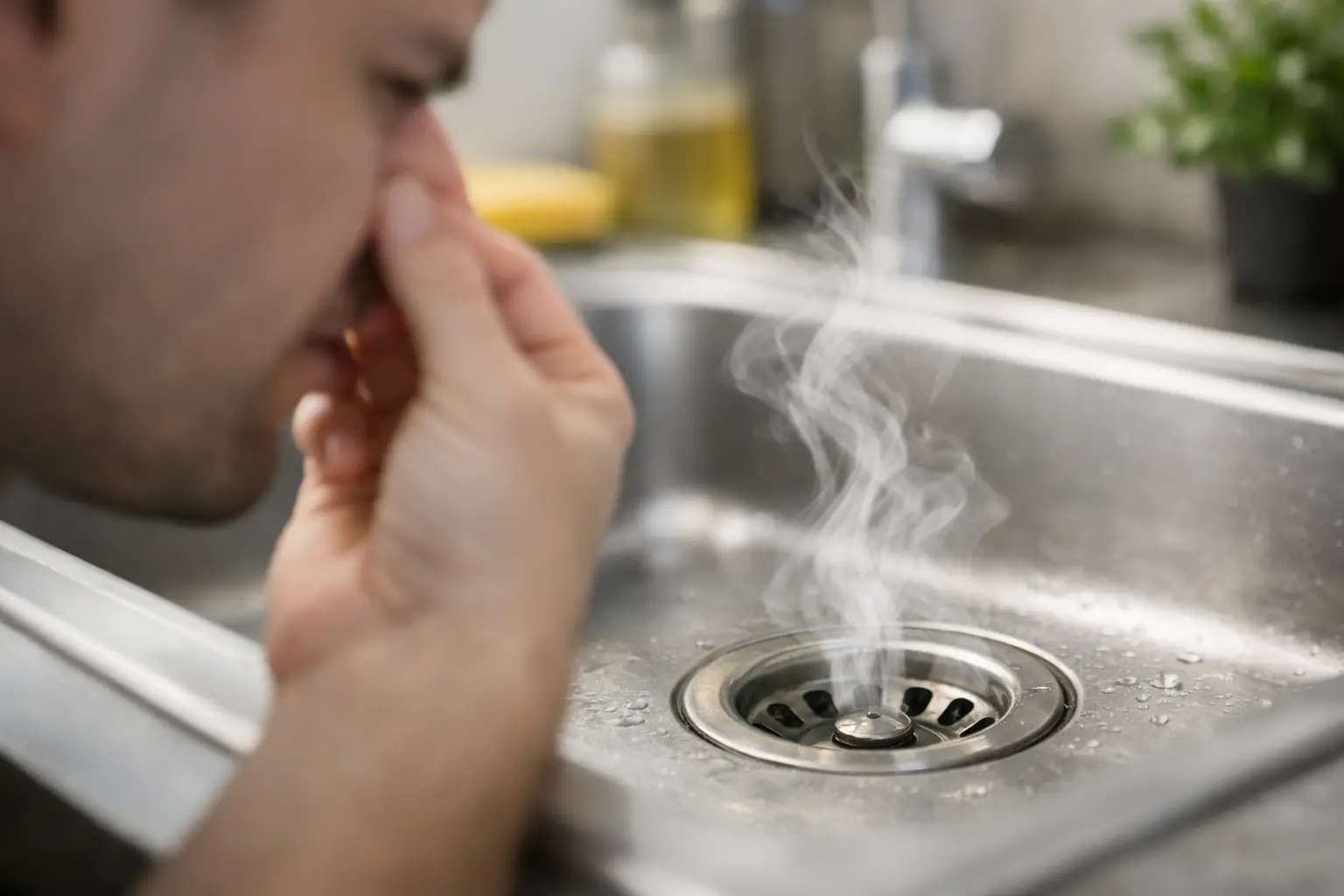
A drain odor can turn an otherwise clean kitchen or bathroom into a place nobody wants to use. If you are asking why drains smell, the answer is usually not that the drain itself is dirty. The odor often points to trapped debris, a dry plumbing trap, a venting issue, or a developing blockage somewhere in the drain system.
A brief odor after cleaning a sink or after a guest bathroom has sat unused may be easy to resolve. A sewer-like smell that keeps returning, spreads through the home, or comes with slow drains needs more attention. Knowing the difference can help you protect your home and avoid waiting until a small drain concern becomes a messy repair.
Why Drains Smell: The Most Common Causes
Your plumbing system is designed to carry wastewater away while preventing sewer gases from coming back into the house. When one part of that system is not doing its job, odors can make their way into kitchens, bathrooms, laundry rooms, or utility areas.
Food residue and grease in kitchen sinks
Kitchen drain odors commonly come from food particles, grease, soap, and oil coating the inside of the pipe or disposal. Even if water still drains, that buildup can hold bacteria that produce a sour, rotten, or musty smell.
Grease is a frequent culprit. It may go down the drain as a liquid, then cool and cling to the piping farther along. Coffee grounds, starchy foods, eggshells, and fibrous vegetable scraps can add to the problem. A garbage disposal can make this issue more noticeable because residue can remain around the splash guard and grinding chamber.
Hair, soap scum, and organic buildup
Bathroom sink, shower, and tub drains collect a different kind of debris. Hair combines with shampoo, conditioner, soap scum, skin oils, and toothpaste residue to create a sticky coating. As that material breaks down, it can smell unpleasant well before the drain fully clogs.
A slow shower drain that smells earthy or sour is often a sign that buildup needs to be removed. The odor may seem worse after a hot shower because warm, humid air can carry it farther into the room.
A dry P-trap
Under most sinks and inside shower or floor drains is a curved section of pipe called a P-trap. It holds a small amount of water at all times. That water creates a seal that blocks odors from the sewer system.
When a fixture is rarely used, the water in the trap can evaporate. This is especially common in guest bathrooms, basement floor drains, unused tubs, and laundry areas. Once the trap dries out, sewer gas has a direct path into the room.
Run water in the unused fixture for about a minute and see whether the smell fades. For a floor drain that repeatedly dries out, a plumber can help determine whether there is a trap problem or another issue that needs correction.
A blocked or poorly functioning plumbing vent
Drain pipes need venting to move water and air through the system correctly. Plumbing vents typically extend through the roof, allowing sewer gases to exit outdoors and helping maintain proper pressure inside the pipes.
If a vent becomes blocked by leaves, debris, a bird nest, or other obstruction, water may drain slowly or make gurgling sounds. You may also notice that odors appear after flushing a toilet or draining a tub. Venting concerns are not a do-it-yourself roof project for most homeowners. A professional diagnosis is the safer choice.
A partial clog or sewer line issue
A clog farther down the line can trap waste and wastewater, allowing odors to build up. In some cases, the smell is strongest near one fixture. In others, several drains smell or drain slowly at the same time, which can signal a larger issue in a shared branch line or the main sewer line.
Be especially cautious if you notice gurgling toilets, water backing up in a tub when the washing machine drains, repeated clogs, or sewage odors outdoors near the home. Those symptoms call for prompt professional service. Camera-assisted diagnostics can identify where the restriction is and help avoid unnecessary guessing or digging.
What the Smell Can Tell You
Odors are not a perfect diagnostic tool, but the type and timing of a smell can offer useful clues. A rotten-food odor near the kitchen sink usually suggests organic buildup. A musty smell around a shower may indicate hair and soap residue. A strong sulfur or sewer-gas odor is more likely connected to a dry trap, venting concern, or drain and sewer problem.
Pay attention to whether the odor appears only when water runs. If it does, debris in the fixture drain may be the source. If the smell is constant, becomes stronger after toilets flush, or is present in multiple rooms, the issue may be deeper in the plumbing system.
A persistent sewer odor should not be ignored. Sewer gases can make a home unpleasant and may cause headaches or nausea for some people. The source also matters because a drain or sewer defect can worsen over time.
Safe Steps to Try Before Calling for Drain Service
For a mild odor limited to one sink or shower, a few simple steps may help. Start by removing visible hair and debris from the drain opening. Clean the sink stopper, drain cover, and, if applicable, the underside of the garbage disposal splash guard.
Then flush the drain with hot tap water for several minutes. Hot water can help rinse away loose soap and grease, although it will not clear a serious clog. If an infrequently used fixture smells, refill its trap by running water into it.
Use caution with store-bought chemical drain cleaners. These products can be harsh on pipes, may not remove the actual source of an odor, and can create a safety hazard for anyone who later works on the drain. They are particularly risky if the product sits in a backed-up drain. Mechanical cleaning or professional drain service is often the better answer for recurring problems.
Do not remove plumbing under a sink if you are uncomfortable doing so or if the smell is strong. A loose fitting, damaged trap, or hidden leak can create a larger problem quickly. If you do inspect under the sink, look for obvious signs such as standing water, drips, loose connections, or a missing trap – but leave repairs to a qualified plumber if anything looks damaged.
When a Smelly Drain Needs a Plumber
A drain that smells once and improves after cleaning may not need a service call. The situation changes when the odor keeps returning or comes with signs of restricted drainage. Recurring odors mean there is likely material or a plumbing condition that basic rinsing cannot reach.
Call for professional help when one or more of these problems is present:
- The odor is strong, sewer-like, or affects more than one room.
- Drains are slow, gurgle, or back up when another fixture is used.
- You see water around a drain, under a sink, or near a toilet.
- The smell returns soon after you clean the fixture or refill the P-trap.
- You suspect a problem in a sewer line, vent pipe, or drain located behind a wall or under a slab.
Professional drain cleaning can remove stubborn buildup without relying on corrosive chemicals. For more complex problems, a plumber may use a drain camera to inspect the line and locate grease accumulation, root intrusion, damaged piping, or a blockage. The right method depends on the pipe material, the location of the problem, and what the inspection finds. Hydro jetting, for example, can be highly effective for certain buildup, but it is not the right first step for every older or damaged pipe.
Preventing Drain Odors From Returning
A little routine care goes a long way. Keep cooking grease, oils, and food scraps out of kitchen drains. Use a drain screen in showers to catch hair before it enters the pipe, and clean sink stoppers regularly. Run water in seldom-used bathrooms and floor drains every few weeks so their traps stay full.
If your home has older plumbing or a drain that repeatedly needs attention, do not settle for temporary fixes. A clear diagnosis can reveal whether you are dealing with surface buildup, a damaged pipe, or a sewer line restriction that needs a more lasting repair.
For homeowners in Raleigh and surrounding communities, Delta Heating, Cooling & Plumbing can inspect persistent drain odors with the right equipment and explain the repair options clearly. A drain should quietly move water away – not keep reminding you that something is wrong.