A water heater rarely fails at a convenient time. It may start with a lukewarm shower, a small puddle near the utility closet, or rusty water when the family is getting ready for work. Knowing when to replace a water heater can help you avoid water damage, repeated repair bills, and the stress of losing hot water without warning.
Age matters, but it is not the only factor. A well-maintained unit may provide dependable service beyond its expected lifespan, while a neglected one can develop serious problems sooner. The right decision comes down to the heater’s condition, the cost of repair, your household’s hot-water needs, and whether the problem could lead to a leak or complete failure.
When to Replace a Water Heater Instead of Repairing It
For many Raleigh-area homeowners, the first question is simple: can this water heater be fixed? Often, the answer is yes. Components such as heating elements, thermostats, pressure-relief valves, pilot assemblies, or anode rods can sometimes be repaired or replaced without replacing the entire system.
Replacement becomes the more practical choice when the tank itself is failing. A corroded or leaking tank cannot be reliably repaired. It is also worth considering replacement when an older unit needs a costly repair that represents a large share of the price of a new installation.
A helpful rule of thumb is to look at the unit’s age and the scope of the repair together. If a water heater is still relatively new and the issue is isolated, a repair may make good financial sense. If it is nearing the end of its service life and has started needing repeat service, putting more money into it can become a short-term fix with a long-term cost.
8 Signs Your Water Heater May Need Replacement
1. The Water Heater Is Near or Beyond Its Expected Lifespan
Conventional tank water heaters commonly last about 8 to 12 years, though actual life varies with water quality, installation conditions, maintenance, and daily use. Tankless units can often last longer, but they still need professional maintenance and can develop component issues over time.
Check the manufacturer label or serial number to determine the unit’s age if you are unsure. Once a tank-style heater moves into its later years, it is smart to plan ahead even if it is still producing hot water. Planning replacement gives you more choices than waiting for an emergency failure.
2. Water Is Pooling Around the Tank
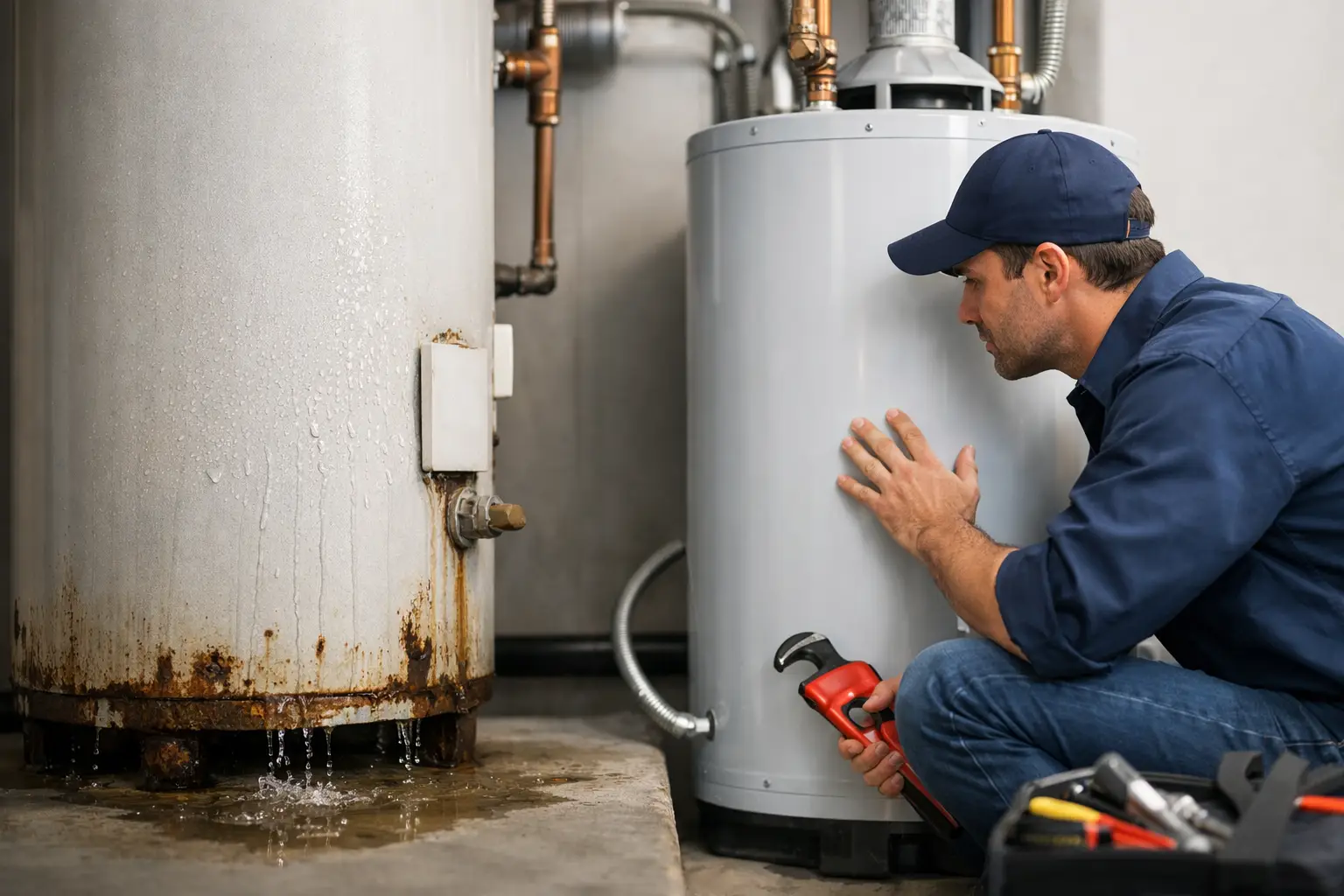
Condensation can occur in some situations, so moisture near a water heater does not automatically mean the tank has failed. But steady pooling, drips from the tank body, or water collecting beneath the unit deserves quick attention.
A leak from a fitting, valve, or connected pipe may be repairable. A leak coming through the tank itself is different. Internal corrosion can create small openings in the metal, and those openings do not heal. A tank leak can worsen quickly and may cause significant damage to flooring, walls, stored belongings, or nearby equipment.
3. Your Hot Water Has a Rusty or Metallic Color
Brown, reddish, or rusty-looking water can point to corrosion somewhere in the plumbing system. If discoloration appears only when using hot water, the water heater is a likely source.
Sometimes replacing a deteriorated anode rod can help protect a tank that is otherwise in good condition. However, if the tank lining is already breaking down, replacement may be the safer answer. A technician can help identify whether the issue is limited to a serviceable part or signals internal tank corrosion.
4. Hot Water Runs Out Much Faster Than It Used To
If your household has not changed but everyone is suddenly racing through showers, your water heater may have a performance problem. Sediment buildup inside a tank can take up space and reduce heating efficiency. A failing heating element or burner-related problem can also leave you with less available hot water.
In some cases, flushing the tank or repairing a component restores performance. In others, especially with an aging unit, reduced capacity is a sign that replacement will provide a more dependable result. This is also a good time to reassess sizing. A unit that was adequate years ago may not meet the needs of a growing family, frequent guests, or a new soaking tub.
5. You Hear Popping, Rumbling, or Banging Sounds
A quiet hum or normal operating sound is usually nothing to worry about. Loud popping, rumbling, or banging can indicate hardened sediment at the bottom of a tank. The heater has to work harder to heat water through that buildup, which can reduce efficiency and place extra strain on the system.
A professional flush may help when the buildup is caught early. Heavy sediment that has been present for years can be more difficult to remove, and an older tank may remain at risk even after service. Do not ignore new or increasingly loud noises, especially when they occur alongside inconsistent hot water or rising utility costs.
6. Repairs Are Becoming More Frequent
One repair does not mean it is time for a new water heater. Even a reliable system may eventually need a valve, thermostat, or ignition-related repair. The concern is a pattern of breakdowns.
If you have called for service multiple times within a short period, ask for a clear comparison between the immediate repair and replacement options. A transparent estimate should explain what is wrong now, whether other aging components may be affected soon, and what each path is likely to cost. That information makes it easier to choose based on value, not pressure.
7. Utility Costs Are Rising Without a Clear Reason
Water heating is a meaningful part of a home’s energy use. An aging water heater can lose efficiency because of sediment, worn components, poor combustion performance, or heat loss from the tank. If your energy bills are increasing and your household habits have stayed about the same, the water heater deserves a closer look.
Replacement is not always the answer. A repair or maintenance visit may identify a correctable efficiency issue. But when an older unit is working harder to deliver less hot water, a newer, properly sized system can offer more predictable performance.
8. Your Household’s Needs Have Changed
A water heater can be mechanically sound and still be the wrong fit for the home. Maybe more people now live in the house, someone takes longer showers, or morning demand has increased because several bathrooms are used at once. You may be tired of waiting for a tank to recover between loads of laundry and showers.
When replacement time arrives, consider more than simply installing the same size unit. A plumbing professional can evaluate your household’s hot-water demand, fuel source, available space, venting, and budget. The goal is enough hot water when you need it, without paying for more capacity than your home requires.
Tank or Tankless: What Changes the Decision?
A conventional tank water heater stores a set amount of heated water and is often a straightforward replacement choice for homes with existing tank installations. It can be a practical option when you want predictable upfront costs and familiar operation.
A tankless water heater heats water as it flows, which can provide a continuous supply when it is correctly sized and installed. It may be appealing for households that regularly run out of hot water or want to reclaim floor space. The trade-off is that installation requirements and upfront costs can be higher, particularly if changes to gas supply, venting, electrical service, or plumbing are needed.
Neither option is automatically better for every household. The best choice depends on usage patterns, the home’s existing setup, and how long you plan to stay in the home. A professional assessment helps prevent the common mistake of selecting equipment based only on advertised capacity or price.
What to Do If You Think Your Water Heater Is Failing
If you see active leaking, smell gas near a gas-fired water heater, notice water near electrical connections, or hear unusual sounds paired with a leak, do not wait to get the system checked. Avoid trying to dismantle the unit yourself. Water heaters combine pressurized water, high temperatures, and either electricity or fuel connections, so small problems can become safety concerns.
For less urgent concerns, schedule an inspection before the system quits completely. A technician can identify the source of the problem, check for corrosion and sediment, assess the condition of safety components, and explain whether repair or replacement is the better value. Delta Heating, Cooling & Plumbing provides clear options so homeowners can make an informed decision without guessing.
A water heater replacement is easiest when it is planned, sized correctly, and completed before a failing tank turns into a household emergency. If your unit is aging or showing any of these warning signs, getting answers now can protect your home and keep hot water available when your family needs it.