A burst supply line can release gallons of water in minutes. When water is running across a bathroom floor, soaking a cabinet, or dripping through a ceiling, the first repair is not a wrench or a bucket – it is stopping the flow. This guide to emergency plumbing shutoffs will help you act quickly, avoid common mistakes, and give a plumbing professional a safer starting point when repairs are needed.
Why Knowing Your Shutoffs Matters
Water damage moves beyond the original leak fast. It can ruin flooring, swell cabinets, stain drywall, damage insulation, and create conditions where mold can develop. In many cases, shutting off water promptly limits a repair to one failed hose, valve, or fixture instead of a larger restoration project.
Every homeowner should know two kinds of shutoffs: the main water shutoff for the entire house and local fixture shutoffs for individual toilets, sinks, appliances, and water heaters. Local shutoffs are usually the better first choice because they keep water available elsewhere in the home. But if you cannot stop the leak at the fixture, or water is coming from an unknown location, turn off the main valve without hesitation.
This is especially useful in homes with older plumbing. Valves that have not been touched in years can be difficult to operate, and small leaks may remain hidden until a line fails under pressure. A few minutes of preparation now can prevent a stressful scramble later.
Find the Main Water Shutoff Before an Emergency
The main water shutoff controls the cold-water supply entering your home. Its location varies by house age, construction style, and whether the home is connected to a municipal water system or a private well.
In many North Carolina homes, look near the water heater, in a garage, utility room, crawlspace, basement, or an exterior wall where the water line enters the house. It may be close to the water meter, but do not assume the meter-side valve is yours to use. Some meter equipment belongs to the utility provider, and operating the wrong valve can create another problem.
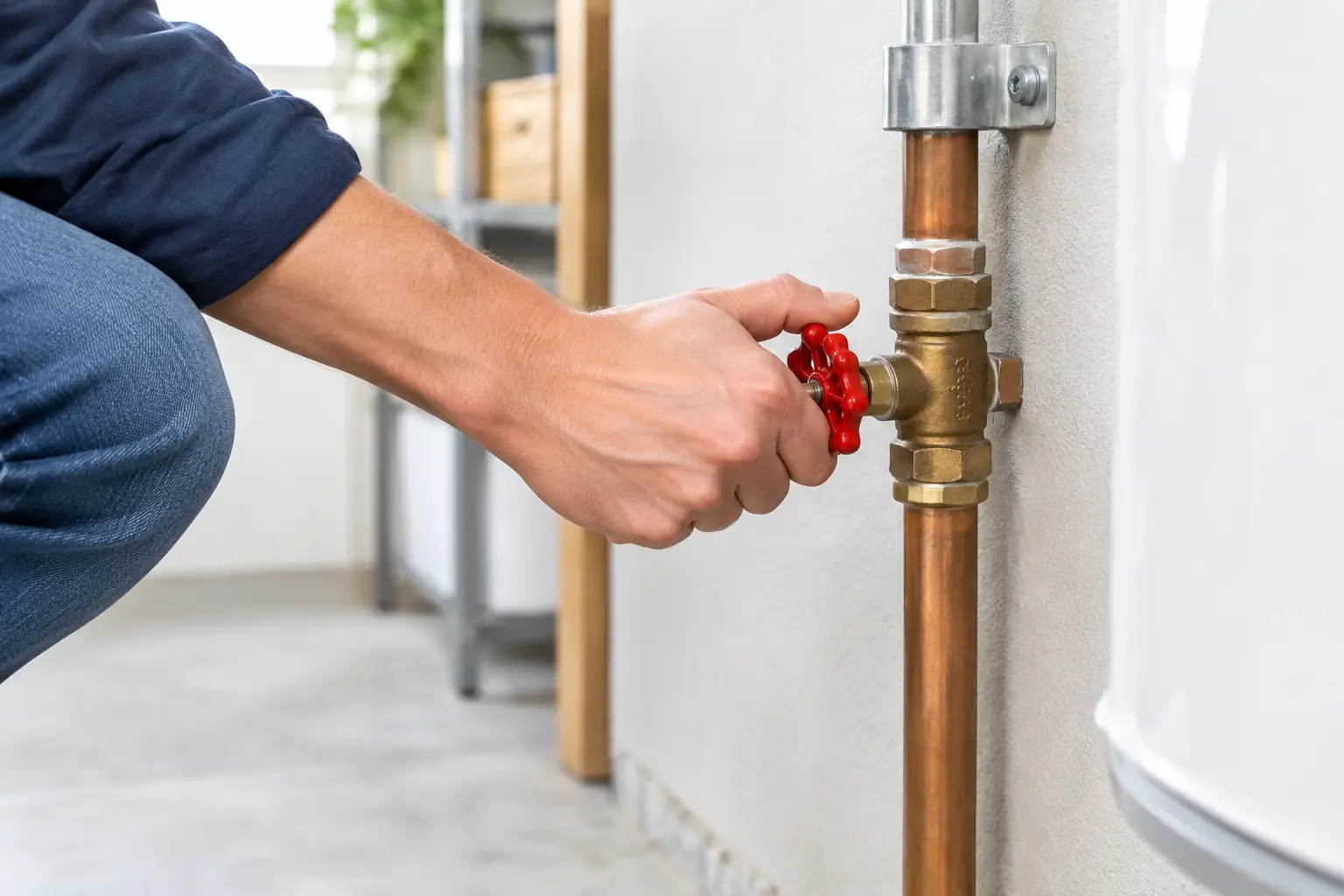
A main shutoff often has either a round wheel handle or a straight lever. Turn a wheel clockwise until it stops. Move a lever-style ball valve a quarter turn so the handle sits perpendicular to the pipe. If the handle is parallel with the pipe, the valve is typically open.
Once you think the valve is off, open a cold-water faucet at the lowest practical point in the home, such as a first-floor sink. Water may continue to run briefly as the lines drain, but the flow should stop. If it does not, the valve may not be fully closed, may have failed internally, or may not be the main shutoff.
Do not force a corroded or stuck valve. Excessive pressure can break the handle, crack a fitting, or start a leak where there was not one before. If the valve will not move and water is actively leaking, call for emergency plumbing help and focus on containing water safely.
Mark It and Make It Easy to Reach
A shutoff valve is only helpful if everyone responsible for the home can find it. Clear away storage, add a simple label if needed, and show household members where it is located. Keep a flashlight nearby if the valve is in a dark utility area or crawlspace.
It is also smart to practice turning the valve gently once or twice a year. This can reveal a stiff valve before it becomes urgent. If it drips around the stem, does not fully stop water, or feels fragile, schedule repair or replacement rather than waiting for an emergency.
Use Local Shutoffs When the Leak Is Isolated
Most plumbing fixtures have a dedicated stop valve. These small valves allow you to shut down one fixture while the rest of the home remains in service. They are commonly found under sinks, behind toilets, near washing machines, and at the water heater.
For a toilet leak, look behind the bowl near the floor. Turn the small valve clockwise to stop the incoming water. If the toilet is overflowing, remove the tank lid and lift the float or flapper mechanism only as a temporary measure while you close the valve. Do not keep flushing to test whether the problem has gone away.
For a sink, the hot and cold shutoffs are usually inside the cabinet below. If a supply hose bursts or a faucet will not stop running, close the appropriate valve. If you cannot tell whether the hot or cold side is involved, close both.
Washing machine hoses deserve special attention. They are under constant water pressure and can fail suddenly, particularly as they age. The hot and cold valves are usually in a recessed box behind the machine. If a hose is leaking, shut off both supplies, unplug the washer only if the area is dry and safe, and avoid pulling the appliance away from the wall while water is present.
Water heater shutoffs require more caution. The cold-water supply valve is generally located on the line above the unit. Turning it off can help with a leak on the water heater or its nearby connections. However, do not shut off a water heater and then leave its energy source operating without professional guidance. A leaking water heater, pooling water around electrical connections, or a damaged gas line calls for prompt professional service.
What to Do Immediately After You Shut Off the Water
Stopping the water is the priority, but your next steps matter too. First, protect people from electrical hazards. If water is near outlets, power strips, appliances, or electrical panels, do not step into the area or touch electrical equipment. If you can safely access the home electrical panel from a dry location, turn off power to the affected area. Otherwise, wait for qualified help.
Next, contain what you can. Place buckets under slow drips, move rugs and valuables, and use towels to absorb standing water. Do not use a household vacuum on water unless it is specifically designed for wet pickup. If water has reached ceilings, watch for sagging drywall. A bulging ceiling can hold significant weight and should be treated as a safety concern, not punctured casually.
Take a few photos after the water is off, especially if the source is visible. Pictures can help document the issue and give the technician useful context. Then open cabinet doors or access panels when it is safe to improve air circulation. The goal is not to perform a complete repair yourself. It is to reduce damage while the source of the problem is identified correctly.
When a Main Shutoff Is the Right Call
Use the main shutoff when water is pouring from a wall, ceiling, slab area, or pipe you cannot isolate. It is also the right move when a fixture shutoff will not close, a supply line has separated, or multiple fixtures are behaving unexpectedly.
For example, a sudden loss of water pressure combined with wet flooring can point to a supply-line leak. Water appearing under a kitchen cabinet may be a loose drain fitting, but a steady spray when the faucet is off is more likely a pressurized supply issue. A drain leak may stop when nobody uses the fixture; a supply leak often continues until a valve is closed.
If sewage or wastewater is backing up through a shower, tub, or floor drain, turning off the main water can prevent household use from adding more volume to the problem. Avoid running faucets, flushing toilets, or using the dishwasher and washing machine until the drain or sewer issue has been assessed.
Avoid These Emergency Plumbing Mistakes
Do not ignore a small leak because it seems manageable. A slow drip can signal a worn connection, a failing valve, or pressure problems that worsen over time. Likewise, do not rely on tape, sealant, or a temporary clamp as a permanent repair for a pressurized line.
Avoid pouring chemical drain cleaners into a drain that is fully blocked or backing up. These products may not clear the obstruction, can damage certain piping, and create a hazard for anyone working on the line afterward. For recurring clogs, slow drains throughout the home, or backups, professional camera diagnostics can identify whether the issue is inside a branch line, farther down the sewer line, or related to roots or pipe damage.
Finally, do not turn water back on until you understand what failed. If a fitting has come loose, a pipe has cracked, or an appliance connection is compromised, restoring pressure can restart the leak immediately. A licensed plumber can repair the source, test the system, and explain what was found before water service is restored.
Keep a Simple Emergency Plan
A practical emergency plan does not need to be complicated. Keep the main shutoff accessible, know the local shutoffs for high-risk fixtures, and save the contact information for a trusted residential plumbing provider. If you are leaving home for an extended trip, consider shutting off the main water supply if your home and water-heating setup allow for it safely. This can reduce the chance that an unnoticed leak continues for days.
For homeowners in Raleigh and surrounding communities, Delta Heating, Cooling & Plumbing can help with leak detection, failed shutoff valves, burst pipes, water heater issues, drain backups, and the repairs that follow a plumbing emergency. Clear explanations and prompt diagnosis matter when your home is on the line.
The best time to locate a shutoff valve is a calm afternoon, not the minute water starts spreading across the floor. Find yours, test it carefully, and make sure the people in your home know what to do.