
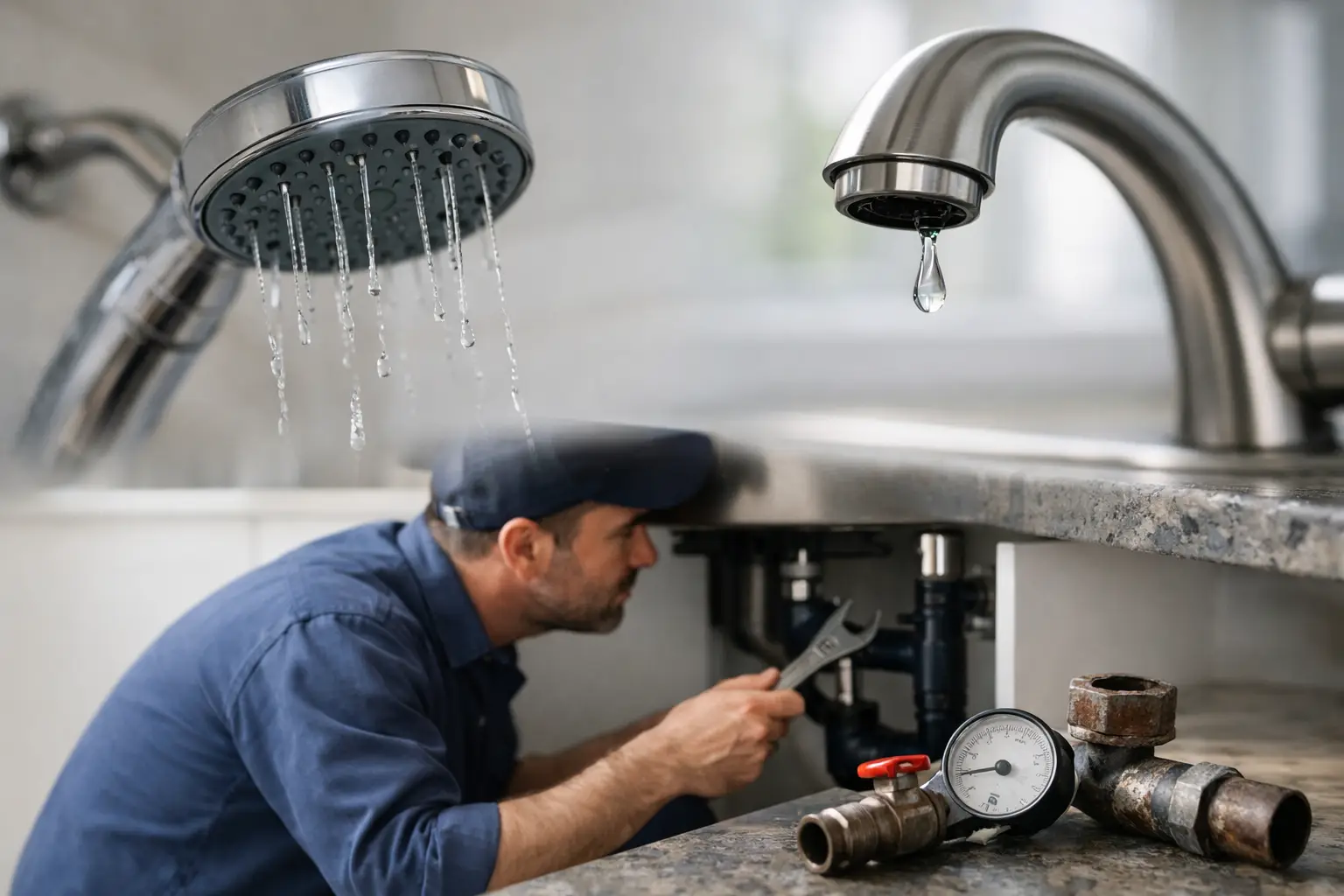
A shower that turns from steady to disappointing the moment someone starts the dishwasher is more than an everyday annoyance. The causes of low water pressure can range from a simple clogged faucet screen to a hidden water line leak that needs prompt attention. The first clue is whether the problem affects one fixture, the hot water only, or every tap in the house.
Start by Identifying Where Pressure Is Low
Water pressure and water flow are related, but they are not exactly the same. Pressure is the force pushing water through the pipes. Flow is the amount of water that actually reaches the fixture. A restriction inside a faucet, showerhead, filter, or pipe can make the water seem weak even when the home’s incoming pressure is normal.
Before assuming there is a major plumbing problem, compare a few fixtures. Turn on a cold-water faucet in the kitchen, a bathroom sink, and a tub faucet. Then check the same fixtures on the hot side. Notice whether the issue is limited to one location, one temperature, or the entire home. This simple check gives a plumber useful information and can help you avoid replacing a fixture when the real issue is elsewhere.
Causes of Low Water Pressure at One Fixture
When low pressure is isolated to a single faucet or shower, the cause is often close to the fixture itself. Mineral sediment, rust particles, and debris can collect in a faucet aerator or showerhead. This is especially common after plumbing repairs, water line work, or a disruption in the local water supply, when small particles can move through the pipes.
A homeowner can usually remove and rinse a faucet aerator if it is accessible and the fixture instructions allow it. Keep track of the small screens and washers as you take it apart. If the aerator is clean but the flow remains weak, the faucet cartridge, supply line, or shutoff valve may be restricted or failing.
Showerheads can also collect mineral buildup over time. Cleaning may improve flow, but it will not solve a worn mixing valve or an undersized supply line serving the bathroom. If several fixtures in the same bathroom have weak water flow, the issue may be in that bathroom’s branch line rather than the individual fixtures.
Partially Closed Valves Can Restrict Water
A partially closed valve is one of the more straightforward causes of low water pressure, but it is easy to overlook. Your home has a main shutoff valve, typically located near where the water service enters the home. Individual fixtures also have small shutoff valves underneath sinks and behind toilets.
A valve may be left partly closed after a repair, especially if it was difficult to operate or did not reopen fully. Older valves can corrode internally as well. The handle may appear open while the inside of the valve restricts water flow.
It is reasonable to check whether an accessible valve is fully open, but do not force a stuck or heavily corroded valve. A broken shutoff can quickly turn a minor pressure concern into an active leak. A plumbing technician can evaluate and replace a failing valve safely if needed.
Pressure Problems Throughout the House
If every fixture has low pressure, the source is more likely in the home’s main water supply, pressure-control equipment, or incoming water line. Homes that receive municipal water may occasionally experience temporary changes from street-side maintenance, high neighborhood demand, or a utility issue. Asking a nearby neighbor whether they have noticed the same change can be helpful.
If nearby homes have normal pressure, the issue is more likely on your property. A failing pressure-reducing valve can lower water pressure throughout the house or cause pressure to fluctuate. Not every home has this device, but it is common where incoming pressure needs to be regulated to protect plumbing fixtures and appliances.
A plumber can test the pressure at appropriate points in the system and determine whether the problem is incoming pressure, a restriction, or a malfunctioning control valve. This matters because adding a booster or replacing fixtures without diagnosis can leave the underlying problem unresolved.
Aging or Corroded Pipes
Older plumbing systems may have galvanized steel pipes that corrode from the inside. As corrosion and mineral scale build up, the opening inside the pipe becomes smaller. Water can still reach the fixture, but the available flow steadily decreases.
This type of restriction often develops gradually. You may first notice it at an upstairs bathroom, at a rarely used fixture, or whenever multiple fixtures run at once. Brownish water, frequent small leaks, and uneven pressure between rooms can also point to aging pipe concerns.
Pipe replacement is a larger project, so the right recommendation depends on the pipe material, the extent of the restriction, the home’s layout, and whether leaks are recurring. A clear diagnosis should identify the affected lines and explain whether a targeted repair or a more comprehensive replacement makes better long-term sense.
A Hidden Leak in the Water Line
A leak can reduce available pressure, particularly when it occurs on the main water line between the meter and the home. Unlike a dripping faucet, an underground or concealed leak may not be immediately visible. It can waste a significant amount of water while quietly damaging landscaping, a slab, walls, or flooring.
Watch for a sudden pressure drop, an unexplained rise in the water bill, wet spots in the yard, the sound of water moving when fixtures are off, or a water meter that continues to register use when no one is using water. These signs do not prove there is a leak, but they warrant professional leak detection.
Do not wait on a suspected main line leak simply because water is still coming from the faucets. Early diagnosis can limit water loss and property damage. Camera-assisted diagnostics and specialized leak-location equipment can help identify the issue without unnecessary digging or guesswork.
Why Hot Water Pressure May Be Lower
Low pressure on the hot side only usually points to a plumbing or water-heating issue rather than a city supply problem. Sediment can accumulate in a water heater, especially where water contains minerals. A failing shutoff valve, a restricted flex line, or buildup in hot-water pipes can also limit flow.
Start by comparing hot and cold water at more than one fixture. If cold water is strong everywhere but hot water is weak throughout the house, avoid repeatedly adjusting the water heater or taking apart connections yourself. Hot-water systems involve high temperatures, pressure, and components that require proper handling.
A technician can inspect the water heater connections, valves, distribution piping, and fixtures to isolate the restriction. In some cases, maintenance or a localized repair restores performance. In others, the age and condition of the equipment may make replacement the more reliable choice.
Homes With Wells Need a Different Check
For homes served by a private well, low pressure can involve the well pump, pressure tank, pressure switch, treatment equipment, or a clogged filter. A pump that runs more often than usual, pressure that rises and falls sharply, or sputtering faucets should be addressed promptly.
Replacing a filter may be appropriate if it is due for service, but a rapidly clogged filter can signal sediment or an issue farther upstream. Well systems should be evaluated as a complete system. Changing one component without testing the others can lead to repeat problems and unnecessary expense.
When to Call a Plumber Right Away
A gradual change at one faucet is usually less urgent than a sudden whole-house pressure loss. Request professional help promptly when low pressure appears without warning, follows a suspected leak, comes with discolored water, affects both hot and cold water, or prevents normal use of sinks, showers, or appliances.
It is also wise to schedule service if pressure fluctuates from strong to weak, pipes make unusual noises, or you have an older home with recurring leaks. These symptoms can point to a developing restriction or water line problem that will not improve on its own.
For Raleigh-area homeowners, Delta Heating, Cooling & Plumbing can diagnose low water pressure with a straightforward inspection, clear findings, and transparent repair options. The best next step is not to guess at the most expensive cause. It is to identify where the pressure changes, protect your home from a possible leak, and restore the dependable water flow your household needs.