A Raleigh summer can turn a small cooling problem into a miserable afternoon fast. If your system is blowing warm air, running constantly, leaking water, or making a sound it never made before, timely ac repair can protect both your comfort and your equipment. The goal is not to guess at the problem or wait for a complete breakdown. It is to get a clear diagnosis, understand your options, and make a repair decision that makes sense for your home.
Signs You May Need AC Repair
Not every air conditioning issue means the system is finished. Some problems are straightforward repairs, especially when they are caught early. The key is noticing a change in how your home feels or how the equipment behaves.
Your AC Is Running but the House Is Still Warm
An air conditioner that runs without lowering the indoor temperature may have an airflow issue, a thermostat problem, a dirty outdoor coil, a refrigerant-related concern, or a failing component. Start with the simple checks: confirm the thermostat is set to cool, replace a visibly dirty filter, and make sure supply vents are open and unobstructed.
If those steps do not help, schedule service. Continuing to run a struggling system can add wear to parts that may not have been the original problem.
Airflow Is Weak From Some or All Vents
Weak airflow often points to a clogged filter, blower motor trouble, a dirty evaporator coil, duct restrictions, or a failing capacitor. You may notice that rooms farthest from the indoor unit are uncomfortable first, but weak airflow throughout the home deserves attention.
Closing multiple vents to force more air into one room is rarely a reliable fix. It can interfere with system airflow and create pressure problems. A technician can determine whether the issue is inside the equipment, in the ductwork, or related to how air is being distributed through the home.
Your System Is Making New or Unusual Noises
A brief hum at startup is normal. Persistent rattling, buzzing, squealing, grinding, or banging is not. Loose panels can rattle, but other sounds may signal a worn motor part, electrical issue, compressor concern, or loose component.
Turn the system off if you hear loud grinding, repeated clicking without startup, or an electrical buzzing sound accompanied by a burning odor. Waiting on those symptoms can turn a targeted repair into a larger one.
Water Is Pooling Near the Indoor Unit
In North Carolina’s humid climate, your AC removes significant moisture from the air. That moisture has to drain properly. A clogged condensate line, damaged drain pan, or frozen coil can lead to water around the indoor equipment.
Do not ignore a small puddle just because the AC is still cooling. Water can damage ceilings, flooring, insulation, and nearby materials. A technician can clear the drain, identify the source of the overflow, and check for conditions that may cause it to happen again.
Your Energy Bills Rise Without a Clear Reason
Summer utility bills naturally increase when outdoor temperatures rise. But a sudden jump, especially when your cooling habits have not changed, can mean the system is working harder than it should. Dirty coils, airflow restrictions, aging electrical parts, duct leaks, or refrigerant issues can all reduce efficiency.
An inspection provides more useful information than simply comparing this month’s bill to last month’s. The right question is whether the equipment is delivering the cooling you are paying for.
What Happens During a Professional AC Repair Visit
A good repair visit should replace uncertainty with answers. Rather than swapping parts based on a symptom, a qualified technician should assess the system as a whole. That includes thermostat operation, airflow, electrical connections, safety controls, indoor and outdoor equipment performance, drainage, and the condition of key components.
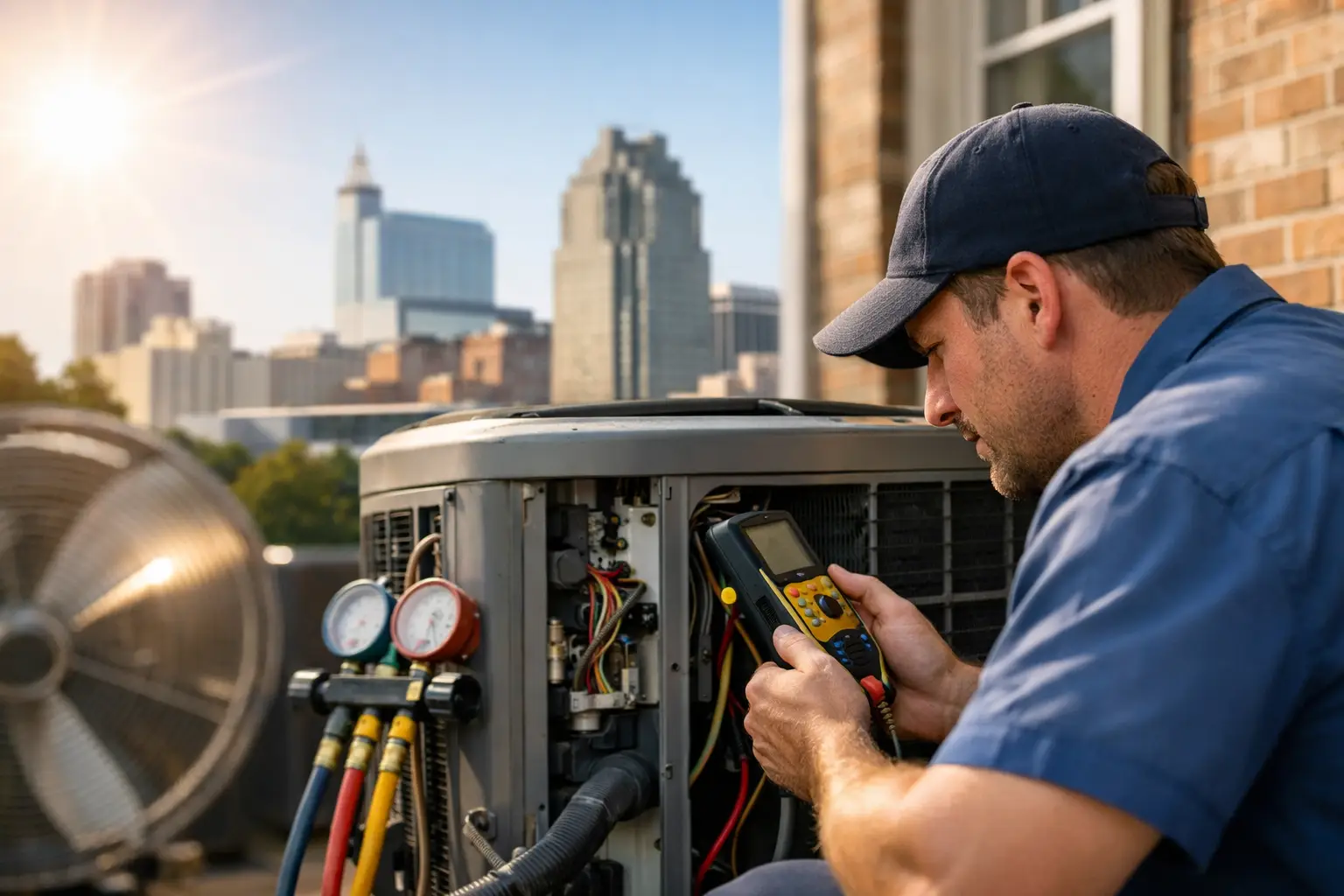
Advanced diagnostic equipment helps narrow down the cause, but the findings should still be explained in plain language. You should understand what failed, what may have contributed to the failure, what the repair involves, and what the cost will be before work begins.
Some repairs are relatively contained, such as replacing an electrical component, addressing a drain blockage, correcting a control issue, or restoring proper airflow. Other findings may reveal a more complicated problem. For example, a frozen coil might be caused by a dirty filter, but it can also be connected to an airflow issue or a refrigerant leak. Treating only the visible symptom may leave the underlying cause in place.
AC Repair or Replacement: How to Make the Call
When a major repair is recommended, homeowners often want a simple yes-or-no answer: fix it or replace it. The honest answer is that it depends. Age matters, but it should not be the only factor.
Consider the repair cost alongside the system’s overall condition, maintenance history, efficiency, comfort performance, and likelihood of future repairs. A newer system with a specific failed component is often worth repairing. An older system that has needed repeated service, cools unevenly, and now faces a major repair may be a better candidate for replacement.
It also helps to look beyond the immediate invoice. A replacement may improve energy use, humidity control, and reliability, but it requires a larger upfront investment. A repair may be the practical choice when the equipment is otherwise performing well or when a replacement is not the right financial move at the moment. Financing options can make an upgrade more manageable for some households, but the decision should still be based on the home’s needs rather than pressure.
If you are uncertain about a major recommendation, seek a second opinion. A reputable HVAC company should be willing to explain its findings and give you room to choose the path that fits your budget and plans for the home.
How to Avoid an Emergency AC Repair
Maintenance cannot prevent every failure. Electrical parts wear out, storms can affect equipment, and older systems eventually need more attention. Still, routine service is one of the best ways to reduce surprise breakdowns during the hottest stretch of the year.
Change filters regularly based on your filter type, household conditions, and manufacturer guidance. Homes with pets, allergy concerns, or heavy system use may need more frequent filter changes. Keep leaves, grass clippings, and stored items away from the outdoor unit so it can release heat properly. Never wash the indoor components or handle electrical repairs yourself.
A seasonal tune-up gives a technician the opportunity to check performance before the system is under peak demand. Small concerns such as weak electrical components, drainage buildup, or declining airflow are usually easier to address before they leave your family without cooling. A maintenance membership can also help homeowners keep those visits on schedule rather than trying to remember them during a busy season.
Choosing an AC Repair Company With Confidence
When your home is hot, the first available appointment can feel like the only thing that matters. Fast response is valuable, but clear communication matters too. Look for a company that employs trained, certified technicians, uses proper diagnostic tools, explains repair options without confusing jargon, and provides transparent pricing.
Ask whether the technician can show you what they found and explain the recommended next step. You should not have to approve a repair without knowing why it is needed. It is also reasonable to ask about repair warranties, maintenance recommendations, and whether another issue could be contributing to the failure.
For homeowners in Raleigh and nearby communities, Delta Heating, Cooling & Plumbing brings NATE-certified expertise, technology-enabled diagnostics, and a straightforward service experience to AC concerns large and small. When comfort changes suddenly, acting early gives you more options, more control over costs, and a better chance of restoring cool air before the next hot day settles in.