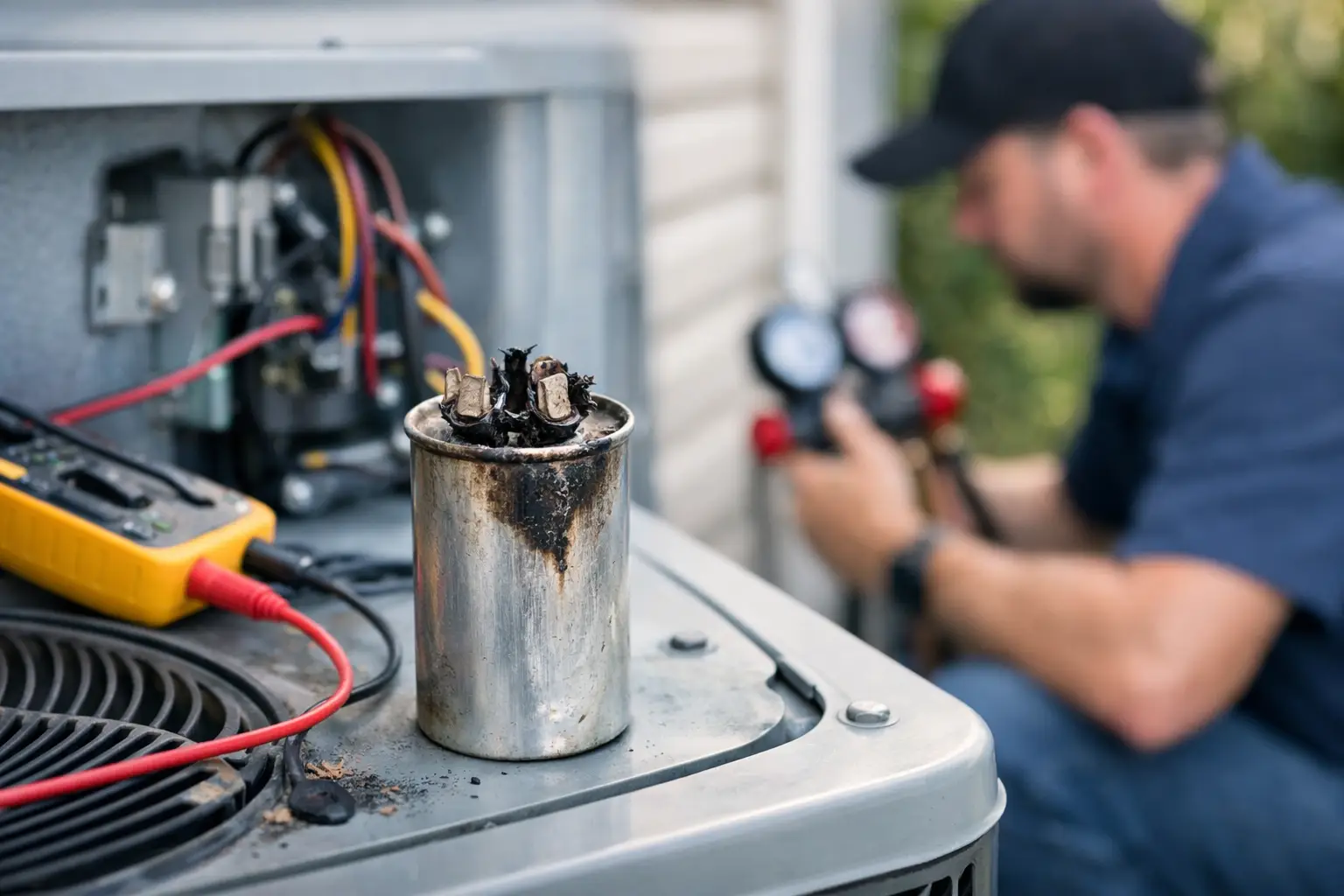
A hot North Carolina afternoon is a bad time to hear your outdoor AC unit hum without starting. That frustrating sound, especially when warm air is coming through the vents, can point to ac capacitor failure. A capacitor is a small electrical component, but when it fails, it can keep a much larger and more expensive part of your air conditioning system from doing its job.
For homeowners, the most useful next step is not guessing at the repair. It is recognizing the warning signs, protecting the system from further strain, and getting a qualified technician to identify the actual cause. Several AC problems can look alike, and a clear diagnosis can make the difference between a straightforward repair and unnecessary damage to a compressor or fan motor.
What an AC Capacitor Does
Your air conditioner relies on motors to move refrigerant through the system and pull outdoor air across the condenser coil. Those motors need an extra electrical boost to start and, in many systems, ongoing electrical support to run efficiently. That is the capacitor’s job.
Many residential systems use a dual-run capacitor in the outdoor unit. One side supports the compressor, while the other supports the condenser fan motor. Some equipment also uses a separate start capacitor that gives the compressor an added jolt during startup. When either type weakens or fails, the motor it supports may struggle, overheat, or stop running altogether.
A failed capacitor does not always mean the entire AC system is at the end of its life. Capacitors are wear items, particularly in Raleigh-area summers where outdoor equipment works hard through long stretches of heat and humidity. Still, the component should be tested and replaced correctly. The wrong capacitor rating or an improperly installed part can create more problems than it solves.
Common Signs of AC Capacitor Failure
A capacitor can lose capacity gradually, so the early symptoms may be intermittent. Your AC may start normally in the morning but have trouble during the hottest part of the day, when electrical and mechanical demand is highest.
Watch for these signs:
- The outdoor unit hums or clicks but the fan or compressor does not start.
- The condenser fan runs slowly, stops unexpectedly, or needs time to get moving.
- Your AC starts and shuts off more often than usual.
- Warm air blows indoors even though the thermostat is set to cool.
- The outdoor unit is unusually noisy, or your energy use rises without a clear explanation.
These symptoms are useful clues, but they are not a final diagnosis. A failing contactor, damaged wiring, weak fan motor, dirty coil, refrigerant issue, thermostat problem, or compressor concern can produce similar results. That is why professional testing matters. Replacing a capacitor based on symptoms alone may not solve the underlying problem.
Why Capacitors Fail in North Carolina Homes
Heat is one of the biggest reasons capacitors wear out. The electrical load inside the component produces heat on its own, and the outdoor cabinet adds more of it. When temperatures remain high day after day, the capacitor’s internal materials can deteriorate faster.
Age also matters. Capacitors have a limited service life, and a system that has operated through many cooling seasons may eventually need one replaced. A power surge, loose electrical connection, voltage fluctuations, or an overworked motor can shorten that timeline.
Restricted airflow can contribute as well. When leaves, grass clippings, cottonwood, or other debris collect around the outdoor unit, heat has a harder time escaping. A dirty condenser coil or an overgrown area around the equipment forces the system to work harder. The capacitor may not be the original cause, but it can become one of the parts affected by the extra strain.
It depends on the system, its age, and the condition of its motors. One failed capacitor may be an isolated repair. If the same part fails repeatedly, however, a technician should look beyond the capacitor for electrical issues, motor problems, airflow restrictions, or equipment that is operating outside normal conditions.
What to Do When Your AC Will Not Start
If your AC is not cooling and you suspect a capacitor issue, turn the thermostat to off rather than allowing the unit to repeatedly try to start. Repeated startup attempts can place significant stress on the compressor and other electrical components.
Check that the thermostat is set to cool and that the circuit breaker has not tripped. If a breaker has tripped, you can reset it once. If it trips again, leave it off and schedule service. A recurring breaker trip is a warning sign that needs professional attention.
Do not remove the outdoor unit’s access panel or try to handle the capacitor yourself. Capacitors can store an electrical charge even after power to the unit has been shut off. The repair also requires confirming the correct microfarad rating, voltage rating, wiring arrangement, and condition of related parts. This is not a safe place for a trial-and-error repair.
While you wait for service, close blinds or curtains on sunny windows, use ceiling fans to improve comfort, and avoid adding heat indoors with ovens or dryers if possible. If someone in the home is especially sensitive to heat, make arrangements to stay in a cooler location until the AC is restored.
How a Technician Diagnoses the Problem
A proper AC service visit should do more than swap a part. The technician will inspect the outdoor unit, verify electrical safety, and check whether the capacitor is within its required rating. Capacitors are measured in microfarads, and a reading outside the acceptable range confirms that the component has weakened or failed.
The technician should also inspect the contactor, wiring, compressor, fan motor, electrical connections, and overall operation of the system. This broader evaluation helps answer an important question: did the capacitor simply reach the end of its service life, or is another issue causing it to fail early?
Once the diagnosis is complete, you should receive a clear explanation of the recommended repair and pricing before work begins. If the system has other concerns, such as a struggling motor or a compressor drawing excessive electrical current, you can make an informed decision about whether a repair is the best path or whether it is time to consider larger equipment options.
Can You Prevent Another Capacitor Problem?
No maintenance plan can guarantee that an electrical part will never fail, but regular AC maintenance can reduce avoidable stress on the system. During a seasonal tune-up, a technician can test electrical components, tighten connections, inspect the condenser fan and compressor performance, clean the outdoor equipment as needed, and identify warning signs before a small concern becomes a no-cooling call.
Homeowners can help by keeping at least a couple of feet of open space around the outdoor unit, gently clearing away leaves and loose debris, and replacing indoor air filters on schedule. Avoid planting shrubs directly against the condenser or stacking items around it. The unit needs room to release heat.
If your AC has had repeated electrical repairs, inconsistent cooling, or frequent summer breakdowns, ask for a full system assessment. A repair may still be the practical choice, especially when the rest of the equipment is in good condition. In an older system with multiple problems, though, investing in a replacement can sometimes offer more dependable comfort and more predictable operating costs.
Get Clear Answers Before a Small Problem Grows
An AC that hums, short cycles, or blows warm air is asking for attention. Acting quickly can help protect the compressor, preserve indoor comfort, and avoid a more disruptive breakdown during the peak of summer. Delta Heating, Cooling & Plumbing can provide a careful diagnosis, explain what the system needs in plain language, and help you move forward with confidence. When your cooling system is struggling, a prompt professional evaluation is often the simplest way to get your home comfortable again.