A water heater decision often becomes urgent when the old unit starts leaking, runs cold during a shower, or simply cannot keep up with a busy household. When comparing tankless versus storage water heaters, the better choice depends less on which system is newer and more on how your family uses hot water, what your home can support, and what you want to spend upfront.
For many Raleigh-area homeowners, both options can be dependable. The right answer comes from matching the equipment to your home’s demand, plumbing layout, fuel source, and long-term plans.
Tankless Versus Storage Water Heaters: The Core Difference
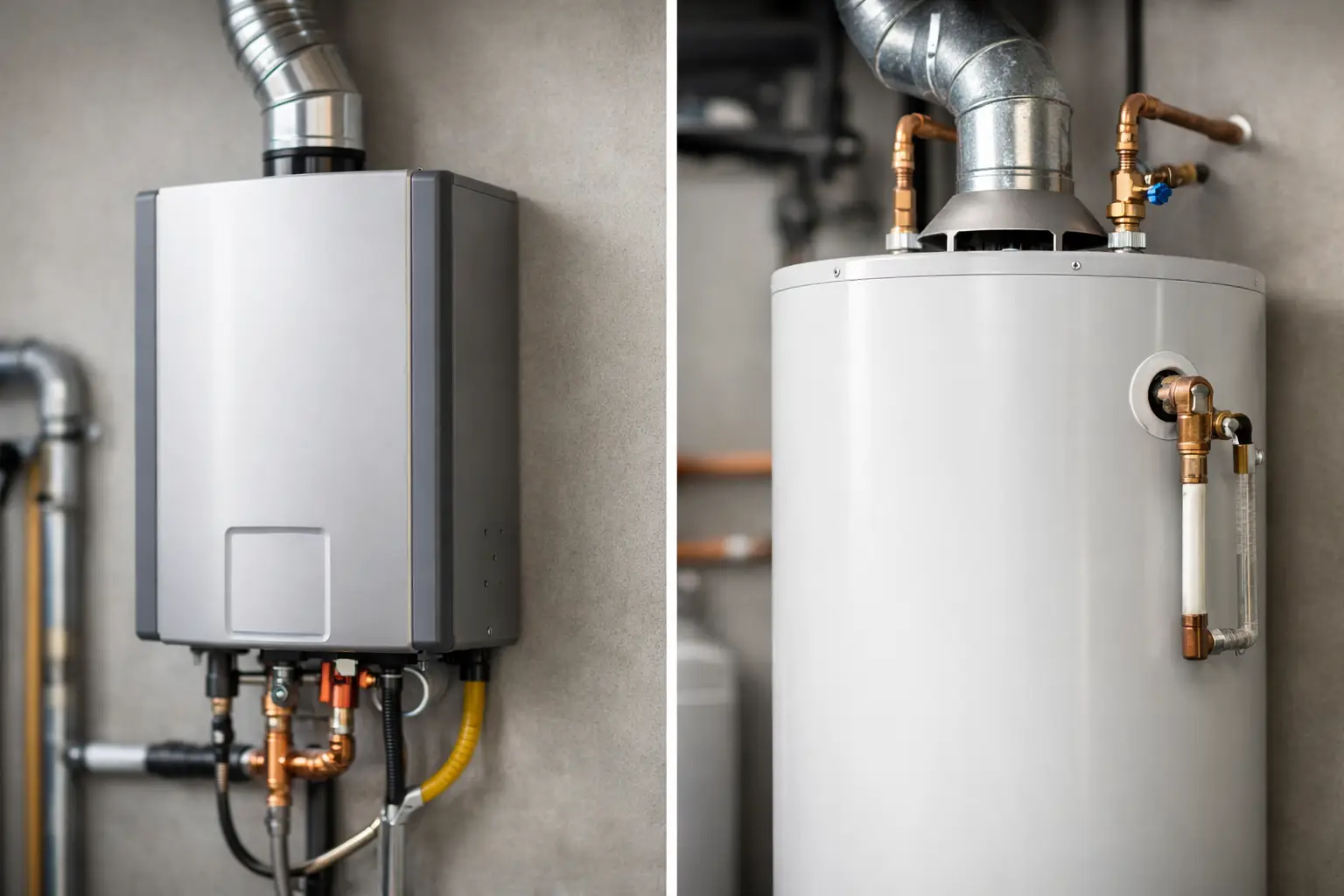
A conventional storage water heater keeps a set amount of water – commonly 30, 40, or 50 gallons – heated and ready in an insulated tank. When someone opens a hot-water faucet, the stored water moves through the plumbing system and is replaced with incoming cold water. Once the tank’s supply is depleted, the unit needs time to heat another full batch.
A tankless water heater heats water only when a fixture calls for it. Cold water passes through the unit’s heat exchanger, and a gas burner or electric element warms it as it flows. Because it does not store a limited volume of hot water, it can provide hot water continuously as long as demand stays within its rated flow capacity.
That distinction matters. A tank water heater has a finite supply but may handle several fixtures at once well when properly sized. A tankless unit does not run out of stored hot water, but it can be pushed beyond its capacity if too many showers, appliances, and faucets operate at the same time.
When a Storage Water Heater Is the Better Fit
Storage water heaters remain a practical choice for many homes. They usually cost less to purchase and install, especially when the replacement uses the same fuel type, location, and venting setup as the existing unit. If an aging tank has failed unexpectedly, a comparable replacement can often restore hot water with fewer changes to the home.
A tank unit can also work well for households with short periods of high demand. For example, a properly sized 40-gallon or 50-gallon gas water heater may comfortably serve a family completing back-to-back showers before school or work. Its recovery rate – how quickly it reheats water after use – is just as important as the gallon capacity.
Storage systems are also simpler in some homes with limited gas service or electrical capacity. An electric tankless water heater, in particular, can require major electrical upgrades because it draws significant power while heating water. That added work can change an affordable upgrade into a much larger project.
The trade-off is standby heat loss. Even excellent tank models use energy to keep stored water warm between uses. Tanks also occupy more floor space and generally have a shorter service life than tankless equipment. A leak from an aging tank can cause serious water damage, which is why homeowners should not ignore rust-colored water, moisture around the base, or a unit nearing the end of its expected lifespan.
Storage water heaters make sense when you value:
Lower initial cost, straightforward replacement, dependable performance during common household routines, and a familiar system that is easier to install in many existing homes.
When a Tankless Water Heater Is Worth It
A tankless water heater is often appealing for homeowners who want a longer-term upgrade. It creates hot water on demand (not an instant heater- just to be clear), which can reduce energy waste from continuously heating a tank. Gas tankless models are especially popular in homes that already have adequate natural gas or propane service.
The most noticeable benefit is duration. A household can take consecutive showers without waiting for a tank to recover, provided the unit is properly sized for the conditions. This can be a major advantage for families with multiple bathrooms, frequent guests, or schedules where several people need hot water within the same hour.
Tankless units are compact and commonly mount on a wall, freeing up utility-room or garage space. They also tend to last longer than standard tank water heaters when maintained properly. Many tankless systems have serviceable components, while a conventional leaking tank usually needs full replacement.
However, “endless hot water” does not mean unlimited hot-water output. A tankless unit is rated by gallons per minute. If two showers, a dishwasher, and a washing machine run simultaneously, the incoming water temperature and fixture flow rates determine whether the unit can keep up. During cooler North Carolina winter weather, incoming water is colder, so the heater has to work harder to raise it to the desired temperature.
A qualified technician should calculate the home’s peak demand rather than select a tankless unit based on bathroom count alone. Oversizing is not always necessary, but under sizing can lead to disappointing performance during busy mornings.
Installation Costs and Home Requirements
The upfront cost is often the deciding factor in tankless versus storage water heaters. A standard tank replacement is usually the less expensive path because the home already has a place for it and may already have compatible connections, drainage, and venting.
Tankless installation can require more preparation. Gas models may need a larger gas line, new venting, condensate drainage for high-efficiency equipment, and electrical power for controls and ignition. The final cost depends on the home’s current setup, the distance to exterior venting, local code requirements, and whether the existing gas service can support the additional load.
Electric tankless water heaters avoid combustion venting, but they may demand a larger electrical panel or multiple dedicated circuits. They can be a good fit in limited situations, yet whole-home electric tankless systems are not automatically the easiest option.
This is where an in-home assessment matters. A clear estimate should explain what equipment is included, what modifications are needed, and why. Homeowners should be cautious about comparing water heater prices without comparing installation scope. The lowest equipment price does not tell the full story if needed gas, electrical, venting, or plumbing work is left out.
Energy Efficiency and Operating Costs
Tankless systems are generally more efficient because they avoid standby heat loss. The actual monthly savings, however, vary with household habits. A family that uses large amounts of hot water may see meaningful savings, while a smaller household with modest usage may take longer to recover the higher installation cost.
Newer storage water heaters have improved insulation and efficiency ratings, so they are not automatically expensive to operate. High-efficiency gas tank models and heat pump water heaters can also be strong options for the right home. A heat pump unit is different from both a standard tank and a tankless model, but it may deserve consideration when efficiency is the main goal and the installation space is suitable.
Fuel prices matter as well. Natural gas, propane, and electricity have different operating costs, and rates can change over time. Instead of expecting one system to win in every situation, weigh expected energy use against installation cost, service needs, and the number of years you plan to stay in the home.
Maintenance and Expected Lifespan
Both styles need professional attention to perform safely and reliably. Conventional tank water heaters benefit from periodic flushing to help reduce sediment buildup. This is especially helpful where mineral content in the water can collect at the bottom of the tank, reducing efficiency and stressing components. The anode rod should also be inspected when appropriate because it helps protect the tank from internal corrosion.
Tankless units need descaling or flushing to remove mineral buildup from the heat exchanger. Skipping this service can reduce flow, affect efficiency, and shorten equipment life. Homes with hard water may benefit from water treatment that protects not only the water heater but also fixtures, appliances, and plumbing lines.
A conventional storage tank often lasts roughly 8 to 12 years, though maintenance, water quality, and usage affect the result. Tankless water heaters can often last 15 to 20 years with proper service. Their longer lifespan is a real advantage, but it should be weighed against the larger initial investment.
How to Choose for Your Household
Start with your actual hot-water routine. Consider how many bathrooms your home has, how many people live there, whether showers overlap, and which appliances draw hot water during peak periods. Also consider your current water heater’s fuel type, age, venting, available utility space, and service history.
Choose a storage water heater when you need a cost-conscious, proven replacement and your household’s demand fits a properly sized tank. Choose tankless when continuous hot water, longer service life, compact equipment, and potential energy savings justify the higher initial project cost.
If you are replacing a failed unit, do not feel pressured to pick the fastest option without understanding the trade-offs. A professional evaluation can show whether your home is ready for tankless equipment or whether a high-quality storage water heater is the smarter investment. Delta Heating, Cooling & Plumbing can help homeowners review those details with clear recommendations and transparent pricing.
The best water heater is the one that gives your household reliable hot water without surprises. Before making the final decision, ask for the expected capacity, required installation changes, maintenance schedule, and total project price in writing. That clarity makes it easier to choose with confidence.