A toilet that refills every few minutes can waste a surprising amount of water, even when there is no puddle on the floor. If you need to stop toilet from running continuously, the good news is that the problem is usually inside the tank and often comes down to one worn or misadjusted part. The key is identifying whether water is leaking from the tank into the bowl or whether the tank is overfilling.
Before taking anything apart, remove the tank lid carefully and set it on a towel. Porcelain lids can crack easily. Then flush the toilet once and watch what happens as the tank refills. That short observation can point you toward the right repair and help you avoid replacing parts that are still working.
Why a Toilet Keeps Running
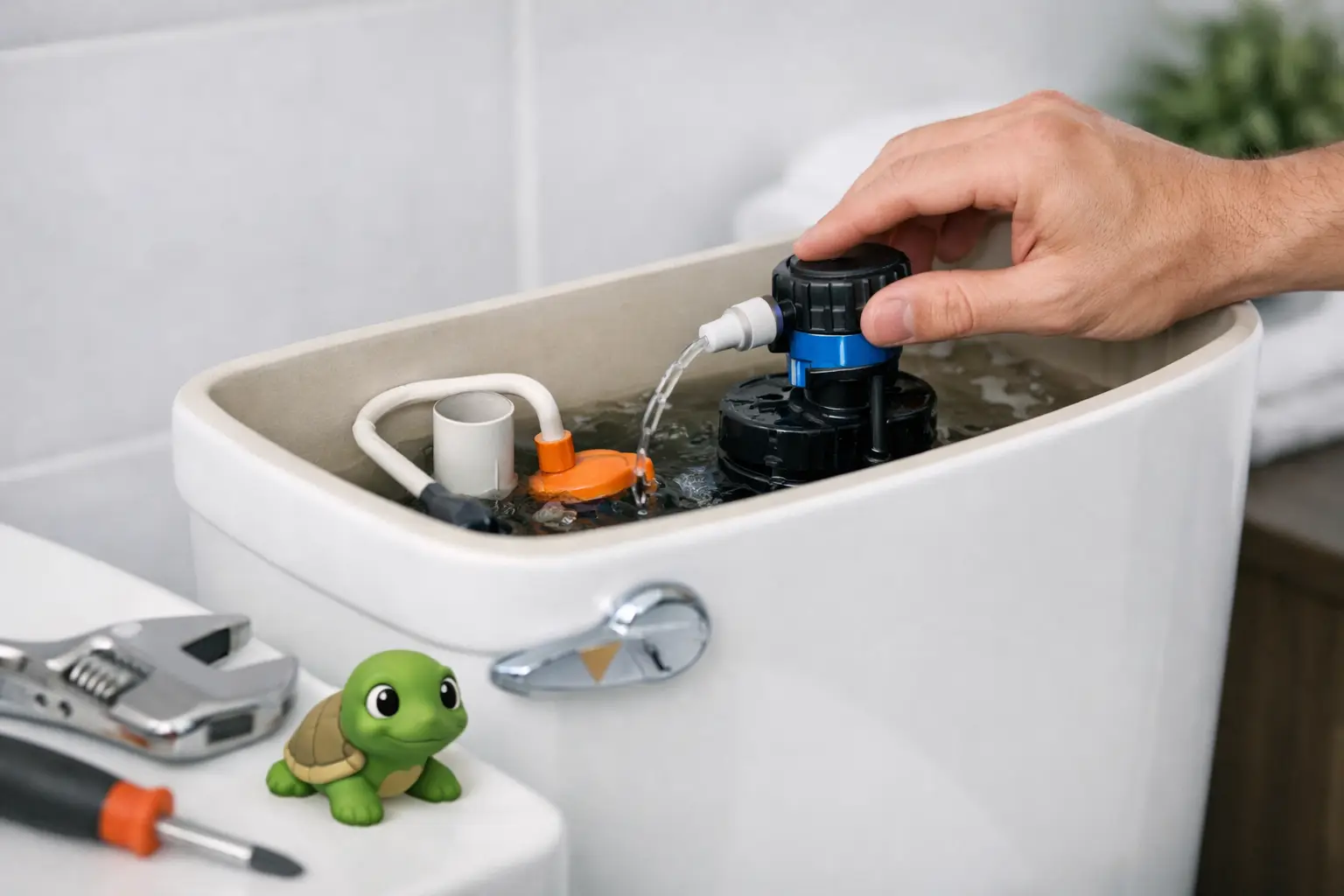
A standard toilet tank has a few parts working together: a fill valve that adds water after a flush, a float that tells the valve when to stop, a flapper that seals water inside the tank, and an overflow tube that prevents the tank from overflowing. When any of these components fails to seal, adjust, or move correctly, water continues moving.
Most continuous-running toilets have one of two issues. The flapper is allowing water to leak slowly into the bowl, so the fill valve repeatedly turns on to replace it. Or, the fill valve is letting the tank overfill, sending water down the overflow tube. Both problems raise your water bill, but they require different fixes.
The sound can offer a clue. A steady hissing sound often points to a fill valve or overflow issue. A toilet that goes quiet and then suddenly refills every several minutes is more likely losing water past the flapper.
How to Stop a Toilet From Running Continuously
Start by taking a close look inside the tank. You do not need advanced plumbing tools for this first check, but work slowly and avoid forcing old plastic parts. In homes around Raleigh and the surrounding area, mineral buildup, age, and frequent household use can all shorten the life of toilet components.
Check the flapper first
The flapper is the rubber or silicone seal at the bottom of the tank. It lifts when you flush, then should fall back into place to hold water in the tank. If it is warped, cracked, coated with buildup, or no longer sitting evenly on the flush valve opening, water can escape into the bowl.
Turn off the toilet’s shutoff valve, usually located on the wall or floor behind the toilet. Flush to empty most of the tank, then inspect the flapper. Make sure the chain is not tangled or too short. A chain with no slack can hold the flapper slightly open. Ideally, it should have a small amount of slack when the flapper is closed.
If the flapper looks worn, replacement is generally inexpensive and straightforward. Bring the old flapper with you when choosing a new one, or have a plumber match the correct size and style. Installing the wrong flapper may create another leak, even if it appears to fit.
Use a simple dye test
A flapper leak is not always visible. To confirm it, add a few drops of food coloring to the tank water after the toilet has finished filling. Do not flush. Wait 15 to 20 minutes, then look in the bowl.
If colored water appears in the bowl, the tank is leaking past the flapper or flush valve seat. If the bowl water stays clear but the tank is still overfilling, shift your attention to the fill valve and float. DO NOT LET FOOD COLORING sit in the bowl, if you see coloring go ahead and flush the toilet (more than once if needed to rid all coloring).
Look at the water level and overflow tube
The overflow tube is the open vertical tube near the center of the tank. Water should sit below its top edge when the tank has completed its refill cycle. If water is flowing into that tube, the tank is overfilling.
Many newer fill valves have an adjustment screw or sliding clip that changes the water level. Lowering the float may stop the water before it reaches the overflow tube. Make small adjustments, then flush and allow the tank to refill before making another change.
If the water keeps rising despite adjustment, the fill valve may be worn out. Sediment can interfere with its internal seal, especially in older plumbing systems. Sometimes cleaning the valve helps, but replacement is often the more dependable long-term solution.
Inspect the refill tube
The small flexible refill tube carries water from the fill valve into the overflow tube. It should be clipped above the opening, not pushed down inside it. When the tube sits too far into the overflow tube, it can create a siphoning effect that slowly pulls water from the tank.
Repositioning the refill tube is a quick fix, but it is an easy detail to miss. The tube should direct water into the overflow tube without forming a sealed connection.
A Few Problems That Look Like a Running Toilet
Not every toilet noise means the same thing. A toilet may make intermittent sounds because of water pressure changes, a sticking fill valve, or a leak somewhere else in the home. If the toilet refills only after another fixture runs, the issue may need a more careful diagnosis.
These signs can help narrow it down:
- Water trickling into the bowl when no one has flushed usually indicates a flapper or flush valve seal problem.
- Water spilling into the overflow tube points to a fill valve or float adjustment issue.
- A handle that sticks or does not return fully may keep tension on the chain and prevent the flapper from sealing.
- Rusted bolts, a cracked tank, or water around the toilet base call for professional attention rather than a quick internal adjustment.
Do not ignore water at the base of the toilet. A running toilet inside the tank is usually a water-waste issue, but water outside the toilet can damage flooring, subflooring, and nearby walls.
When a DIY Repair Makes Sense
Replacing a flapper, shortening an overly tight chain, or adjusting a float can be reasonable homeowner repairs when the parts are accessible and the toilet is otherwise in good condition. Turn off the local water valve first, keep a towel nearby, and test several flushes after the repair. A toilet should fill, stop cleanly, and remain quiet.
There are trade-offs to consider. A low-cost universal repair part may work temporarily, but toilets vary in flush valve size and internal configuration. If the toilet is older, has recurring problems, or needs multiple new parts, a professional repair can prevent repeat trips to the hardware store and continued water loss.
Avoid placing chemical cleaning tablets inside the tank unless the toilet manufacturer specifically allows them. Some products can deteriorate rubber seals and plastic components over time, causing the same running problem you are trying to solve.
When to Call a Plumber
Call a plumbing professional if you have replaced the flapper and adjusted the water level but the toilet still runs. A damaged flush valve seat, faulty fill valve, cracked overflow tube, or internal tank component may be the real cause. These repairs can require removing the tank, replacing multiple parts, or checking for less obvious plumbing issues.
Professional service is also the better choice if the shutoff valve will not close, the toilet is leaking onto the floor, or you are unsure whether the water is coming from the tank, supply line, or base. The goal is not simply to quiet the noise. It is to make sure the toilet seals correctly, uses water properly, and does not create hidden damage.
Delta Heating, Cooling & Plumbing can inspect a running toilet, explain what has failed, and provide a clear repair recommendation before work begins. For homeowners, that means less guessing and a faster path back to a quiet bathroom.
A toilet should be one of the simplest fixtures in your home: flush, refill, and stop. If yours keeps cycling, shut off the water when needed to limit waste, then address the small problem before it becomes an expensive one.