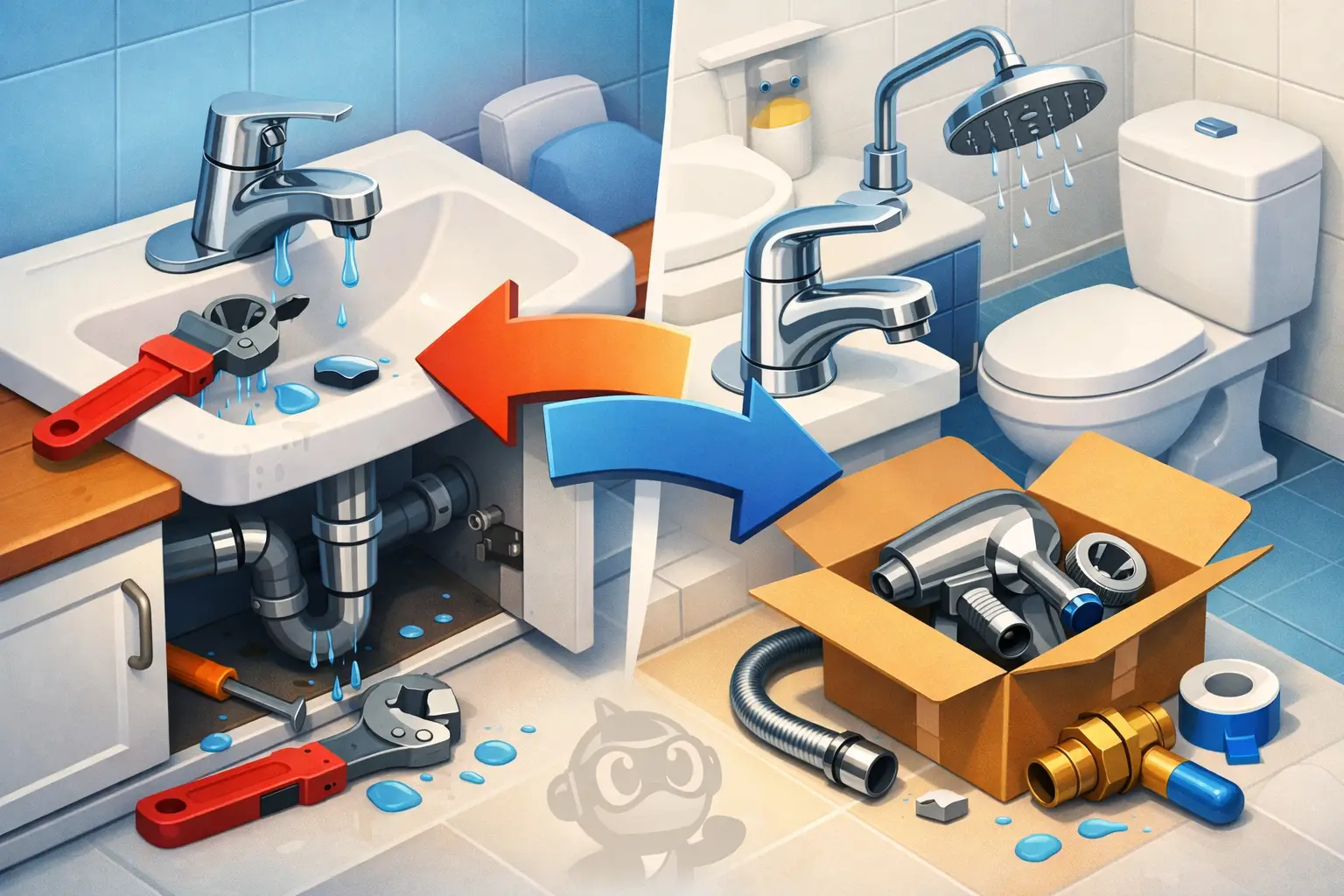
A dripping faucet can waste far more than water. Left alone, the constant moisture can stain a sink, damage cabinetry, encourage mildew, and turn a small plumbing fixture repair into a larger home repair. The same is true of a toilet that runs between flushes, a shower valve that will not hold its temperature, or a loose fixture that allows water to work behind the wall.
For homeowners, the question is usually not whether a fixture needs attention. It is whether a repair will provide a lasting solution or whether replacement makes better financial sense. The answer depends on the fixture’s age, condition, installation, and the source of the problem.
What Counts as a Plumbing Fixture Repair?
Plumbing fixtures are the visible parts of your home’s water system: faucets, sinks, toilets, showers, tubs, garbage disposals, and the valves and connections that help them work. A fixture issue may be isolated to one worn component, or it can be a signal of a hidden plumbing concern.
A faucet may drip because of a worn internal seal. A toilet may run because a fill valve or flapper has reached the end of its service life. Those are often straightforward repairs. But low water pressure at several fixtures, water appearing beneath a vanity, or recurring drain backups can point to a larger issue involving supply lines, drain piping, or a blockage farther down the system.
That distinction matters. Replacing a faucet will not solve a corroded shutoff valve. Tightening a loose toilet will not fix a failed wax ring or damage to the flooring below it. A professional diagnosis helps ensure the repair addresses the actual source of the trouble, not just the symptom you can see.
Signs a Fixture Needs Prompt Attention
Some plumbing problems can wait for a convenient appointment. Others deserve a faster response because water damage can spread quietly. Keep an eye on changes that happen suddenly, especially in bathrooms, kitchens, and laundry areas where fixtures see daily use.
A fixture should be checked promptly when you notice water pooling under a sink, around a toilet base, or near a tub. Water stains on a ceiling below a bathroom are another clear warning that a leak may be occurring behind a wall or beneath the floor. A musty odor, soft flooring, swollen cabinet panels, or peeling caulk can also indicate ongoing moisture exposure.
Pay attention to performance problems, too. A toilet that needs to be flushed twice, a faucet that squeals or sputters, a shower that swings from hot to cold, or a sink that drains slowly every week is telling you something is not working correctly. These issues are not always emergencies, but they rarely improve on their own.
If water is actively flowing where it should not, turn off the nearby fixture shutoff valve if it is safe to do so. For a toilet, that valve is typically behind or beside the fixture. For a sink, there are usually hot and cold shutoff valves in the cabinet. Then arrange for professional service before using the fixture again.
When Repair Is Usually the Better Choice
Repair is often practical when the fixture itself is in good shape and the issue is confined to a serviceable part. This is common with newer fixtures and with quality fixtures that have been maintained well.
A dripping faucet may need a cartridge, washer, O-ring, or valve seat repair. A running toilet may need a new flapper, fill valve, handle assembly, or flush valve component. A garbage disposal that hums but does not grind may have a jam or a reset issue, although a technician should determine whether the unit has suffered motor damage before assuming a simple fix.
Shower and tub repairs can be more involved because the valve is often located behind finished walls. Still, a technician may be able to replace an internal cartridge or repair a trim component without opening the wall. That can make repair a sensible choice when the valve body and surrounding plumbing are sound.
The key is longevity. A repair is worthwhile when it restores dependable operation without creating a pattern of repeat service calls. If one affordable component has failed after years of normal use, replacing that part is usually reasonable. If several parts are worn, the fixture leaks intermittently, or replacement components are difficult to obtain, the calculation changes.
When Replacing the Fixture Makes More Sense
Replacement is not always about appearance. It can be the more responsible option when corrosion, repeated leaks, cracked porcelain, failing internal parts, or outdated connections make a reliable repair unlikely.
A toilet with a cracked tank or bowl should be replaced. Even a small crack can worsen without warning and lead to significant water damage. A faucet that has been repaired repeatedly may also be due for replacement, especially if its finish is deteriorating, handles are loose, or replacement parts are no longer readily available.
Older shower valves deserve careful consideration. If the valve has recurring temperature-control problems, leaks behind the wall, or lacks the safety and performance features homeowners now expect, upgrading the valve during a bathroom project can avoid future disruption. The trade-off is that replacement may require access behind the wall, which can add labor and finish repair costs.
It also makes sense to replace a fixture when you are already addressing related work. For example, if a vanity is being replaced after water damage or a bathroom is being renovated, installing a new faucet or toilet at the same time can prevent paying for separate visits and duplicate labor later.
Common Fixture Problems and What They May Mean
Faucet Drips, Leaks, and Low Pressure
A drip from the spout usually points to a worn internal component. Water under the sink may come from supply connections, the drain assembly, the faucet base, or a failing shutoff valve. Low flow from one faucet could be caused by a clogged aerator, but low pressure throughout the home requires a broader diagnosis.
Do not rely on repeated tightening to solve a leak. Over-tightening fittings can damage threads, crack a component, or make a future repair harder. A technician can identify whether the leak is coming from a replaceable part or from the fixture body itself.
Toilets That Run, Rock, or Leak
A running toilet can add a surprising amount to a water bill. Often, the issue is inside the tank. But water around the base, a toilet that rocks when used, or a sewer-like odor in the bathroom may indicate a failed seal or a problem at the floor connection.
Avoid using harsh drain chemicals in a toilet. They do not fix a mechanical toilet problem and can damage plumbing components. If the toilet is backing up repeatedly, the problem may be in the drain line rather than the fixture.
Shower and Tub Temperature Issues
A shower that will not get hot enough, suddenly becomes too hot, or loses pressure may have a worn cartridge, mineral buildup, a valve issue, or a supply-side problem. Because shower valves affect comfort and safety, inconsistent temperature is worth addressing early.
In Raleigh-area homes, mineral deposits and normal wear can affect fixture performance over time. A professional can test the fixture, inspect accessible connections, and explain whether a targeted repair or a valve replacement offers better value.
Why Professional Diagnosis Protects Your Home
Fixture repairs look simple from the outside, but the important connections are often hidden in cabinets, walls, and floors. An experienced plumber can isolate the water source, evaluate shutoff valves and supply lines, inspect drains, and check for evidence of concealed moisture before recommending work.
That approach is especially valuable when the problem keeps returning. A recurring sink leak may be related to movement in the drain assembly. Repeated clogs may call for drain cleaning or camera-assisted diagnostics rather than another quick fix at the fixture. A technician should explain what was found, what needs to be repaired now, and what can be monitored.
Clear pricing also matters. Before work begins, homeowners should understand the recommended repair, the expected outcome, and whether replacement is likely to save money over the life of the fixture. A second opinion can be helpful when a major replacement is proposed or when the diagnosis does not match the symptoms you have seen.
Small Habits That Help Fixtures Last Longer
Use fixtures gently, and deal with small changes before they become damaging leaks. Do not hang heavy items from faucet handles or shower trim. Keep hair and debris out of drains, avoid pouring grease into kitchen sinks, and do not use chemical drain cleaners as a routine fix.
It is also wise to occasionally look inside sink cabinets and around toilet bases for moisture. Knowing where your main water shutoff is located can limit damage if a supply line or fixture suddenly leaks.
When a faucet drips, a toilet runs, or a shower stops performing the way it should, a timely inspection can protect your home and your budget. Delta Heating, Cooling & Plumbing can help homeowners identify the cause, review practical repair or replacement options, and get the fixture working reliably again.