A drain that keeps backing up is rarely just a simple clog. If the kitchen sink slows down again days after cleaning, multiple fixtures gurgle, or wastewater returns through a tub or shower drain, buildup may be coating the inside of the line. Hydro jetting for clogged drains uses pressurized water to clear that buildup more thoroughly than a basic cable machine can.
For many Raleigh-area homeowners, hydro jetting can restore normal drainage without jumping straight to pipe replacement. But it is not the right answer for every drain problem. A qualified plumber should inspect the line first, identify what is causing the blockage, and make sure the pipe can safely handle the service.
What Hydro Jetting Does for Clogged Drains
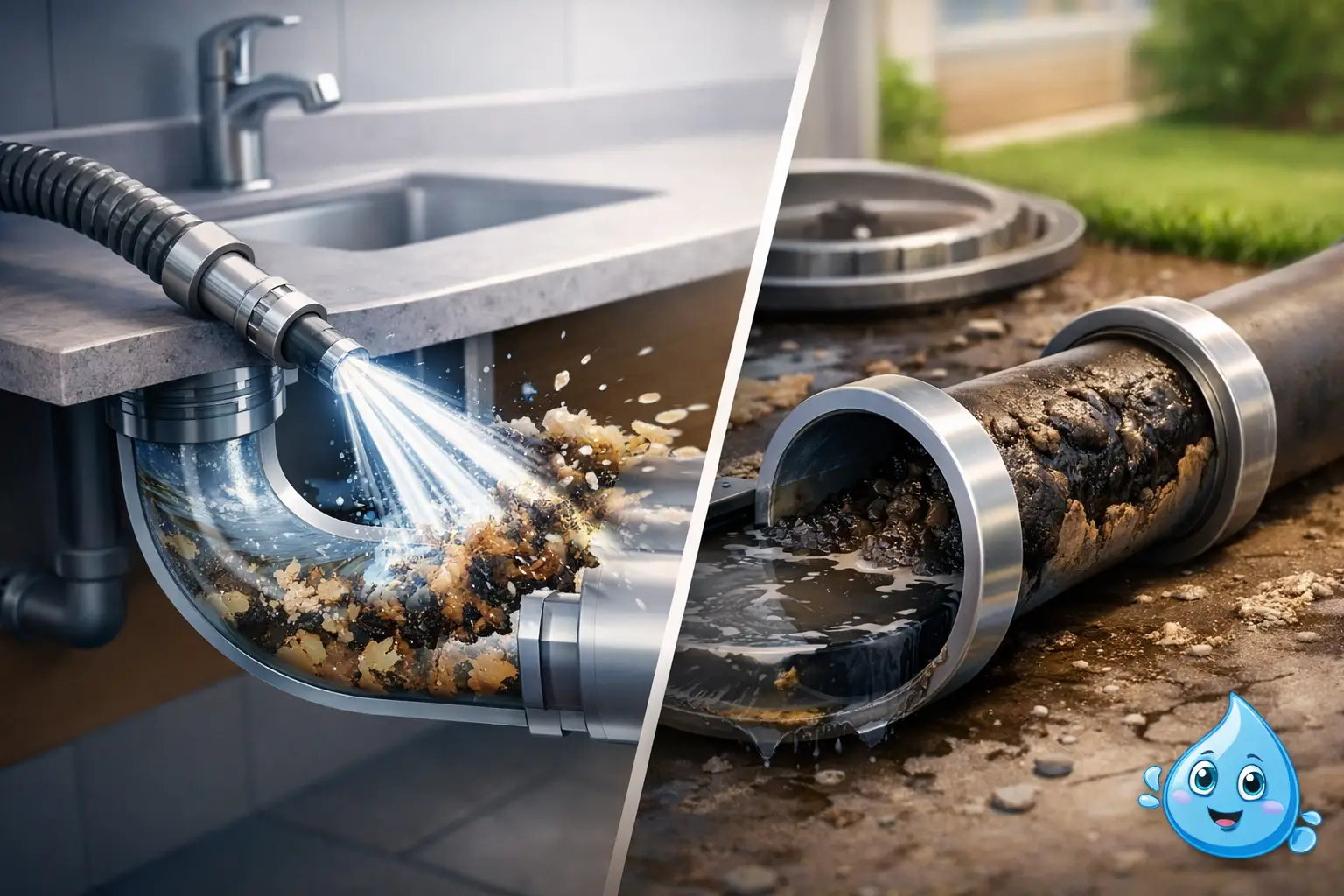
Hydro jetting uses a specialized hose and nozzle to send high-pressure water through a drain or sewer line. The nozzle moves through the pipe while directing water forward to break up an obstruction and backward to scour the pipe walls. This action flushes loosened debris toward the sewer connection.
A traditional drain cable is useful for punching through a localized blockage. It can create an opening through hair, paper, or a small root intrusion so water can begin moving again. Hydro jetting goes further by removing grease, soap residue, sludge, scale, and other material that has collected along the full interior of the pipe.
That difference matters when a drain seems fixed but repeatedly slows down. A small opening through a grease clog may get the sink draining today, yet leave enough buildup behind for the problem to return soon. When the pipe is structurally sound, hydro jetting can provide a much more complete cleaning.
When Hydro Jetting Is a Good Choice
The best candidates are recurring or widespread drainage problems, especially in high-use areas of a home. Kitchen lines often collect cooking grease, food residue, and detergent film over time. Bathroom drains can develop dense layers of soap, hair, and mineral deposits. Main sewer lines may also collect waste buildup or roots that enter through small openings.
Hydro jetting may be recommended when you notice several of these signs:
- The same drain clogs again after being cleared.
- Multiple drains are slow, gurgling, or backing up at once.
- Flushing a toilet causes water to rise in a nearby tub or shower.
- There are sewer-like odors around drains or outdoors near the sewer line.
- A camera inspection shows heavy buildup, debris, or root growth in the line.
A professional camera inspection is especially valuable before hydro jetting a main line. It lets the technician see the location and nature of the obstruction rather than guessing from surface symptoms. It can also reveal bellies in the pipe, separated joints, cracked sections, or severe root damage that need a different repair approach.
When Hydro Jetting May Not Be the Right Repair
High-pressure water is powerful, which is why the condition of the pipe matters. Hydro jetting should not be used blindly on an older or damaged line. If a camera shows a collapsed pipe, a major break, badly deteriorated material, or a displaced joint, cleaning the line will not correct the underlying problem.
In these cases, the better next step may be targeted repair, sewer line replacement, or another solution based on the inspection findings. Hydro jetting can remove roots that have entered a pipe, for example, but it cannot seal the opening that allowed the roots in. Without addressing the damaged area, roots are likely to grow back.
A minor bathroom sink clog may not need hydro jetting either. If the issue is a small hair blockage close to the drain, a standard drain cleaning service may be quicker and more cost-effective. The right service depends on the location, severity, and cause of the clog.
Why Chemical Drain Cleaners Are Not a Substitute
Store-bought chemical drain cleaners can be tempting when water is standing in the sink. The problem is that many formulas are harsh, inconsistent, and limited in what they can remove. They may burn a small path through soft buildup without clearing the larger blockage, and repeated use can be hard on certain pipes, seals, and fixtures.
Chemicals are also a concern when they sit in a completely blocked line. If the drain does not clear, that caustic liquid remains in the plumbing and creates a safety risk for anyone who later works on the drain. For a recurring clog or a suspected main line issue, professional diagnosis is safer than repeatedly adding chemicals.
Homeowners should also avoid using excessive force with a rental drain machine. Improper equipment use can damage a fixture, scratch a tub, or cause the cable to bind in a line. A trained technician has the equipment and experience to match the cleaning method to the pipe and blockage.
What to Expect During a Hydro Jetting Service
A professional visit begins with questions about what you have noticed: which fixtures are affected, when the problem started, whether there has been a previous backup, and whether work has been done on the plumbing before. This helps narrow down whether the issue is likely in a branch drain or the main sewer line.
The technician may then use a camera to inspect the pipe. The footage can confirm the blockage and help determine whether hydro jetting is appropriate. This step supports clear recommendations because you can see why a cleaning, repair, or replacement is being suggested.
If hydro jetting is the right solution, the technician selects the appropriate nozzle and water pressure for the line. Water is fed through the pipe to break up debris and wash the interior clean. Depending on the line’s condition and the amount of buildup, the technician may perform a follow-up camera inspection to confirm the obstruction has been removed and water can flow freely.
The process is designed to work inside the existing pipe, so there is usually no need to disturb finished floors, landscaping, or walls simply to remove buildup. However, access to a cleanout may be necessary, and the service can take longer when the line is large, heavily blocked, or difficult to reach.
How to Help Keep Drains Clear After Service
Hydro jetting removes accumulated debris, but everyday habits still affect how long drains stay clear. In the kitchen, let fats and cooking oils cool and dispose of them in the trash rather than rinsing them down the sink. Use a sink strainer to catch food particles, and avoid treating the garbage disposal as a solution for every leftover.
In bathrooms, use hair catchers in showers and tubs, and clean them regularly. Only toilet paper and human waste should be flushed. Wipes labeled as flushable, paper towels, cotton products, and similar items can create stubborn blockages even when they appear to go down easily.
If your home has mature trees near the sewer line, periodic camera inspections can be a smart preventive measure. Roots often grow toward moisture, and catching early intrusion may help you avoid a major backup at an inconvenient time.
Get a Clear Answer Before Approving the Work
When drains keep clogging, the goal is not just to get water moving for a few days. It is to identify the cause, protect your plumbing, and choose a repair that makes sense for your home. Delta Heating, Cooling & Plumbing uses camera-assisted diagnostics and professional drain cleaning equipment to give homeowners a clear explanation before work begins.
If you are dealing with repeat clogs, slow drains throughout the house, or a possible sewer backup, schedule a professional inspection rather than waiting for the next overflow. A timely look inside the line can turn a stressful plumbing problem into a clear, manageable next step.