
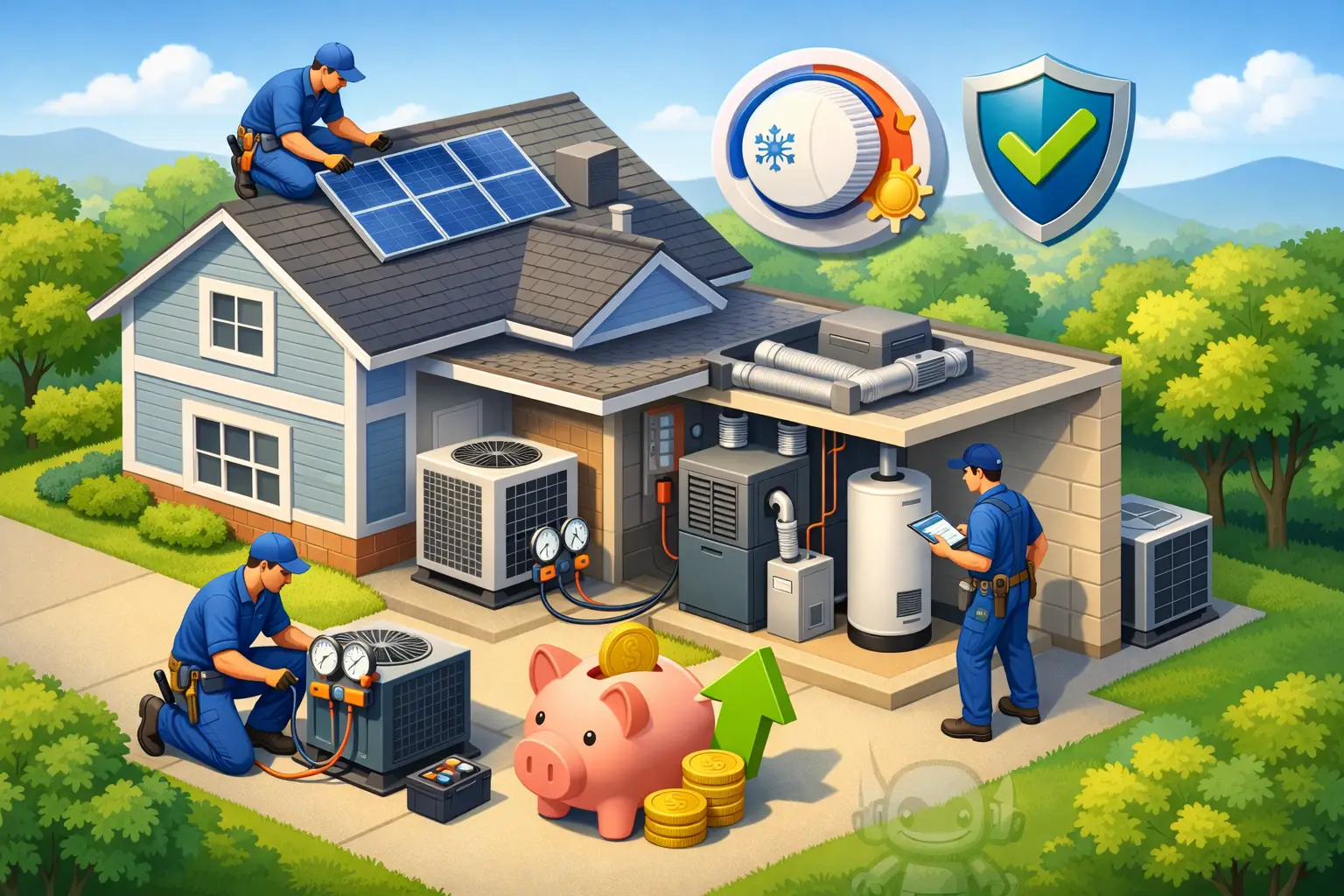
A July afternoon in Raleigh can turn a small air conditioning problem into a whole-house comfort emergency fast. When your system is running hard against heat and humidity, a clogged drain line, dirty coil, weak capacitor, or worn electrical connection can push it past its limit. That is where HVAC maintenance plan benefits become practical, not theoretical: regular professional attention gives your system a better chance to keep up before an inconvenience becomes an urgent repair.
For homeowners, a maintenance plan is not a promise that an HVAC system will never fail. Mechanical equipment wears out, storms happen, and older systems can still need repairs. It is a structured way to catch developing concerns early, improve day-to-day performance, and make home comfort costs less unpredictable.
What an HVAC Maintenance Plan Does
An HVAC maintenance plan schedules professional service for your heating and cooling equipment on a recurring basis, typically with a visit before the cooling season and another before the heating season. During those visits, a qualified technician inspects key components, tests operation, cleans areas that affect performance, and identifies concerns that deserve attention.
The goal is not simply to check a box. Your air conditioner and heating system contain moving parts, electrical controls, safety devices, drainage components, and airflow pathways that all need to work together. A technician can spot changes in performance that a homeowner may not notice until the system stops cooling, heating, or circulating air properly.
For North Carolina homes, this timing matters. Cooling systems often work long hours through humid summers, while heating equipment still needs to be ready for sharp winter temperature swings. Seasonal service helps prepare the equipment for the workload ahead.
The Most Valuable HVAC Maintenance Plan Benefits
The clearest benefit is fewer surprises. Many HVAC breakdowns do not begin as sudden failures. They begin as a loose wire, a weakened component, restricted airflow, a drainage issue, or a part operating outside its normal range. Finding those problems during a planned visit can allow you to schedule a repair on your terms instead of making a rushed decision after losing comfort.
Better Comfort and More Consistent Airflow
When a system is dirty or not operating correctly, some rooms may feel warmer, colder, or more humid than others. Maintenance helps technicians evaluate airflow, filter condition, blower operation, thermostat performance, and the system’s general cooling or heating cycle.
Not every comfort issue has a simple maintenance fix. Poor insulation, duct leakage, an undersized system, and persistent humidity can require a larger solution. Still, confirming that the HVAC equipment is operating as it should is the right first step before investing in repairs or upgrades.
Lower Energy Waste
A system that has to work harder than necessary generally uses more energy. Dirty filters, restricted coils, struggling blower components, and incorrect settings can all affect efficiency. Routine service helps address the maintenance-related issues that make equipment run longer to deliver the same result.
That does not mean a tune-up will make an aging system perform like a new one or guarantee a specific utility bill reduction. Your energy use also depends on your thermostat settings, square footage, insulation, household habits, weather, and equipment age. Maintenance gives your current system the best opportunity to operate efficiently within its design limits.
Longer Equipment Life
HVAC systems are major home investments. While no technician can stop normal wear, regular inspections can reduce the time your equipment spends operating under unnecessary strain. Replacing worn parts, maintaining clean airflow, and correcting small electrical or drainage concerns can help prevent secondary damage.
This matters most when a system is getting older. A well-maintained older unit may continue to serve a home reliably, while another with ignored issues may face a more expensive repair sooner. If replacement is eventually the better option, maintenance history and professional diagnostics can also make that decision clearer.
Safer Heating Operation
Heating maintenance is about comfort, but it is also about safety. A professional visit gives the technician an opportunity to inspect safety controls, electrical connections, and the components responsible for safe system operation. Homeowners should always act quickly if they notice unusual odors, repeated shutdowns, loud new noises, or a system that is not heating correctly.
Do not wait for the next maintenance visit if something seems wrong. Planned service is preventive care, not a reason to delay a repair when your equipment is showing a clear warning sign.
Priority and Budget Advantages
Many maintenance memberships include practical service advantages, such as preferred scheduling or repair discounts. Exact benefits vary by plan, so it is worth reviewing the details rather than assuming every membership offers the same terms.
Even without focusing on discounts, a maintenance plan can help with budgeting. You know when routine visits are expected, and you are more likely to learn about a repair before it becomes a last-minute comfort problem. That can make it easier to consider repair timing, replacement options, and available financing without the pressure of a complete system shutdown.
What Happens During a Professional Tune-Up?
A complete maintenance visit should be more than a quick look at the thermostat. The technician’s work will vary by system type, season, and condition, but it commonly includes checking controls and electrical connections, examining filters and airflow, inspecting the condensate drainage system, testing heating or cooling operation, and looking for signs of wear or unusual performance.
For cooling equipment, the technician may also assess refrigerant-related performance and inspect outdoor components that are exposed to pollen, leaves, weather, and yard debris. For heating equipment, the focus shifts to safe startup, heating performance, and safety-related controls.
The most useful part of the visit is the conversation afterward. A homeowner should receive a straightforward explanation of what is working well, what needs attention now, and what should be watched over time. Clear estimates and plain-language recommendations make it easier to decide what is right for your home.
Maintenance Works Best With Good Home Habits
Professional service handles the detailed inspection and technical work, but homeowners can support system performance between visits. Replace or clean filters on the schedule recommended for your system and household. Keep supply and return vents open and clear of furniture, rugs, and storage. Outside, keep leaves, mulch, and overgrown plants away from the outdoor unit so air can move freely.
Pay attention to changes, too. A new rattle, longer cooling cycles, weak airflow, water near indoor equipment, or rising indoor humidity is worth reporting. Calling early often gives a technician more diagnostic information and may prevent further damage.
Is a Maintenance Plan Worth It for Every Home?
For most homeowners, especially those with a system that sees heavy summer use, the answer is yes. Regular maintenance is particularly valuable for older systems, homes with pets or allergy concerns, households that prefer predictable scheduling, and anyone who wants professional guidance before a major repair catches them off guard.
There are a few situations where the value looks different. If you are planning an immediate replacement because your existing equipment is beyond repair, a full maintenance plan may not be the first priority. If you recently installed new equipment, maintenance remains worthwhile, but the visit may focus more on protecting performance and confirming proper operation than correcting years of accumulated wear.
The key is choosing a provider that treats maintenance as real diagnostic work. Delta Heating, Cooling & Plumbing sends trained technicians who can explain what they find without pressure or confusing jargon. That is the kind of service that turns a routine visit into useful information for your household.
A maintenance plan cannot control the weather or eliminate every repair. It can give you a cleaner, clearer path to dependable comfort: scheduled attention, earlier warnings, and a trusted professional to call when your home needs help.