
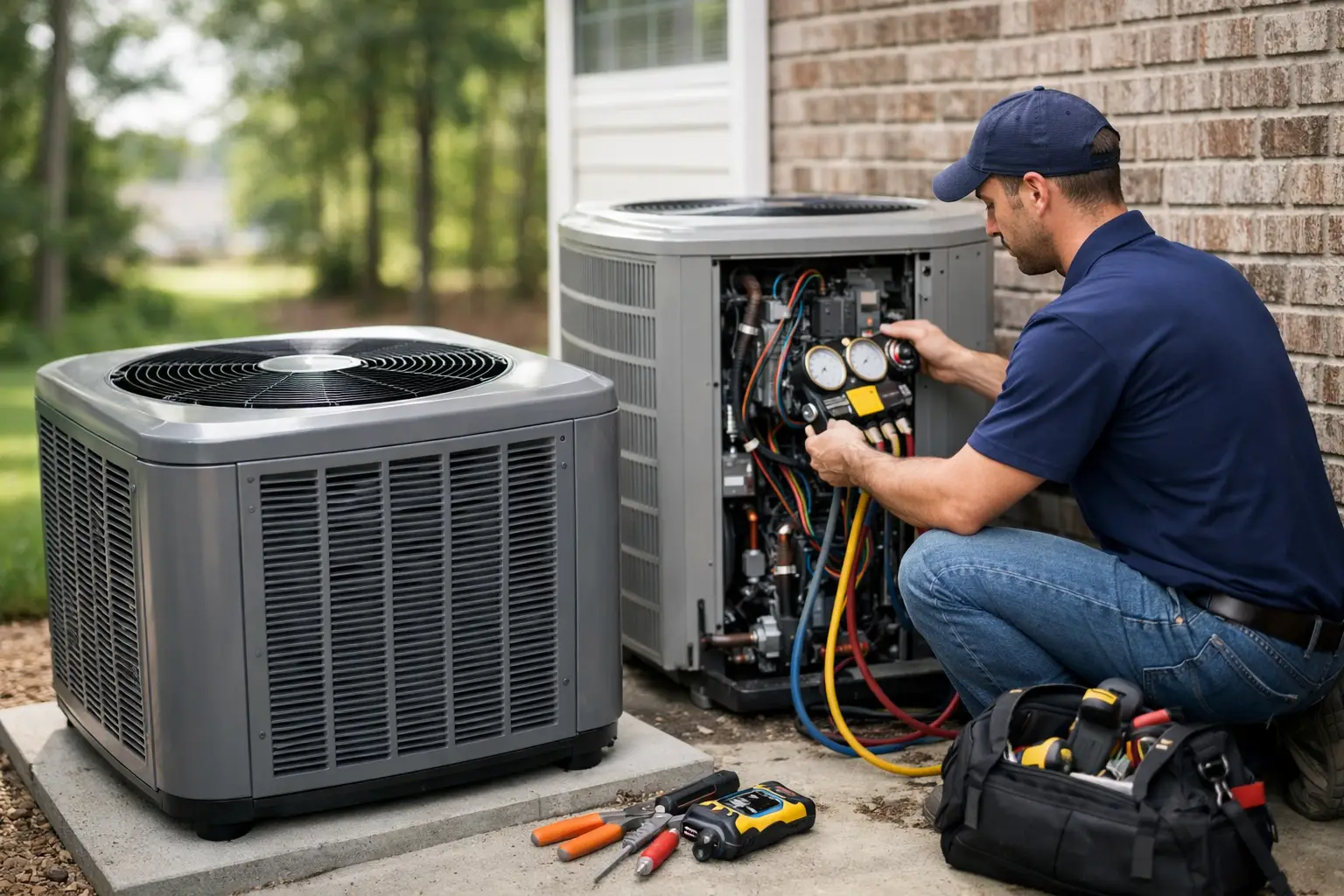
A heat pump that quits during a North Carolina heat wave or a cold January night puts homeowners in a tough spot: restore comfort quickly without making an expensive decision in a rush. Heat pump replacement cost NC homeowners face can vary widely, but a clear estimate should explain what you are buying, why it fits your home, and what work is included.
For a professionally installed whole-home system, many homeowners spend roughly $8,000 to $16,000 or more. A straightforward replacement using existing compatible equipment may land toward the lower end. A high-efficiency system, major duct repairs, electrical upgrades, or a complicated installation can move the total higher. The right number is not simply the lowest quote. It is the price for a properly sized, safely installed system that can handle Raleigh-area summers and the heating season ahead.
What Affects Heat Pump Replacement Cost in NC?
The equipment itself is a significant part of the investment, but it is not the whole job. Heat pumps operate as both your air conditioner and heater, so the system has to be selected and installed with care. Your final proposal should account for your home, not just the square footage printed on a listing.
System size and capacity
A larger heat pump generally costs more, but bigger is not automatically better. An oversized unit can turn on and off too often, leaving humidity behind and causing unnecessary wear. An undersized unit can run constantly when outdoor temperatures are at their hottest or coldest.
A qualified contractor should perform a load calculation that considers the home’s layout, insulation, windows, sun exposure, ceiling height, and ductwork. This step matters in central and eastern North Carolina, where long, humid summers make moisture control nearly as important as temperature control.
Efficiency level and comfort features
Higher-efficiency heat pumps usually carry a higher upfront price, but they can reduce operating costs and improve comfort. Variable-speed and two-stage systems adjust output more precisely than basic single-stage equipment. That can mean steadier indoor temperatures, quieter operation, and better humidity removal.
The trade-off is cost. A premium system may make good sense for a long-term homeowner or a house with persistent hot and cold spots. A dependable standard-efficiency system may be the more practical choice if you expect to move soon or need to stay within a firm budget. Your technician should explain the difference in plain language instead of pushing features you do not need.
Ductwork, electrical work, and installation conditions
The indoor and outdoor components are only part of a heat pump replacement. Older ducts may leak air, be poorly sized, or have damaged insulation. Addressing those problems can increase the initial estimate, but installing new equipment on a failing duct system can limit comfort and efficiency from day one.
Other cost factors may include a new thermostat, condensate drain improvements, a pad for the outdoor unit, refrigerant line replacement, electrical disconnects, breaker or panel work, permits, and code-required safety updates. Homes with tight attic access, crawlspace challenges, or equipment located in difficult areas can also require more labor.
A transparent estimate separates these items so you can see what is included. Be cautious with a quote that is dramatically lower than the others but provides few installation details. It may leave out essential work that appears later as an added charge.
Brand, warranty, and labor coverage
Different manufacturers and product lines have different price points, warranty terms, and available features. Registration requirements can affect parts warranty coverage, while labor coverage may be separate. Ask what is covered, for how long, and whether the proposal includes the labor required to make a warranty repair.
A lower equipment price is not always the better value if it comes with limited installation support. Certified installation, accurate refrigerant charging, and thorough startup testing protect both comfort and manufacturer warranty eligibility.
When Replacement Makes More Sense Than Repair
A repair can often be the smart choice, especially when the system is relatively new and the issue is isolated. A failed capacitor, contactor, thermostat, or small electrical component does not automatically call for a full replacement. A professional diagnosis should come before a major decision.
Replacement deserves serious consideration when the system is near or beyond its expected service life, often around 10 to 15 years, and repair needs are becoming frequent or expensive. It may also be time to replace if the equipment uses an older refrigerant, struggles to cool evenly, has a compressor problem, or produces utility bills that keep climbing without another clear explanation.
Consider the full picture. If a repair is expensive but could reasonably provide several more reliable years, repairing may be worthwhile. If the repair only delays another failure in an aging system, applying that money toward a new, more efficient heat pump may be the better long-term move. A free second opinion can be particularly helpful before approving a compressor replacement or another high-dollar repair.
How to Compare Heat Pump Replacement Estimates
Comparing estimates can feel confusing because two proposals may list different efficiency ratings, warranty terms, accessories, and installation scopes. Start by confirming that each contractor has evaluated the same comfort concerns and proposed an appropriately sized system. Then compare the details, not just the bottom-line total.
A complete proposal should identify the outdoor unit and indoor air handler or coil, the efficiency level, thermostat, warranty information, permit handling, and the major installation tasks. It should also state whether duct repairs, electrical modifications, removal of the old system, and startup testing are included.
Ask how the contractor will verify airflow and refrigerant performance after installation. Proper commissioning is not a luxury. A heat pump can be high quality on paper and still underperform when airflow, duct connections, drainage, or refrigerant charge are wrong.
It is also reasonable to ask about payment options. Financing can make a necessary replacement more manageable, but review the terms carefully, including the payment schedule, promotional period, and what happens after any introductory offer ends. Seasonal promotions, manufacturer rebates, utility programs, and tax incentives may also be available, though eligibility and program rules can change. Confirm current requirements before basing your decision on a projected incentive.
Getting More Value From Your New System
The best way to protect a new heat pump is to maintain the entire comfort system. Keep return vents clear, change filters on schedule, and make sure outdoor equipment has room for airflow. Schedule seasonal service so a technician can check electrical connections, drainage, refrigerant performance, and heating and cooling operation before extreme weather arrives.
Maintenance does not prevent every repair, but it can identify small issues before they threaten the compressor or leave your family without heating or cooling. It also gives you a record of professional service, which can be useful for warranty purposes and for understanding your system’s condition over time.
For homeowners in Raleigh, Cary, and surrounding communities, an in-home evaluation is the most reliable way to turn a broad price range into a useful plan. Delta Heating, Cooling & Plumbing can assess the equipment, ductwork, and comfort needs of your home, then provide straightforward options without guesswork. When replacement is the right call, the goal is simple: dependable comfort now, clear pricing before work begins, and a system that is ready for the next North Carolina season.