A slow drain can be annoying. Several slow drains, sewage odors, or water backing up where it should not are different problems entirely. These are often early signs that sewer repair may be needed, and waiting can turn a contained plumbing issue into damaged flooring, contaminated water, or a disrupted household.
For homeowners in Raleigh and surrounding communities, the right response is not to guess at the cause or keep reaching for a drain cleaner. A professional diagnosis can identify whether the issue is a localized clog, a damaged sewer line, tree-root intrusion, or a problem with the line’s slope. Once you know what is happening underground, you can make a clear decision about the repair.
Signs You May Need Sewer Repair
Your home’s sewer line carries wastewater from sinks, showers, toilets, laundry equipment, and appliances out to the public sewer or septic system. Because the pipe is buried, trouble often appears first inside the home.
A single slow bathroom sink may be a simple fixture or branch-drain clog. But when multiple fixtures drain slowly at the same time, the blockage may be farther down the system. Watch for toilets that bubble when the washing machine drains, water rising in a shower or tub after flushing, or wastewater coming up through a floor drain. Those symptoms deserve prompt attention.
Unpleasant sewer-like odors inside or around the yard are another warning sign. So are unusually green or soggy patches of grass, which can occur when a damaged underground line leaks moisture and nutrients into the soil. A sudden increase in insects near a drain or outdoor wet area can add to the concern, though it does not confirm the cause on its own.
Recurring clogs matter, too. If a drain clears temporarily but backs up again soon after, the issue may not be in the fixture drain. Repeatedly clearing the same line without identifying the obstruction can delay the repair that actually solves the problem.
What Causes a Sewer Line to Fail?
Sewer problems are not always caused by one dramatic event. Many develop gradually as pipes age, soil shifts, or debris accumulates. The cause affects both the urgency and the most sensible repair method.
Tree roots are common in established neighborhoods. Roots naturally seek moisture and can enter tiny openings at pipe joints or cracks. Once inside, they catch paper and waste, creating a blockage that grows over time. Cutting roots out may restore flow, but a line with openings or damaged joints may need repair to prevent the roots from returning.
Older pipe materials can also deteriorate, crack, corrode, or separate at joints. Ground movement, heavy rain, nearby construction, and settling can change the pipe’s alignment. A section that has sagged can hold water and solids instead of carrying them away, leading to frequent backups even when the pipe is not completely blocked.
Then there are everyday use issues. Grease, wipes labeled as flushable, paper towels, hygiene products, and other non-flushable items can build up in a sewer line. In these cases, professional drain cleaning or hydro jetting may be the appropriate solution. It depends on whether the pipe itself is sound. Cleaning a broken or collapsed line will not correct the underlying problem.
Camera Diagnostics Take the Guesswork Out of Sewer Repair
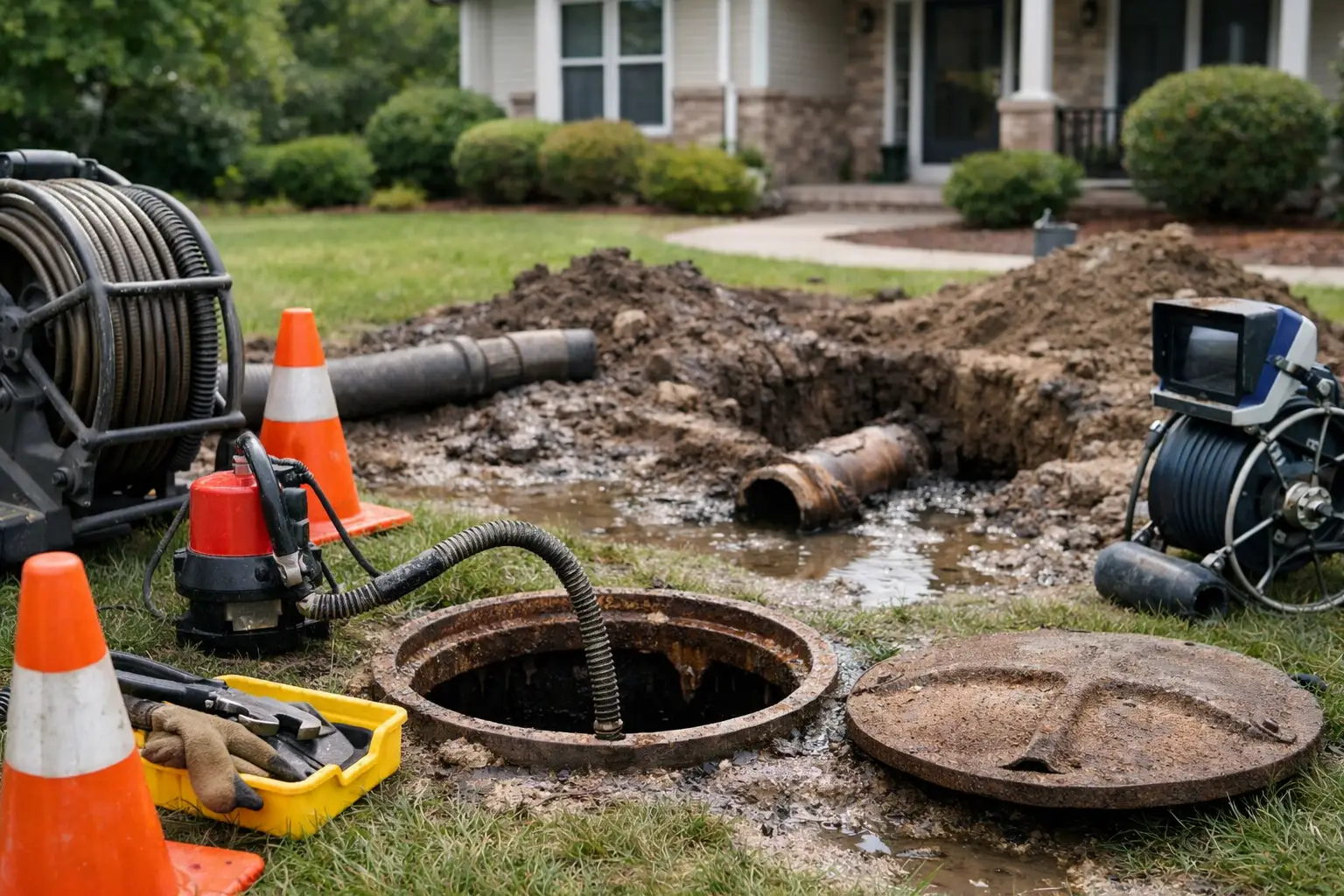
A sewer camera inspection is one of the most useful tools in diagnosing an underground plumbing problem. A technician guides a small, specialized camera through an accessible drain line to view the pipe’s interior in real time. This can reveal roots, grease buildup, cracks, offset joints, standing water, or a collapsed section.
The value is not simply seeing that there is a blockage. It is determining where it is, what caused it, and whether cleaning is likely to provide a lasting result. That information helps avoid unnecessary excavation and gives homeowners a clearer explanation of the recommended work.
In some situations, the line may be blocked so heavily that it needs to be cleared before a complete camera inspection is possible. In others, the camera may show a relatively minor obstruction that can be addressed without major repair. A qualified technician should explain what the inspection shows, what options are available, and why one approach is recommended over another.
Sewer Repair Options Depend on the Pipe Condition
There is no single repair that fits every sewer line. The appropriate solution depends on the location of the damage, the material and age of the pipe, accessibility, and whether the problem is isolated or widespread.
For a line with buildup or roots but no significant structural damage, professional cleaning may restore proper flow. Hydro jetting uses carefully controlled high-pressure water to remove stubborn debris from suitable pipes. It is effective for many blockages, but it is not automatically the right choice for every old or compromised pipe. The condition of the line should be considered first.
If the camera reveals a short damaged area, a targeted repair may be enough. This can involve accessing and replacing the affected section while preserving as much of the surrounding line as possible. It is often less disruptive than replacing an entire sewer line, but it only makes sense when the remaining pipe is in good condition.
When a line has multiple failures, extensive root intrusion, severe corrosion, or collapse, replacement may be the more reliable long-term choice. Replacement involves a larger upfront investment and may require excavation, depending on the property and repair method. The trade-off is that it addresses the larger system problem rather than repeatedly repairing one weak section at a time.
Before approving work, ask for a straightforward explanation of the diagnosis, the repair scope, expected disruption to the property, and the pricing. A free second opinion can be especially useful when the recommendation involves a major repair or replacement.
What to Do When Sewage Backs Up
A sewer backup should be treated as an urgent plumbing issue. Stop using water throughout the home if possible. Do not flush toilets, run the dishwasher, take showers, or start laundry, because additional water can worsen the backup.
Keep children and pets away from the affected area. Wastewater may contain harmful bacteria, so avoid direct contact and do not attempt to clean a large sewage backup without proper protective equipment and guidance. If water is near electrical outlets, appliances, or your electrical panel, stay clear of the area and take appropriate safety precautions.
Call for professional plumbing service as soon as possible. A technician can identify whether the backup is within your home’s sewer line or may involve a broader issue. Fast diagnosis helps limit damage and gives you a path forward before the problem spreads.
Protect Your Sewer Line Between Service Visits
Homeowners cannot prevent every underground pipe failure, especially in aging systems. Still, a few habits reduce the chance of preventable clogs. Keep grease, coffee grounds, food scraps, wipes, paper towels, and hygiene products out of drains and toilets. Use toilet paper in reasonable amounts, and teach guests and children what should not be flushed.
If your property has large, mature trees near the sewer route, consider a proactive camera inspection if you have a history of backups or know the line is older. It is easier to plan cleaning or repairs on your terms than to make decisions during a sewage emergency.
Delta Heating, Cooling & Plumbing uses advanced camera equipment and clear, homeowner-focused recommendations to help identify sewer issues without unnecessary guesswork. Whether the answer is cleaning, a focused repair, or replacement, the goal should be the same: restore dependable drainage and give you confidence in the plumbing beneath your home.
Do not wait for a small warning sign to become a messy interruption. If several drains are slow, fixtures are backing up, or sewer odors are appearing, schedule a professional evaluation while the problem is still easier to control.