A burst supply line can release a surprising amount of water while you are searching for towels, moving furniture, and trying to remember where the valve is. Knowing how to locate main water shutoff equipment before a plumbing emergency gives you a simple way to limit damage and make a stressful situation more manageable.
Your main shutoff valve stops water flowing into the home. Every homeowner should know where it is, how to operate it, and whether it still works. The right location varies by house, especially across the Raleigh area, where homes may have crawl spaces, slabs, basements, municipal water service, or private wells.
How to Locate Main Water Shutoff Valves
Start inside the house. The main water shutoff is usually installed close to the point where the water service line enters the building. Look along exterior-facing walls on the lowest level of your home. In many North Carolina houses, that may mean a utility room, garage, crawl space access area, laundry room, or mechanical closet.
Follow visible plumbing whenever possible. The main line is typically larger than the pipes serving a sink or toilet. It may enter through a foundation wall or floor, then pass through a shutoff valve before branching off to fixtures and appliances.
In a crawl space, the valve may be near the front foundation wall, close to where the water meter sits outside. Use caution when entering a crawl space. Poor lighting, wet ground, exposed wiring, and tight access can turn a quick search into a safety issue. If the area is difficult to access or you see signs of a leak, a licensed plumber can identify the valve and assess the condition of the piping.
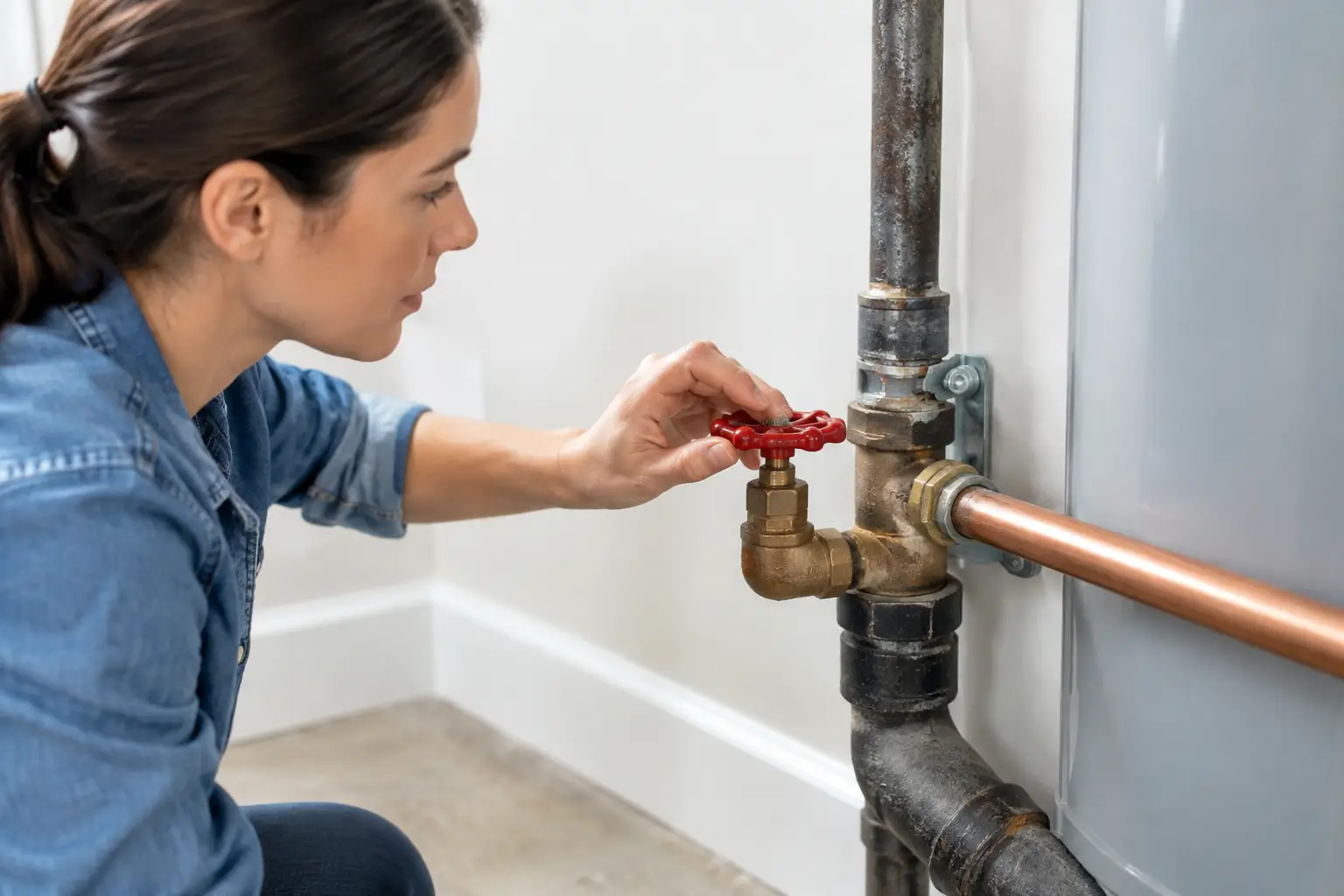
Homes with basements often have the valve near the foundation wall, water heater, laundry equipment, or utility equipment. Do not assume the shutoff beside a water heater is the main valve. Some valves only isolate the water heater or a single branch of plumbing.
Know What the Valve Looks Like
Most main shutoff valves use one of two designs. A gate-style valve has a round wheel that you turn clockwise to close. A ball valve has a straight lever handle; when the handle is perpendicular to the pipe, the valve is generally off. When it is parallel with the pipe, water is generally flowing.
Ball valves are usually easier to identify and operate, but either type can become stiff with age. Never force a corroded or resistant valve with excessive pressure. An older valve can break, begin leaking around the handle, or fail to close fully. That is a repair best handled before an emergency puts you under pressure.
Check the Water Meter Area, Too
Your property may also have a shutoff at or near the water meter, often located in a covered box near the street or sidewalk. This can be useful if the indoor valve cannot be found or will not close. However, the meter assembly may include equipment owned or controlled by the water utility.
Avoid turning valves that are sealed, locked, or clearly on the utility side of the meter. The homeowner-side valve may be available, but access, layout, and local utility rules differ. If a major leak is active and you cannot safely stop water at the indoor valve, contact your water provider and a plumbing professional promptly.
For homes served by a private well, the setup can be different. The main shutoff may be near the pressure tank, well equipment, or where the plumbing enters the home. Turning off electrical power to a well pump can also stop water production, but it does not necessarily drain pressure already held in the home’s plumbing. A plumber can explain the right emergency procedure for your particular well and pump system.
Do Not Confuse Fixture Valves With the Main Shutoff
Several smaller valves can look like a solution during a leak, but they only control one fixture or appliance. Toilet valves are located near the floor behind the toilet. Sink shutoffs sit beneath the cabinet. Washing machine valves are behind the machine, and water heater valves are mounted on the lines connected to the tank.
These local shutoffs are useful when the problem is limited to one fixture. For example, closing the toilet supply valve can stop an overflowing toilet caused by a failed fill valve. If a pipe has burst behind a wall, a supply line is spraying, or water is flooding more than one area, use the main shutoff instead.
Test the Valve Before You Need It
Finding the valve is only half the job. A valve that has not been used for years may not work when it matters. Test it on a calm day, not during a plumbing emergency.
First, tell everyone in the home that water will be off briefly. Close the valve gently, then turn on a cold-water faucet at a sink. Water should slow and stop after the remaining pressure leaves the line. If water continues running steadily, the valve may not be fully closed or may be failing internally.
Open the valve slowly after the test. Check around the handle, stem, and nearby pipe connections for drips. If you find leakage, corrosion, or a handle that is hard to move, schedule a repair. Replacing an aging main shutoff is usually far less disruptive than discovering it has failed during a leak.
A few homes have more than one water shutoff because of additions, separate living areas, irrigation systems, or plumbing upgrades. Label the main valve and any branch valves with clear tags. It also helps to take a photo showing the valve’s location and share it with other adults in the household.
What to Do When Water Is Actively Leaking
If water is flowing from a broken pipe, disconnected supply line, or unknown source, act quickly but safely. Turn off the main water valve if you can reach it without stepping into standing water or approaching electrical hazards. Then open a cold-water faucet on the lowest level of the home to relieve pressure.
If water is near outlets, appliances, electrical panels, or exposed wiring, do not enter the area. Leave the space and contact qualified help. Do not use a vacuum near electrical hazards, and do not attempt a temporary repair on a pressurized pipe unless you are certain it is safe.
After the water is off, move belongings away from the affected area if doing so is safe. Take photos for documentation, then call for professional plumbing service. Fast diagnosis matters because a visible leak is not always the only damage. Water can travel under flooring, behind walls, and into insulation before it becomes obvious.
When It Makes Sense to Upgrade the Shutoff
If your home has an old gate valve, a valve that requires force, or no accessible indoor shutoff, consider an upgrade. A modern, clearly accessible shutoff can make a real difference during an emergency. Some homeowners also choose automatic leak detection and shutoff equipment, particularly after a previous leak or when leaving a home vacant for extended periods.
The best option depends on your plumbing layout, pipe material, water source, and budget. A professional inspection can identify whether a straightforward valve replacement is enough or whether the incoming water line needs attention as well. Delta Heating, Cooling & Plumbing can help homeowners identify the right valve, address leaks, and restore confidence in their plumbing system.
Take ten minutes this week to find the valve, clear access around it, and make sure the people in your home know what it does. That small bit of preparation can protect your floors, belongings, and peace of mind when plumbing trouble arrives without warning.