
A thermostat can say 72 degrees while one bedroom stays muggy, the system runs constantly, and the electric bill climbs. HVAC diagnostics are what separate a quick guess from a clear answer. Instead of replacing parts until the problem goes away, a qualified technician tests the system, identifies the cause, and explains the repair options before work begins.
For homeowners in Raleigh and surrounding communities, that matters during a humid North Carolina summer or an unexpected cold spell. Heating and cooling equipment works hard here. Small issues such as restricted airflow, a weak capacitor, or a refrigerant leak can become bigger and more expensive when they are ignored.
What HVAC Diagnostics Actually Tell You
An HVAC system is a group of connected components, not a single machine that simply turns on and off. Your thermostat communicates with electrical controls. The indoor unit moves air across a coil and through ductwork. The outdoor unit releases heat. Safety switches, drains, filters, motors, and sensors all need to work together.
That is why the same symptom can have several possible causes. Weak airflow could come from a dirty filter, a failing blower motor, a duct issue, a clogged coil, or a system that is not sized or balanced properly for the home. An air conditioner that blows warm air may have an electrical problem, low refrigerant due to a leak, a dirty outdoor coil, or a compressor concern.
Professional diagnostics narrow those possibilities with measurements and inspection. The goal is not only to get the equipment running again. It is to determine why it stopped performing as it should and whether the recommended repair is likely to provide a lasting result.
Signs Your Home Needs HVAC Diagnostics
Some HVAC problems are obvious, such as a system that will not start. Others show up gradually. If you notice uneven temperatures between rooms, unusually high utility bills, short cycling, weak airflow, new noises, musty odors, water near the indoor unit, or frequent thermostat adjustments, it is time to have the system checked.
Pay attention to changes in how long the equipment runs. During hot weather, a properly operating air conditioner may run for extended periods, especially in the afternoon. But nonstop operation without reaching the set temperature, or repeated starts and stops every few minutes, points to a problem worth investigating.
A frozen indoor coil is another reason to call for service rather than keep lowering the thermostat. Ice can be tied to airflow restrictions or refrigerant issues. Turning the system off can prevent further strain, but it does not identify the source of the issue. Likewise, resetting a tripped breaker may restore power briefly, yet repeated trips can signal an electrical concern that needs professional attention.
How Professional HVAC Diagnostics Work
A thorough diagnostic visit starts with your experience in the home. A technician should ask what you have noticed, when the issue began, whether it happens at certain times of day, and whether any recent changes were made to the thermostat, filter, electrical panel, or home renovation. Those details help focus testing from the start.
Checking the basics first
The first step is often confirming the simple, high-impact items: thermostat settings, air filter condition, power supply, disconnects, breakers, airflow, and visible drainage issues. This is not cutting corners. A blocked filter or clogged condensate drain can create real comfort problems and place unnecessary stress on equipment.
The technician will also inspect indoor and outdoor components for signs of wear, dirt buildup, damaged wiring, oil residue, corrosion, or loose connections. A visual inspection alone is not enough, but it can reveal where deeper testing is needed.
Testing system performance
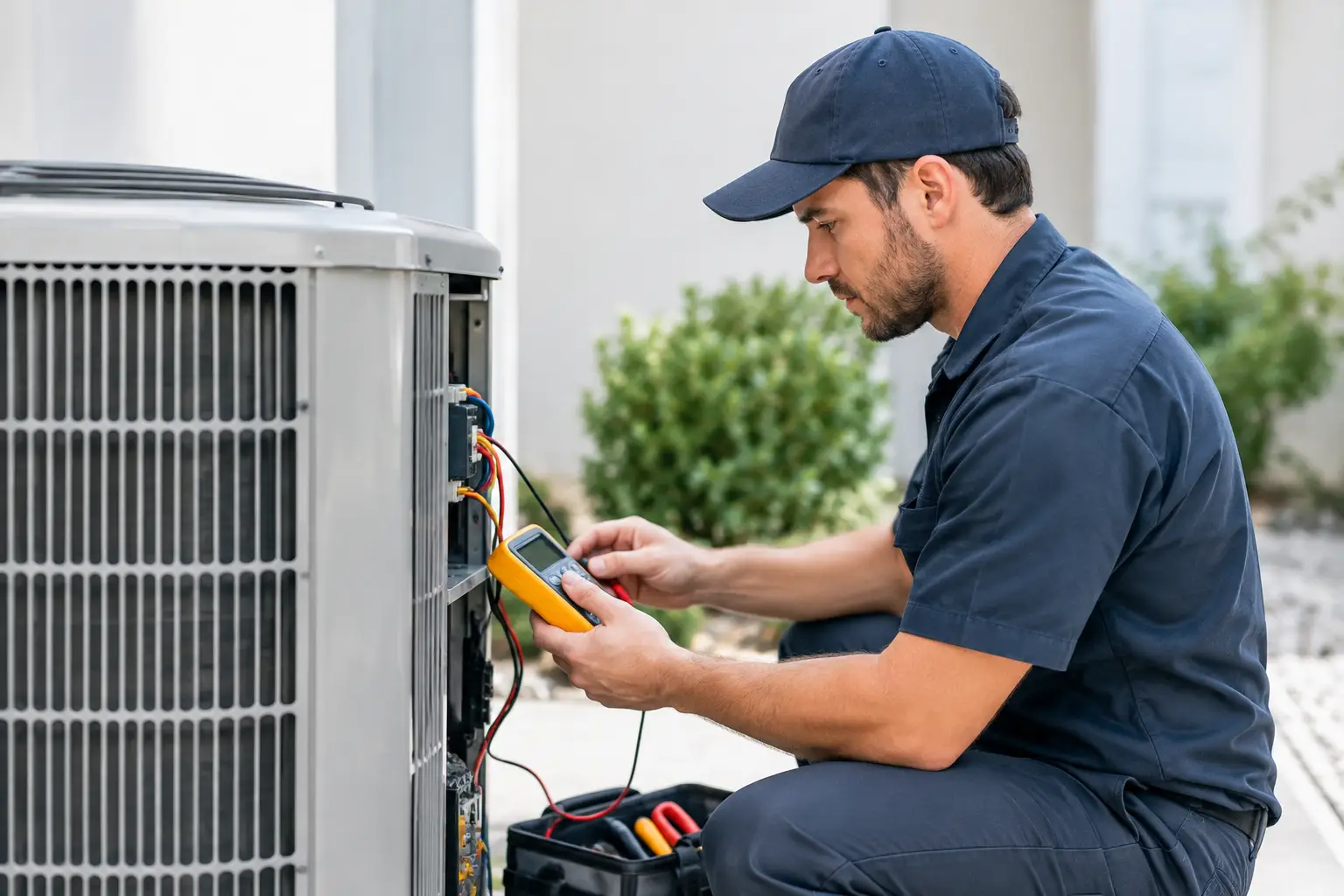
Next comes measurement. Depending on the symptoms and equipment, this may include checking voltage, amperage, capacitors, temperature differences, static pressure, blower operation, safety controls, refrigerant pressures, and drain function. These readings show whether key components are operating within the expected range.
For example, an air conditioner may appear to cool at first but have a weak electrical component that cannot reliably start the outdoor motor under load. A heater may ignite but shut down early because a safety control is responding to an airflow or venting issue. Testing helps distinguish the visible symptom from the actual failure.
Advanced diagnostic tools can make this process more accurate, but experience still matters. Numbers need context. A good technician considers the age and condition of the system, outdoor temperature, maintenance history, airflow conditions, and the homeowner’s comfort concerns before recommending a repair.
Explaining the findings clearly
The diagnostic process should end with a straightforward conversation. You should know what failed, what likely contributed to the failure, what repair is recommended, and what the cost will be before work moves forward. If there are multiple reasonable paths, such as repairing an aging component or considering replacement, each option should be explained without pressure.
Delta Heating, Cooling & Plumbing focuses on clear findings and transparent pricing so homeowners can make decisions with confidence. A free second opinion can also be valuable when a major repair or replacement recommendation does not feel fully explained.
Why Accurate HVAC Diagnostics Can Save Money
The least expensive repair is not always the one with the lowest invoice today. Replacing a failed part without addressing a dirty coil, airflow restriction, drainage problem, or refrigerant leak can lead to another service call soon after. Accurate diagnosis helps prevent that cycle.
It can also protect equipment that still has useful life left. A system that is noisy, inefficient, or struggling to maintain temperature does not automatically need replacement. Many issues can be repaired when they are caught early. On the other hand, repairs may be harder to justify when the system has recurring failures, major component damage, poor efficiency, or repair costs that approach the value of a newer system.
There is no single age at which every HVAC system should be replaced. The better question is whether the repair solves the current issue reliably and whether the equipment can reasonably meet your home’s comfort needs in the years ahead. A technician should help you weigh those trade-offs based on facts, not a one-size-fits-all rule.
What You Can Do Before the Technician Arrives
Homeowners can often provide useful information without taking risks. Check that the thermostat is set to the correct mode and temperature, make sure the filter is not heavily blocked, and note any error messages, noises, odors, water, or changes in performance. If the system has a frozen coil, turn cooling off and allow it to thaw while leaving the fan setting as recommended by the technician.
Avoid opening sealed electrical compartments, adding refrigerant, or repeatedly resetting breakers. HVAC equipment combines high voltage, moving parts, pressurized refrigerant, and combustion components in heating systems. A quick do-it-yourself fix can create a safety issue or make the original problem harder to diagnose.
If your system is still running but struggling, do not wait for a complete failure during the hottest or coldest stretch of the season. Scheduling service early often gives you more control over timing and repair choices.
Keep Future Problems Easier to Catch
Seasonal maintenance does not eliminate every breakdown, but it gives technicians a chance to spot worn electrical components, drainage concerns, airflow restrictions, and declining performance before they disrupt your home. Regular filter changes and keeping the outdoor unit clear of leaves, grass, and debris also support proper airflow.
When a comfort problem appears, trust the details you are seeing in your home. A room that never cools, a new rattle, or a bill that suddenly rises is useful diagnostic information. The sooner those clues are checked, the more likely you are to have a clear repair plan and restored comfort before a minor issue turns into an urgent one.