A Raleigh AC breakdown rarely waits for a convenient time. It can happen after work, during a humid weekend, or in the middle of a heat wave when your system has been running hardest. When you need emergency ac repair raleigh nc homeowners can count on, the immediate goal is simple: protect your household, prevent further equipment damage, and get a clear answer about what failed.
Not every cooling issue requires a middle-of-the-night repair. But some warning signs should not be ignored, especially when indoor temperatures are rising quickly or vulnerable family members are at home. Knowing what to do before a technician arrives can make the situation safer and help speed up the diagnosis.
When an AC Problem Is a Real Emergency
An air conditioner that is not keeping up on a warm afternoon may be frustrating, but it is not always an emergency. Start by checking the thermostat setting, the air filter, and the circuit breaker. A clogged filter or a thermostat accidentally set to heat can create a problem that looks much bigger than it is.
The situation becomes more urgent when there is no cooling at all in extreme heat, airflow has stopped completely, or your home includes infants, older adults, pets, or anyone with a health condition affected by high temperatures. A system that repeatedly trips a breaker, produces a burning smell, leaks heavily, or makes loud grinding or screeching sounds also deserves prompt professional attention.
Turn the system off if you smell burning, see smoke, hear severe mechanical noise, or notice water collecting near electrical components. Do not keep resetting a tripped breaker. That can damage the equipment further and may create an electrical hazard. If you suspect a gas leak or carbon monoxide issue from a combined HVAC system, leave the home and contact the appropriate emergency resources immediately.
What to Do Before Emergency AC Repair Arrives
A few safe checks can help restore cooling in minor cases and give the technician useful details if a repair is needed. Set the thermostat to cool and lower the temperature setting several degrees below the current indoor temperature. Make sure the thermostat has power and that its batteries are working, if applicable.
Then inspect the air filter. If it is visibly packed with dust, replace it with the correct size and type. Restricted airflow can cause the indoor coil to freeze and can leave your home feeling warm even when the equipment is running.
Walk outside and look at the condenser unit from a distance. Clear away leaves, grass clippings, and other debris around it, but do not remove access panels or attempt to clean electrical or internal components. If the unit is coated in ice, turn the cooling system off at the thermostat and set the fan to ON if it still operates. This may help the ice thaw while you wait for service.
It also helps to write down what you noticed. Did the system stop suddenly? Is it blowing warm air? Did it make a new noise? Did a breaker trip? These details can shorten the diagnostic process once the technician is on site.
Common Reasons Raleigh Air Conditioners Fail
Raleigh summers place steady demand on air conditioners. Long periods of heat and humidity can expose weak components, airflow restrictions, drainage problems, and refrigerant issues that may have been developing quietly for months.
A failed capacitor or contactor is a common reason an outdoor unit will not start. These electrical components help the system run, and they can wear out from age, heat, and repeated cycling. A technician can test them safely and determine whether a targeted repair is appropriate.
Frozen evaporator coils are another frequent issue. Low refrigerant, dirty filters, blocked return vents, and blower problems can all restrict the heat transfer process and lead to ice buildup. The visible ice is not the underlying problem, so simply thawing the coil does not guarantee the system is fixed.
Clogged condensate drains can be especially troublesome in North Carolina’s humidity. Your AC removes moisture from indoor air, and that water needs a clear path out of the home. When a drain line backs up, it can trigger a safety switch, shut down the system, or cause water damage near the indoor equipment.
Compressor problems are more serious. The compressor is central to the refrigeration cycle, and replacement can be costly. Depending on the age, repair history, warranty status, and efficiency of the system, a homeowner may need to weigh a repair against replacement. A clear diagnosis and transparent estimate matter most at this stage.
What Professional Emergency AC Repair Should Include
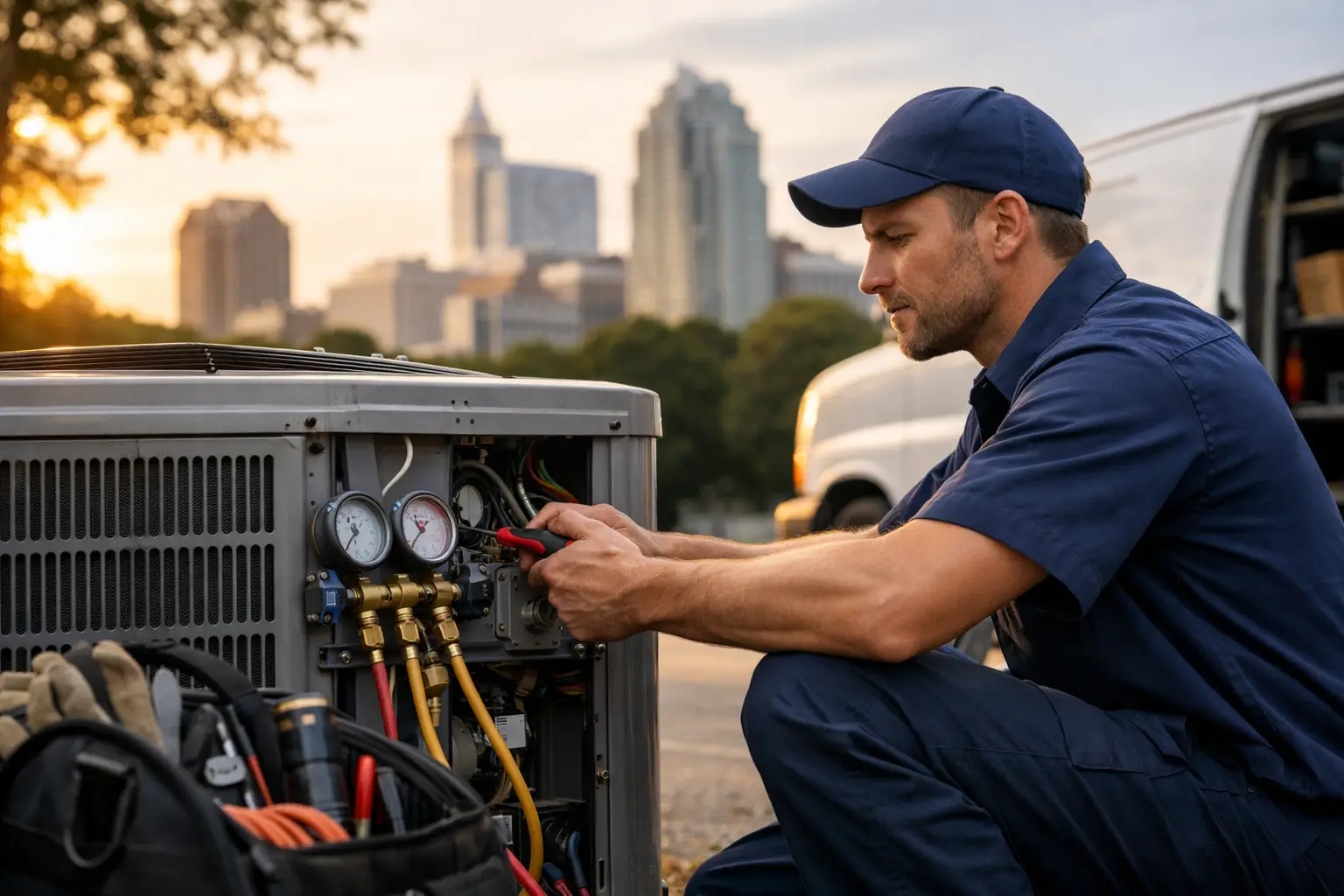
Fast service matters, but speed should not replace careful diagnosis. A qualified technician should inspect the system as a whole rather than guessing based on one symptom. That includes checking thermostat operation, electrical connections, capacitors, airflow, filters, drain components, refrigerant performance, indoor and outdoor equipment, and safety controls.
You should receive a straightforward explanation of the problem, what is required to correct it, and the cost before work begins. If there are multiple repair paths, ask how each option affects reliability, efficiency, and the expected life of the system. For an older unit with several worn components, the least expensive repair today is not always the best value over the next season.
Delta Heating, Cooling & Plumbing sends trained technicians who use modern diagnostic tools to identify the cause of the failure, not just the most obvious symptom. Year-round live-operator emergency availability helps homeowners get support when comfort cannot wait, while clear pricing helps remove uncertainty from an already stressful situation.
Repair or Replace? Make the Decision With the Full Picture
Emergency calls sometimes uncover a problem that is larger than a simple part replacement. If your AC is relatively new, has been maintained, and needs a common repair, fixing it is often the sensible choice. A repair can restore comfort quickly without the expense and disruption of replacing the entire system.
Replacement deserves consideration when the system is nearing the end of its expected service life, has frequent breakdowns, uses an outdated refrigerant, or needs a major component such as a compressor. High energy bills, uneven temperatures, and persistent humidity problems may also indicate that the current equipment is no longer meeting your home’s needs.
There is no one answer for every Raleigh home. Equipment size, insulation, duct condition, family comfort preferences, and budget all affect the decision. Ask for an honest comparison of repair costs, replacement options, available financing, and the expected efficiency improvement. If a major replacement is recommended, a free second opinion can provide added confidence before you decide.
Keep a Small Problem From Becoming an Emergency
Most AC emergencies cannot be predicted perfectly, but routine maintenance lowers the odds of a breakdown during peak summer weather. Seasonal service gives a technician a chance to check electrical parts, refrigerant operation, coils, drains, and airflow before a minor concern becomes a no-cooling call.
Between visits, replace filters regularly, keep supply and return vents open, and keep vegetation trimmed back from the outdoor unit. Pay attention to changes in runtime, new noises, weaker airflow, or rooms that suddenly feel more humid than usual. Those early signs are worth addressing before the system is under its heaviest summer load.
If your air conditioner fails, focus first on safety and keeping the home as comfortable as possible. Close blinds against direct sun, use ceiling fans, avoid adding heat with ovens or dryers, and move family members to a cooler location if indoor conditions become unsafe. Prompt, professional help can turn a stressful breakdown into a clear plan for restoring comfort and protecting your home.