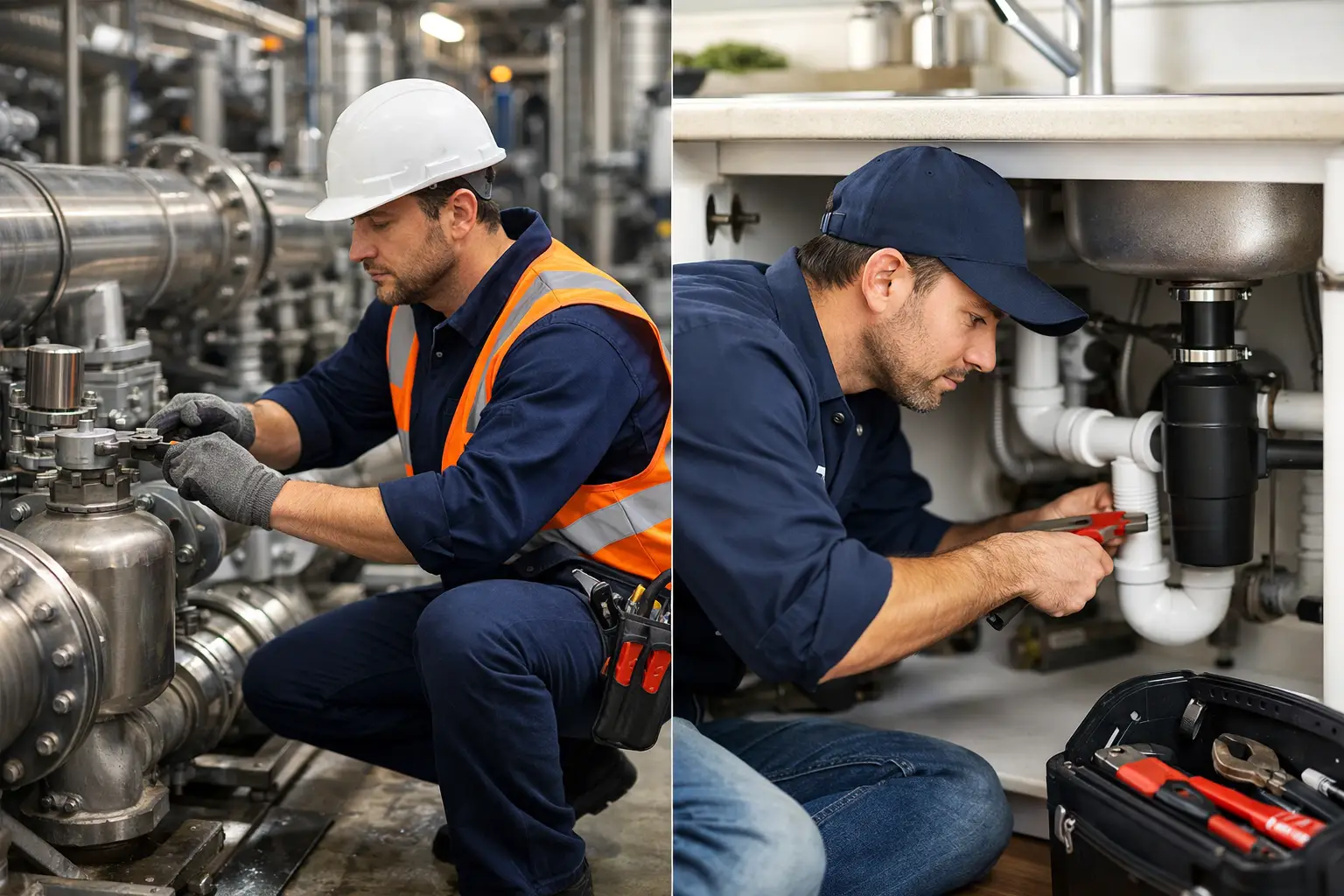
A commercial plumber may work on much larger plumbing systems, but the same basic problems can create serious disruption anywhere: a hidden leak, a sewer backup, a failed water heater, or a drain that will not clear. The difference is in the scale, system design, building use, and code requirements involved. Understanding where commercial and residential plumbing diverge helps homeowners, landlords, and property decision-makers call the right type of professional before a manageable issue turns into extensive damage.
What Does a Commercial Plumber Handle?
A commercial plumber works on plumbing systems in non-residential buildings, such as offices, restaurants, schools, retail spaces, medical facilities, apartment communities, and warehouses. These systems are often larger and used by far more people than the plumbing in a single-family home.
That higher demand changes the work. A commercial building may have multiple restrooms, long drain runs, larger water lines, mechanical rooms, shared sewer connections, specialized fixtures, and equipment that needs uninterrupted water or gas service. One clogged line can affect an entire floor. One water-line failure can interrupt business operations, damage inventory, or close a facility until repairs are complete.
Commercial work can also involve scheduled maintenance, plumbing upgrades during tenant build-outs, fixture replacements, water and sewer line repairs, and diagnostics for recurring drainage or pressure problems. The right approach depends on the building’s layout, its occupancy, and how the plumbing is used every day.
How Commercial Plumbing Differs From Home Plumbing
The most visible difference is size, but size is not the whole story. Residential systems are generally designed around one household’s daily routines. Commercial systems must support many users, often during the same few hours of the day.
A restaurant, for example, may put heavy demand on drains and water lines during meal service. A multi-unit property may have shared lines, meaning a blockage in one area can show up in another. An office building may appear quiet after hours, but a slow leak above a ceiling can spread unnoticed until the next workday.
Commercial plumbing also tends to involve more planning. Access may need to be coordinated around business hours, tenants, customers, safety rules, and building management. Repairs can require careful isolation of a section of the system so the rest of the building can remain operational where possible.
Home plumbing is usually more straightforward, but it is never insignificant. A failed water heater can leave a family without hot water. A sewer issue can make bathrooms unusable. A leak beneath a slab or behind a wall can threaten floors, framing, and indoor air quality. The setting changes, but fast diagnosis and skilled repair matter in both cases.
System Complexity Changes the Diagnosis
When a drain backs up in a home, the source may be a clog near one fixture, a blocked branch line, or a sewer-line issue. In a larger building, identifying the source can be more complicated because several fixtures may connect to a shared network of lines.
This is why camera-assisted inspections and accurate testing are valuable. Rather than guessing at the cause, a qualified plumbing professional can inspect the line, locate the obstruction or damage, and recommend a repair based on what the system actually needs. That can prevent repeat visits and unnecessary disruption.
Water Damage Has Different Consequences
Water follows gravity, but the consequences differ by property. In a home, a supply-line leak might damage a cabinet, wall, flooring, or personal belongings. In a commercial setting, the same type of leak could affect multiple suites, equipment, inventory, or customers.
For any property owner, the best response is to act early. A water stain, musty odor, unexplained increase in a water bill, soft flooring, or sound of running water when fixtures are off deserves attention. Waiting for a visible flood is rarely the cost-effective choice.
When Homeowners Need a Residential Plumbing Pro
Homeowners do not typically need a commercial plumber for a household plumbing issue. They need a provider equipped for the systems found in homes and ready to explain the problem in plain language.
That is especially true for common issues like clogged drains, dripping fixtures, water heater trouble, low water pressure, sewer odors, leaking pipes, damaged water lines, and well or pump concerns. The right technician should inspect the issue, identify the likely cause, discuss practical repair options, and provide clear pricing before work begins.
At Delta Heating, Cooling & Plumbing, homeowners can get help with plumbing repairs, drain cleaning, hydro jetting, camera diagnostics, leak detection, water and sewer line work, water heaters, filtration, and more. Advanced tools are useful, but the homeowner experience still comes down to straightforward answers and repairs that solve the real problem.
If your home has an older plumbing system, do not assume recurring trouble is simply part of owning an older house. Repeated clogs, frequent leaks, discolored water, or inconsistent hot water may point to a larger issue that needs a closer look. Sometimes a targeted repair is the sensible choice. Other times, replacing a worn component or section of pipe can reduce future repair costs and inconvenience.
Choosing the Right Plumbing Provider for the Job
Whether you manage a property or own a home, start by matching the provider to the work. Ask whether the company regularly handles your type of property and the specific problem you are facing. Drain cleaning, leak detection, water-line repair, sewer work, gas-line service, and water heater replacement all require different knowledge and equipment.
It also helps to ask how the diagnosis will be performed. A provider that can inspect lines with a camera, pinpoint a hidden leak, or evaluate a failing water heater can give you a more informed recommendation than one that relies on assumptions. Clear estimates matter just as much. You should know what repair is recommended, why it is needed, and what the expected cost includes.
For a major repair or replacement, a second opinion can be worthwhile, particularly when the diagnosis involves underground lines, extensive pipe replacement, or a new water heater. A second evaluation may confirm the original recommendation or reveal a less invasive option. Either way, you can make the decision with more confidence.
Signs a Plumbing Problem Needs Prompt Attention
Some issues can wait for a scheduled appointment, while others should be addressed quickly to limit damage. Pay close attention when you notice:
- Water actively leaking from a pipe, appliance connection, ceiling, or wall
- Sewage backing up into tubs, showers, sinks, or toilets
- Multiple drains slowing down or clogging at the same time
- No hot water, especially when the water heater is leaking or making unusual noises
- A sudden loss of water pressure or unexplained water pooling in the yard
If there is active water leakage, shut off the nearest fixture valve if you can safely reach it. If the leak continues, turn off the home’s main water supply and contact a plumbing professional. For a suspected gas-line problem, leave the area and follow local emergency guidance before arranging service.
Preventing Bigger Plumbing Repairs
Plumbing maintenance is less exciting than a renovation, but it can protect the parts of your home that are hardest to see. Avoid pouring grease down kitchen drains, use strainers where hair or food debris is common, and address small leaks before they affect surrounding materials. Be careful with chemical drain cleaners as well. They may not remove the underlying obstruction and can damage certain pipes when used repeatedly.
For homes with recurring drain trouble, a professional evaluation can identify whether the problem is inside the home, farther down the sewer line, or related to pipe condition. In North Carolina, changing weather, mature tree roots, aging pipes, and soil movement can all contribute to underground line concerns. There is no one-size-fits-all fix, which is why a proper diagnosis comes first.
A plumbing problem does not need to stop your household routine or become a guessing game. When something seems off, getting a clear assessment early gives you more choices, more control over the repair, and a better chance of protecting your home from avoidable damage.